

If your business serves customers who speak two languages, you’re leaving money on the table without a proper bilingual SEO strategy. A translated homepage isn’t enough. Search engines treat each language version of your site as a separate entity, and if you’re not optimizing both correctly, you’re invisible to half your potential audience.
At AGR Technology, we help businesses across Australia and beyond build search visibility in more than one language. This page covers the essentials of bilingual SEO: what it is, why it matters, and how to get it right from the ground up.
Book a free consultation call with AGR Technology to see how we can help scale your brand with proven online marketing strategies
Reviews from some of our happy customers:

Justine Brummans
Alessio is both incredibly knowledgeable and personable! He gave me great advice that was catered to me and my situation. Thank you Alessio! Super helpful!

Springfield Equestrian Park
Alessio is amazing! I can not speak highly enough of how helpful and knowledgeable he is, my website he created far exceeded my expectations, he is so accomodating and I can only wish him every success with his business. I rate AGR technology 10 out of 10.
Legacy Energy
We used AGR Technology and dealt with Alessio to design and build our website as well as host our emails. Alessio was a pleasure to deal with and had plenty of ideas that we could implement into our site. He has a great attention to detail, he is also very polite in understanding our goals and what we wanted to achieve with our website.
Thanks mate,
Alex & Rob
Excellent Service
Alessio developed our website for our business and has done a wonderful job. He is very personable and knowledgeable. We have enjoyed working with him. We will be referring others to him and highly recommend him to those who need Tech advice.
MRC Performance
I have been in business for over 10 Years and recently moved to AGR Technology for all our IT needs. They are able to fix nearly anything remotely and always very helpful in recommending appropriate hardware upgrades that do the job as required but not costing more than needed.

Alessio provided an excellent service. He was very dedicated in his method of finding solutions to problems. He continued to try different avenues until he found the reason as to why a particular application was not working. He was very knowledgeable in his understanding of the internet and of applications and how they work, and he was able to apply this knowledge in understanding how to resolve the obstacles that continued to appear. He is understanding towards his client's needs and goals and he is willing to work with his client in achieving those goals. He is a very polite and well mannered person and very calm and gentle in his approach. I would highly recommend Alessio's services to anyone.

Palmira Rigoli
Great work ethics Alessio! We at Totally Gluten Free Products are very happy to have you on board as our IT and SEO master. Very reliable, trustworthy and knowledgeable in the field.
YouTube Comment

Nat's Custom Designs
Alessio from AGR Technology has recently helped me create a website for my business.
Throughout the whole process from start to finish Alessio made the process easy for me, by calling me and explaining each step of the way. I'm not very computer savvy, but with Alessio taking the time to explain in detail everything I needed to know from putting inventory in to having it shipped. He even remotely joined my computer to help guide me through everything.
He's very knowledgeable and is experienced in everything I needed and if there was anything else I needed to know that wasn't something he was familiar with, he researched it.
I would HIGHLY recommend Alessio to anyone. He has not only helped me for now but I know that if I ever needed help with anything else he would definitely go above and beyond to help. Thank you so much for everything you have done. It's been a long process but well worth it 🙂
Byron Macumber
AGR Technology is amazing. not only do they stick with you through out the process, they also accommodate to your wants and needs. They are efficient in their work and they have high integrity. Their capabilities are shown through their website design, and appropriate knowledge of utilities regarding software. over the many years of working with them they have been fantastic. I would recommend to everyone
Very helpful
Alessio was thorough, diligent and kept me updated at all time points. I was very impressed with his performance, passion and dedication. I will continue to use his services.
Wantrup & Associates
Alessio of AGR Technology is an IT guy we rely on whenever we need IT help. His professionalism impressed us right at the first time. He solved many of our IT problems in no time. Excellent communication and speedy response.
We highly recommend this company
From a happy customer
Valeria Bianco
I received AGR contact information from a previous client, who had found their service excellent. So I contacted AGR with some expectations, and I can say they exceeded them. Professional, honest, punctual, reliable, their service is faultless. We can't recommend them highly enough.
Very fast, value for money and a comprehensive service
AGR is professional, organised and very skilled at what they do. They take the initiative, looking after all the details that you would not have thought of to enhance your website presence, marketing funnel and automated appointment bookings. Big bonus - pricings are at a fraction of the cost of competitors.
Customer testimonial
Alessio from AGR Technology is wonderful at gently guiding the less technically savvy users to solve problems. Back up service excellent. Highly recommended
SEO for website
The team is very cooperative and delivers clean and very efficient work.

Raimond Volpe
Nothing but good things to say about Alessio. He has been great service and great at communicating with me by both phone and email. Very good knowledge and problem-solving ability with our web development. I would thoroughly recommend Alessio and AGR Technology to anyone wanting online marketing or web development
Website design
Big thank you to Alessio at AGR Technology for a smooth and easy website development process. Nothing was to difficult to accomplish, I can highly recommend his first class service.
Supporting businesses of all sizes to get ahead with digital solutions







Why work with us?






What Is Bilingual SEO and How Does It Differ From Multilingual SEO?

Bilingual SEO is the practice of optimizing a website so it ranks in search results for two specific languages. It covers everything from keyword research and content creation to technical setup like hreflang tags and URL structures.
People often confuse bilingual SEO with multilingual SEO, but the distinction matters:
- Bilingual SEO targets exactly two languages, for example, English and Mandarin, or English and Spanish.
- Multilingual SEO covers three or more languages and typically involves a more complex site architecture.
A bilingual approach is more focused. You’re not spreading resources across five or six markets. Instead, you’re going deep on two language sets, which means tighter keyword targeting, more controlled content workflows, and a clearer technical implementation.
For businesses operating in regions like Australia, where communities speak languages such as Mandarin, Arabic, Vietnamese, and Greek alongside English, bilingual SEO can be a practical first step before scaling to a full multilingual strategy.
Why Bilingual SEO Matters for Business Growth
Reaching Untapped Audiences
Google processes over 8.5 billion searches per day, and a significant portion of those are in languages other than English. If your competitors only rank in one language, a bilingual website gives you access to search queries they’re completely ignoring.
Consider an Australian legal firm serving clients in both English and Mandarin. Without Mandarin-language pages optimized for relevant search terms, that firm simply won’t appear when potential clients search in their preferred language. That’s not a branding problem, it’s a revenue problem.
Improving User Experience and Trust
People buy from businesses they trust. And trust starts with communication. When a potential customer lands on your site and finds content in their native language, with locally relevant phrasing, not awkward machine translation, they’re more likely to engage, enquire, and convert.
Bilingual SEO isn’t just about rankings. It signals cultural awareness and respect, which directly impacts bounce rates, time on page, and conversion rates.
If you’re looking to expand your reach across language groups, get in touch with AGR Technology to discuss a bilingual SEO strategy tailored to your market.
Laying the Foundation: Market Research and Keyword Strategy
Identifying Your Target Language and Audience
Before you write a single word of content, you need clarity on two things:
- Which language pair are you targeting? This should be driven by data, customer demographics, regional search trends, and business objectives.
- Where is your audience located? A Spanish-speaking audience in Mexico searches differently from one in Spain. Language and locale are not the same thing.
Use tools like Google Analytics, Search Console, and even CRM data to understand where your non-English traffic is coming from. That data should shape your entire approach.
Conducting Keyword Research in Both Languages
This is where most businesses get it wrong. They take their English keywords, run them through Google Translate, and call it a day. That doesn’t work.
Keyword research for a second language needs to be done natively. Search intent, phrasing, and even search volume can differ dramatically between languages. A term that gets 10,000 monthly searches in English might have a completely different equivalent in your target language, or no direct equivalent at all.
Here’s what we recommend:
- Use native-language keyword tools (Ahrefs, SEMrush, and Google Keyword Planner all support multiple languages).
- Work with a native speaker or professional linguist to validate search terms.
- Map keywords to user intent, informational, navigational, and transactional, in both languages separately.
At AGR Technology, our SEO team conducts bilingual keyword research as part of our broader SEO services, ensuring your strategy is built on real search data rather than guesswork.
Choosing the Right URL Structure for a Bilingual Site
Your URL structure tells search engines how your language versions relate to each other. There are three common approaches:
| Structure | Example | Pros | Cons |
|---|---|---|---|
| Subdirectories | example.com/es/ |
Easy to set up and maintain: shares domain authority | Less geographic targeting |
| Subdomains | es.example.com |
Separates content clearly | Can dilute domain authority |
| ccTLDs | example.es |
Strong geo-targeting signal | Expensive: builds authority from scratch |
For most businesses, subdirectories are the best starting point. They keep everything under one domain, which consolidates your backlink profile and simplifies management. Subdomains and ccTLDs have their place, but they add complexity that’s often unnecessary for a two-language setup.
Whichever structure you choose, be consistent. Mixing approaches across your site creates confusion for both users and search engines.
Optimizing On-Page Elements for Both Languages
Hreflang Tags and Technical Considerations
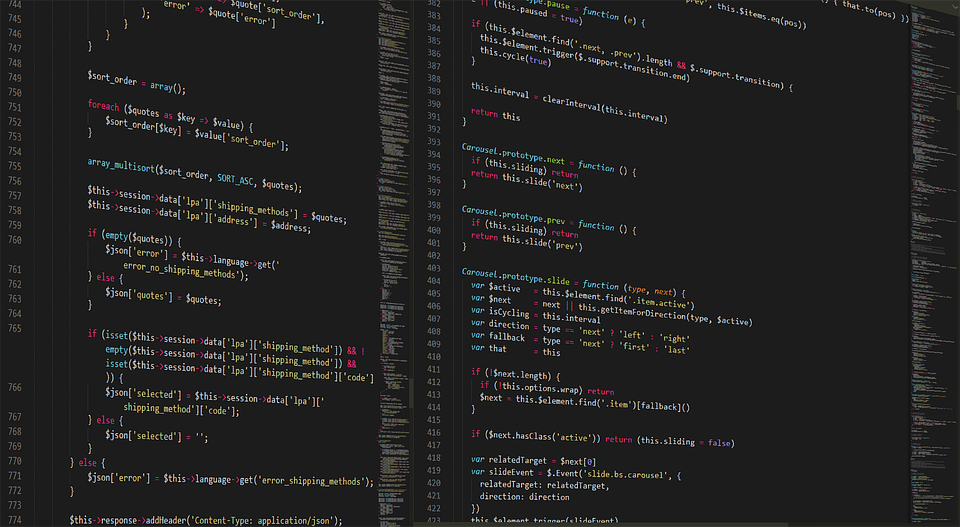
Hreflang tags are essential for bilingual SEO. They tell Google which language version of a page to serve to which user. Without them, search engines may show the wrong language version in results, or flag your content as duplicate.
A basic hreflang implementation looks like this:
- Add
<link rel="alternate" hreflang="en" href="https://example.com/page/" />for your English page. - Add
<link rel="alternate" hreflang="es" href="https://example.com/es/page/" />for the Spanish version. - Include a self-referencing hreflang on each page.
Other technical considerations:
- Canonical tags, ensure each language version points to itself as canonical, not to the other language.
- XML sitemaps, include all language versions and reference hreflang within the sitemap.
- Page speed, optimize both versions independently: don’t assume one template fits all.
Localised Content, Metadata, and Internal Linking
Every on-page element needs to be localized, not just translated. That includes:
- Title tags and meta descriptions, written for native speakers with locally relevant keywords.
- Image alt text, described in the appropriate language.
- Internal links, English pages should link to other English pages: your second-language pages should link within their own language silo.
Cross-language internal linking (e.g., an English blog post linking to a Spanish service page) should be minimal and intentional. Keeping clean language silos helps search engines understand your site structure.
Building Bilingual Backlinks and Measuring Performance
Backlinks remain one of the strongest ranking signals. For a bilingual site, you need links pointing to both language versions, not just your English pages.
Strategies for building bilingual backlinks:
- Guest posting on industry publications in your target language.
- Local directories and citations in the relevant language community.
- Digital PR targeting journalists and bloggers who write in your second language.
- Partnerships with bilingual or foreign-language organizations in your industry.
When measuring performance, track each language version separately in Google Search Console. Set up separate views or filters in your analytics platform so you can compare:
- Organic traffic by language
- Keyword rankings per language
- Conversion rates across language versions
- Bounce rate and engagement metrics
This data tells you where to double down and where to adjust. If your second-language pages are getting traffic but not converting, the issue might be content quality, trust signals, or a UX problem, not SEO.
Need help building a measurement framework for your bilingual site? Talk to our team at AGR Technology about our analytics and SEO reporting services.
Common Bilingual SEO Mistakes to Avoid
We see the same issues come up repeatedly when businesses attempt bilingual SEO without expert guidance:
- Using machine translation without human review. Google’s algorithms are increasingly good at detecting low-quality translations. Poor translations hurt rankings and credibility.
- Duplicating content across languages without hreflang tags. This can trigger duplicate content issues and confuse Google about which version to index.
- Ignoring local search intent. Just because a keyword works in English doesn’t mean a direct translation captures the same intent in another language.
- Neglecting one language after launch. Both language versions need ongoing content updates, link building, and technical maintenance. A stale second-language section sends the wrong signals.
- Using automatic language redirects based on IP. This blocks search engines from crawling all versions and frustrates users who may prefer a different language than their location suggests. Use a language selector instead.
Avoiding these mistakes saves time, budget, and rankings in the long run.
Conclusion
Bilingual SEO is a genuine competitive advantage for businesses that serve multilingual audiences. But it requires more than translation, it demands native keyword research, proper technical setup, localised content, and a clear measurement strategy.
The businesses that get this right don’t just rank in two languages. They build trust, reach new customers, and grow revenue from markets their competitors overlook.
At AGR Technology, we specialise in bilingual and multilingual SEO strategies built on real data and technical expertise. Whether you’re starting from scratch or fixing an existing setup, we can help.
Ready to grow your search visibility across languages? Contact AGR Technology to get started.
Frequently Asked Questions About Bilingual SEO
What is bilingual SEO and how is it different from multilingual SEO?
Bilingual SEO is the practice of optimizing a website to rank in search results for exactly two languages. Multilingual SEO covers three or more languages and typically requires more complex site architecture. A bilingual approach allows tighter keyword targeting and a clearer technical implementation, making it an ideal first step before scaling further.
Why is machine translation not enough for a bilingual SEO strategy?
Machine translation often fails to capture local search intent, natural phrasing, and culturally relevant keywords. Search engines can detect low-quality translations, which hurts both rankings and credibility. Effective bilingual SEO requires native-language keyword research and human-reviewed content to ensure accuracy, trust, and genuine engagement from users.
What is the best URL structure for a bilingual website?
Subdirectories (e.g., example.com/es/) are generally the best starting point for bilingual sites. They consolidate domain authority under one domain, simplify management, and preserve your backlink profile. Subdomains and country-code top-level domains (ccTLDs) offer benefits but add complexity that’s often unnecessary for a two-language setup.
How do hreflang tags work in bilingual SEO?
Hreflang tags tell search engines which language version of a page to serve to each user. Each page should include a self-referencing hreflang tag plus a reference to its alternate-language counterpart. Without proper hreflang implementation, Google may display the wrong language version or flag your content as duplicate.
How long does it take to see results from bilingual SEO?
Bilingual SEO typically takes three to six months to show measurable results, depending on competition, content quality, and technical execution. Factors like domain authority, backlink acquisition in both languages, and consistent content updates influence the timeline. Tracking each language version separately in Google Search Console helps monitor progress accurately.
Can bilingual SEO improve conversion rates for multilingual audiences?
Yes. When users find content in their native language with locally relevant phrasing, they’re more likely to trust your brand, stay on your site longer, and convert. Bilingual SEO reduces bounce rates and signals cultural awareness, directly impacting engagement metrics and driving higher conversion rates across both language audiences.
Related resources:
International Marketing Explained
SEO Services for Large Language Models (LLMs)
Website Design for Chinese Brands Expanding to English Markets

Alessio Rigoli is the founder of AGR Technology and got his start working in the IT space originally in Education and then in the private sector helping businesses in various industries. Alessio maintains the blog and is interested in a number of different topics emerging and current such as Digital marketing, Software development, Cryptocurrency/Blockchain, Cyber security, Linux and more.
Alessio Rigoli, AGR Technology