
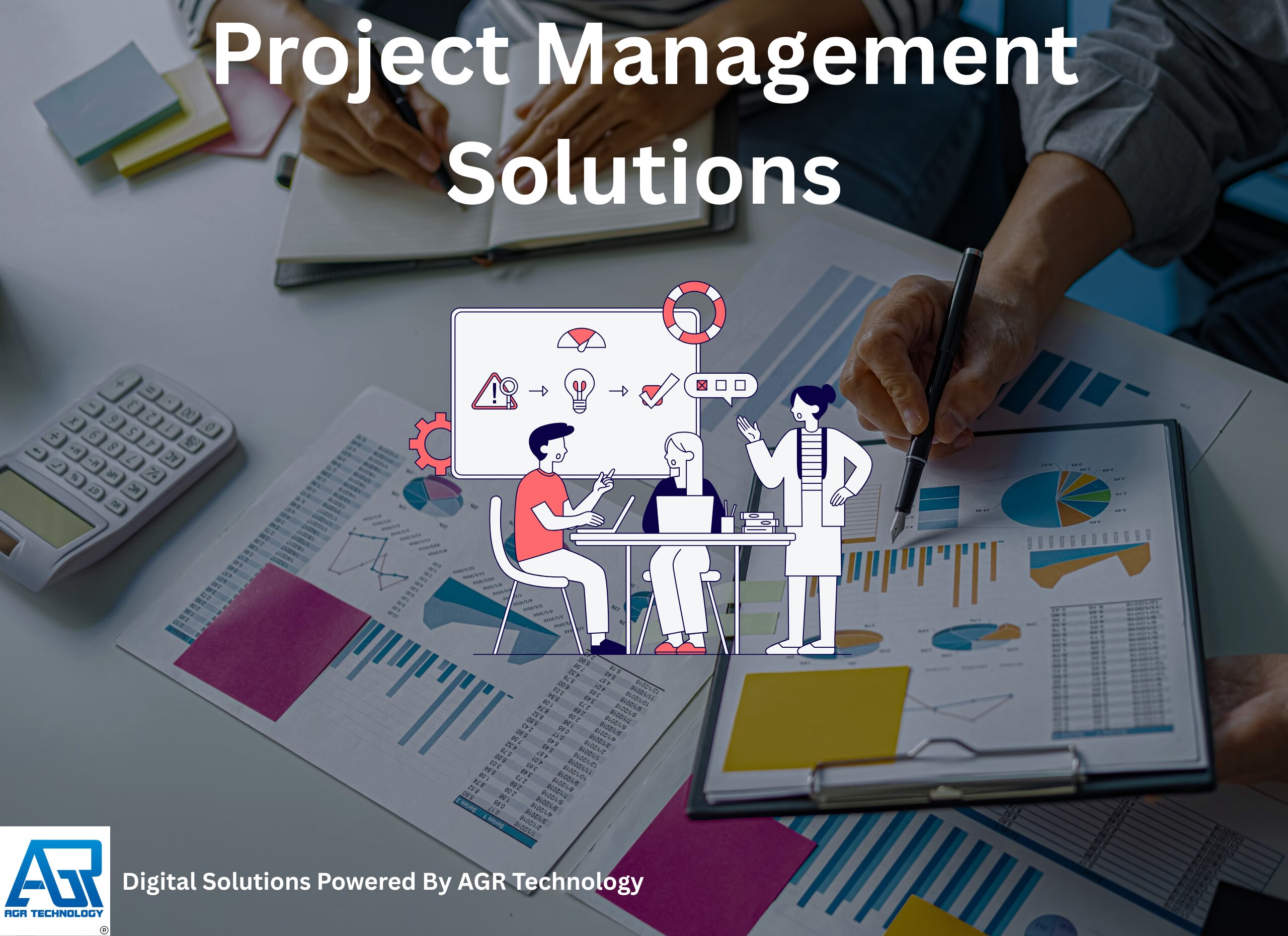
Project management is one of those disciplines that quietly determines whether our work turns into a real result or just a good intention. When we manage projects well, we deliver the right outcomes, for the right people, at the right time, without burning out our team or blowing the budget.
In this practical guide, we’ll walk through what project management actually is, why it matters, how the project lifecycle works, the main methodologies, the skills we need, and the tools and pitfalls that shape success. Whether we’re managing a formal project at work or coordinating a complex initiative on the side, the principles are surprisingly similar, and incredibly useful.
Let’s discuss your project
Reviews from some of our happy customers:

Justine Brummans
Alessio is both incredibly knowledgeable and personable! He gave me great advice that was catered to me and my situation. Thank you Alessio! Super helpful!

Springfield Equestrian Park
Alessio is amazing! I can not speak highly enough of how helpful and knowledgeable he is, my website he created far exceeded my expectations, he is so accomodating and I can only wish him every success with his business. I rate AGR technology 10 out of 10.
Legacy Energy
We used AGR Technology and dealt with Alessio to design and build our website as well as host our emails. Alessio was a pleasure to deal with and had plenty of ideas that we could implement into our site. He has a great attention to detail, he is also very polite in understanding our goals and what we wanted to achieve with our website.
Thanks mate,
Alex & Rob
Excellent Service
Alessio developed our website for our business and has done a wonderful job. He is very personable and knowledgeable. We have enjoyed working with him. We will be referring others to him and highly recommend him to those who need Tech advice.
MRC Performance
I have been in business for over 10 Years and recently moved to AGR Technology for all our IT needs. They are able to fix nearly anything remotely and always very helpful in recommending appropriate hardware upgrades that do the job as required but not costing more than needed.

Alessio provided an excellent service. He was very dedicated in his method of finding solutions to problems. He continued to try different avenues until he found the reason as to why a particular application was not working. He was very knowledgeable in his understanding of the internet and of applications and how they work, and he was able to apply this knowledge in understanding how to resolve the obstacles that continued to appear. He is understanding towards his client's needs and goals and he is willing to work with his client in achieving those goals. He is a very polite and well mannered person and very calm and gentle in his approach. I would highly recommend Alessio's services to anyone.

Palmira Rigoli
Great work ethics Alessio! We at Totally Gluten Free Products are very happy to have you on board as our IT and SEO master. Very reliable, trustworthy and knowledgeable in the field.
YouTube Comment
Nat's Custom Designs
Alessio from AGR Technology has recently helped me create a website for my business.
Throughout the whole process from start to finish Alessio made the process easy for me, by calling me and explaining each step of the way. I'm not very computer savvy, but with Alessio taking the time to explain in detail everything I needed to know from putting inventory in to having it shipped. He even remotely joined my computer to help guide me through everything.
He's very knowledgeable and is experienced in everything I needed and if there was anything else I needed to know that wasn't something he was familiar with, he researched it.
I would HIGHLY recommend Alessio to anyone. He has not only helped me for now but I know that if I ever needed help with anything else he would definitely go above and beyond to help. Thank you so much for everything you have done. It's been a long process but well worth it 🙂
Byron Macumber
AGR Technology is amazing. not only do they stick with you through out the process, they also accommodate to your wants and needs. They are efficient in their work and they have high integrity. Their capabilities are shown through their website design, and appropriate knowledge of utilities regarding software. over the many years of working with them they have been fantastic. I would recommend to everyone
Very helpful
Alessio was thorough, diligent and kept me updated at all time points. I was very impressed with his performance, passion and dedication. I will continue to use his services.
Wantrup & Associates
Alessio of AGR Technology is an IT guy we rely on whenever we need IT help. His professionalism impressed us right at the first time. He solved many of our IT problems in no time. Excellent communication and speedy response.
We highly recommend this company
From a happy customer
Valeria Bianco
I received AGR contact information from a previous client, who had found their service excellent. So I contacted AGR with some expectations, and I can say they exceeded them. Professional, honest, punctual, reliable, their service is faultless. We can't recommend them highly enough.
Very fast, value for money and a comprehensive service
AGR is professional, organised and very skilled at what they do. They take the initiative, looking after all the details that you would not have thought of to enhance your website presence, marketing funnel and automated appointment bookings. Big bonus - pricings are at a fraction of the cost of competitors.
Customer testimonial
Alessio from AGR Technology is wonderful at gently guiding the less technically savvy users to solve problems. Back up service excellent. Highly recommended
SEO for website
The team is very cooperative and delivers clean and very efficient work.

Raimond Volpe
Nothing but good things to say about Alessio. He has been great service and great at communicating with me by both phone and email. Very good knowledge and problem-solving ability with our web development. I would thoroughly recommend Alessio and AGR Technology to anyone wanting online marketing or web development
Website design
Big thank you to Alessio at AGR Technology for a smooth and easy website development process. Nothing was to difficult to accomplish, I can highly recommend his first class service.
Supporting businesses of all sizes to get ahead with digital solutions








Why work with us?




An Introduction To Project Management And Why It Matters
Keep your digital project on track — delivered on time, on budget, and built to scale.
With AGR Technology, there are no surprises, just clear outcomes and measurable results.
AGR Technology takes a pragmatic Agile approach to digital delivery, aligning the right people, processes, and technology stack to your business objectives from day one. Every project is scoped with clarity, managed with discipline, and executed with flexibility — ensuring milestones are met without scope creep or budget blowouts.
From custom software development and web platforms to automation and system integrations, AGR Technology works as a strategic partner, not just a supplier. The focus is on building solutions that support growth, improve efficiency, and deliver real commercial value.
Core Concepts And Terminology
At its simplest, project management is how we plan, organise, and control work to achieve a specific goal within a defined timeframe and budget.
A few key terms help us speak the same language:
- Project – A temporary effort with a clear start and end, created to deliver a unique product, service, or result.
- Scope – What’s included in the project, and just as importantly, what’s not.
- Stakeholders – People or groups who are affected by or can influence the project (sponsors, customers, team members, partners, etc.).
- Deliverables – The tangible outputs we commit to producing.
- Constraints – Time, cost, quality, scope, resources, and risk. These are the levers we constantly balance.
- Project Manager – The person responsible for guiding the project from idea to delivery, coordinating people, tasks, and decisions.
When we talk about digital project management, agile project management, or software project delivery, we’re still talking about the same core discipline, just applied to different contexts and using different frameworks.
Benefits Of Effective Project Management For Teams And Organizations
When we invest in real project management rather than just “doing the work and hoping,” we see predictable benefits:
- Clarity and focus – Everyone knows what we’re doing, why it matters, and what success looks like.
- Better use of resources – We align people, time, and budget with priorities instead of reacting to the loudest request.
- Fewer surprises – Risks are identified earlier, issues are tracked, and decisions are documented.
- Higher accountability – Owners, deadlines, and expectations are visible, so work doesn’t disappear into the void.
- Consistent outcomes – We’re not relying on heroics: we’re relying on process and good communication.
For teams and organisations, strong project management directly supports business objectives: more predictable delivery, better customer satisfaction, and smarter investment of time and money.
The Project Lifecycle: From Idea To Delivery
Initiation: Defining The Problem And The Goal
Every successful project starts with a clear “why.” In the initiation phase, we:
- Define the problem or opportunity.
- Clarify goals and success criteria (How will we know this worked?).
- Identify high-level scope, constraints, and assumptions.
- Map key stakeholders and their interests.
Planning: Scope, Schedule, Budget, And Risk
Planning is where we turn intent into a concrete roadmap. We:
- Break work into tasks and deliverables.
- Estimate effort and duration.
- Build a schedule, sometimes a detailed Gantt chart, sometimes a simple timeline.
- Define scope in more detail and agree on what’s out of scope.
- Forecast budget and resources.
- Identify risks, prioritise them, and decide how we’ll prevent or respond to them.
This is the heart of project planning and strategy. Good planning doesn’t mean we never change direction: it means we understand our baseline so we can adapt intelligently.
Execution And Monitoring: Keeping Work On Track
Execution is where most of the visible work happens. Our job during this phase is to:
- Coordinate the team’s tasks and handoffs.
- Remove blockers and resolve conflicts.
- Monitor progress against plan (scope, schedule, budget, quality).
- Adjust priorities and resources as reality unfolds.
- Communicate regularly with stakeholders.
In many digital and marketing environments, this is where agile project management shines, short iterations, frequent feedback, and continuous adjustment.
Closure: Handing Off, Learning, And Celebrating
Closure is more than just “we’re done.” We:
- Confirm deliverables are accepted and documented.
- Hand off to operations, support, or ongoing teams.
- Review what went well and what didn’t (a retrospective or post‑mortem).
- Capture lessons learned for future projects.
- Celebrate wins and recognise contributions.
Proper closure turns a project into a building block for future success instead of a one‑off effort that disappears from memory.
Popular Project Management Methodologies
Waterfall And Traditional Approaches
Waterfall is a linear methodology where we move through stages, requirements, design, build, test, deploy, in sequence. It works best when:
- Requirements are stable and well‑understood up front.
- Regulatory or compliance needs demand detailed documentation.
- Change is expensive once we start implementation.
Traditional project management often emphasises detailed upfront planning, baselines, and formal change control. It’s still very relevant for construction, infrastructure, and certain enterprise software projects.
Agile, Scrum, And Kanban
Agile project management focuses on adaptability and frequent delivery of value. Instead of trying to predict every detail, we work in smaller cycles and learn as we go.
- Scrum structures work into time‑boxed sprints (often 1–4 weeks) with defined roles (Product Owner, Scrum Master, Development Team) and ceremonies (planning, daily stand‑ups, reviews, retrospectives).
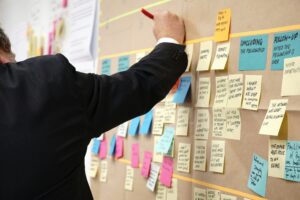
- Kanban visualises work on a board with columns (To Do, In Progress, Done), limiting work in progress to keep flow smooth and avoid overloading the team.
Agile is particularly effective for software project delivery, digital project management, marketing project management, and other environments where feedback and change are constant.
Hybrid Approaches And When To Use Them
In practice, many of us use hybrid approaches, combining structured planning with agile execution. For example, we might:
- Do high‑level scoping and milestones using a traditional plan.
- Execute the work in agile sprints with frequent stakeholder reviews.
- Use Kanban boards for support and continuous improvement streams.
Hybrid frameworks shine when we need governance and predictability for stakeholders, but also flexibility to adapt as we learn more about user needs or market conditions.
Essential Skills Of An Effective Project Manager
Leadership, Communication, And Stakeholder Management
Effective project managers don’t just move tasks around: we lead people. That means we:
- Set clear direction and help the team see the bigger picture.
- Communicate with different audiences in the right level of detail.
- Listen carefully and anticipate concerns.
- Manage expectations, negotiate trade‑offs, and resolve conflicts.
Stakeholder management is critical. We identify who needs what information, how often, and in what format. In complex initiatives, like creative project coordination or brand and design project execution, this can make the difference between smooth approvals and endless rework.
Planning, Prioritization, And Decision-Making
We’re constantly balancing priorities: scope vs. time, quality vs. cost, innovation vs. risk. Strong project managers:
- Translate goals into clear, actionable plans.
- Use data and feedback to prioritise what matters most.
- Make decisions with imperfect information and keep work moving.
- Re‑plan quickly when assumptions change.
This is especially important in cross-functional project leadership, where different teams (engineering, marketing, design, operations) all have competing demands on their time.
Risk Management And Problem-Solving
No project is risk‑free. Our value often shows most when things go wrong. We:
- Proactively identify risks and build mitigation plans.
- Create an environment where issues surface early, not at the last minute.
- Analyse problems logically and involve the right people.
- Communicate impacts and options clearly so decision‑makers can act.
This mindset turns surprises into manageable challenges instead of crises.
Tools And Techniques That Make Projects Easier
Planning And Tracking Tools (Roadmaps, Gantt Charts, Boards)
We don’t need fancy tools to manage a project, but the right ones make life easier and more transparent.
Common planning and tracking techniques include:
- Roadmaps – High‑level views of how major initiatives and releases line up over time.
- Gantt charts – Visual timelines showing tasks, durations, and dependencies.
- Task boards – Kanban‑style boards (physical or digital) that show work status at a glance.
Modern tools integrate these concepts, letting us manage end-to-end project management from a single place: planning, assigning, tracking, and reporting in one system.
Collaboration, Documentation, And Reporting
Beyond planning, we rely on tools that improve collaboration and visibility:
- Shared workspaces for documents, briefs, and requirements.
- Chat and video platforms for quick questions and decisions.
- Dashboards and reports that show status, risks, and upcoming milestones.
The goal isn’t to produce documents for their own sake: it’s to keep everyone aligned and reduce friction. When we manage marketing project management or complex digital project management, this kind of transparency is essential for coordinating campaigns, launches, and supporting activities.
Common Project Management Pitfalls And How To Avoid Them
Scope Creep And Poor Requirements
Scope creep happens when new features, requests, or expectations get added without adjusting time, budget, or resources. It usually comes from:
- Vague or incomplete requirements.
- Lack of a clear process for evaluating changes.
- Saying “yes” to everything without trade‑offs.
To avoid it, we:
- Invest time up front in clarifying requirements and outcomes.
- Document scope clearly and share it widely.
- Use a simple change control process: assess impact, decide, then update the plan.
Communication Breakdowns And Stakeholder Misalignment
Many project failures trace back to communication, not technical issues. Symptoms include:
- Stakeholders surprised by delays or changes.
- Different people working from different versions of the plan.
- Conflicting assumptions about priorities.
To prevent this, we:
- Set a communication plan early (who hears what, how often, and how).
- Keep status updates honest, concise, and focused on decisions.
- Check alignment at key milestones instead of waiting for the final delivery.
Conclusion
Boost performance through efficient, end-to-end project management.
AGR Technology takes a holistic view of every project — aligning strategy, execution, and delivery to achieve the outcomes that matter most to your business.
From planning through to deployment, every detail is managed with precision to ensure your project delivers measurable results, not just deliverables.
Planning your next digital project?
Partner with AGR Technology and move forward with clarity, confidence, and control.
Get in touch today to discuss how your next project can be delivered right — from start to finish.
Frequently Asked Questions (FAQ)
What are the core project management services that AGR Technology offers?
Our comprehensive IT project management services include areas such as:
- Project Management
- Project Planning and Programming
- Develop a brief and plan costs
- Forming project teams
- Risk management
- Handover management
What collaboration models do we have within our project management services?
At AGR Technology we offer clients different collaboration models such as project based retainers (BOT), partnerships or ad-hoc development services for fixed scope projects.
How does AGR Technology ensure projects stay on time and on budget?
Projects are delivered using a pragmatic Agile framework with clearly defined scopes, milestones, and deliverables. Regular progress reviews, transparent communication, and proactive risk management ensure timelines and budgets remain controlled — without compromising quality.
Can AGR Technology work with existing systems or teams?
Absolutely. AGR Technology regularly integrates with existing platforms, software, and internal teams. Whether augmenting your current setup or leading delivery end-to-end, the approach is flexible and designed to minimise disruption.
Is AGR Technology suitable for growing and established businesses?
Yes. AGR Technology works with startups, scale-ups, and established organisations that need structured delivery, technical expertise, and strategic oversight to execute digital projects with confidence.
Related content:
Software Development Shepparton
Software Development Melbourne
Software Development Wagga Wagga
Software Development Gold Coast
Mobile App Development Shepparton