
Legacy Software Modernization Services
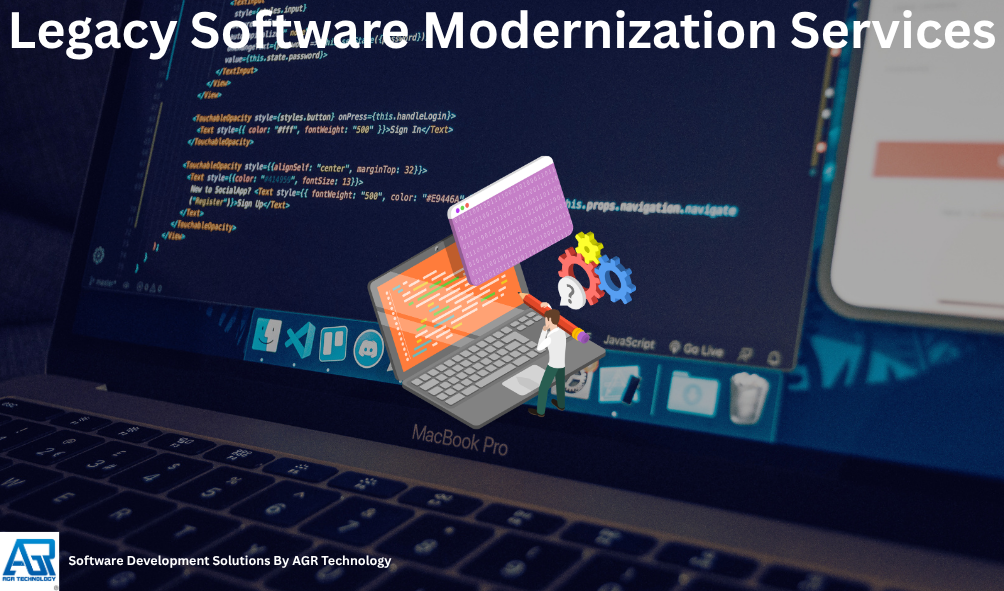
Modernize ageing software without unnecessarily replacing the systems, data and business processes that still work. AGR Technology helps businesses assess, refactor, migrate, integrate and rebuild legacy applications around modern requirements.
Get in contact with us to discuss your project
Reviews from our happy clients:

Justine Brummans
Alessio is both incredibly knowledgeable and personable! He gave me great advice that was catered to me and my situation. Thank you Alessio! Super helpful!

Springfield Equestrian Park
Alessio is amazing! I can not speak highly enough of how helpful and knowledgeable he is, my website he created far exceeded my expectations, he is so accomodating and I can only wish him every success with his business. I rate AGR technology 10 out of 10.
Legacy Energy
We used AGR Technology and dealt with Alessio to design and build our website as well as host our emails. Alessio was a pleasure to deal with and had plenty of ideas that we could implement into our site. He has a great attention to detail, he is also very polite in understanding our goals and what we wanted to achieve with our website.
Thanks mate,
Alex & Rob
Excellent Service
Alessio developed our website for our business and has done a wonderful job. He is very personable and knowledgeable. We have enjoyed working with him. We will be referring others to him and highly recommend him to those who need Tech advice.
MRC Performance
I have been in business for over 10 Years and recently moved to AGR Technology for all our IT needs. They are able to fix nearly anything remotely and always very helpful in recommending appropriate hardware upgrades that do the job as required but not costing more than needed.

Alessio provided an excellent service. He was very dedicated in his method of finding solutions to problems. He continued to try different avenues until he found the reason as to why a particular application was not working. He was very knowledgeable in his understanding of the internet and of applications and how they work, and he was able to apply this knowledge in understanding how to resolve the obstacles that continued to appear. He is understanding towards his client's needs and goals and he is willing to work with his client in achieving those goals. He is a very polite and well mannered person and very calm and gentle in his approach. I would highly recommend Alessio's services to anyone.

Palmira Rigoli
Great work ethics Alessio! We at Totally Gluten Free Products are very happy to have you on board as our IT and SEO master. Very reliable, trustworthy and knowledgeable in the field.
YouTube Comment
Nat's Custom Designs
Alessio from AGR Technology has recently helped me create a website for my business.
Throughout the whole process from start to finish Alessio made the process easy for me, by calling me and explaining each step of the way. I'm not very computer savvy, but with Alessio taking the time to explain in detail everything I needed to know from putting inventory in to having it shipped. He even remotely joined my computer to help guide me through everything.
He's very knowledgeable and is experienced in everything I needed and if there was anything else I needed to know that wasn't something he was familiar with, he researched it.
I would HIGHLY recommend Alessio to anyone. He has not only helped me for now but I know that if I ever needed help with anything else he would definitely go above and beyond to help. Thank you so much for everything you have done. It's been a long process but well worth it 🙂
Byron Macumber
AGR Technology is amazing. not only do they stick with you through out the process, they also accommodate to your wants and needs. They are efficient in their work and they have high integrity. Their capabilities are shown through their website design, and appropriate knowledge of utilities regarding software. over the many years of working with them they have been fantastic. I would recommend to everyone
Very helpful
Alessio was thorough, diligent and kept me updated at all time points. I was very impressed with his performance, passion and dedication. I will continue to use his services.
Wantrup & Associates
Alessio of AGR Technology is an IT guy we rely on whenever we need IT help. His professionalism impressed us right at the first time. He solved many of our IT problems in no time. Excellent communication and speedy response.
We highly recommend this company
From a happy customer
Valeria Bianco
I received AGR contact information from a previous client, who had found their service excellent. So I contacted AGR with some expectations, and I can say they exceeded them. Professional, honest, punctual, reliable, their service is faultless. We can't recommend them highly enough.
Very fast, value for money and a comprehensive service
AGR is professional, organised and very skilled at what they do. They take the initiative, looking after all the details that you would not have thought of to enhance your website presence, marketing funnel and automated appointment bookings. Big bonus - pricings are at a fraction of the cost of competitors.
Customer testimonial
Alessio from AGR Technology is wonderful at gently guiding the less technically savvy users to solve problems. Back up service excellent. Highly recommended
SEO for website
The team is very cooperative and delivers clean and very efficient work.

Raimond Volpe
Nothing but good things to say about Alessio. He has been great service and great at communicating with me by both phone and email. Very good knowledge and problem-solving ability with our web development. I would thoroughly recommend Alessio and AGR Technology to anyone wanting online marketing or web development
Website design
Big thank you to Alessio at AGR Technology for a smooth and easy website development process. Nothing was to difficult to accomplish, I can highly recommend his first class service.
Proudly supporting clients of all sizes to succeed through digital solutions


Why work with us?
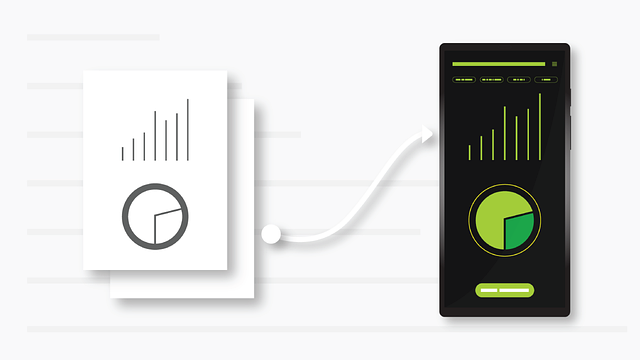


Modernize Legacy Software Without Starting From Scratch
Legacy software can become difficult to change long before it stops being useful.
You may have a custom application that has supported the business for years, but now depends on outdated frameworks, ageing infrastructure, manual processes or a database that is becoming increasingly difficult to maintain.
Replacing everything isn’t always the right answer.
AGR Technology provides legacy software modernization services to help businesses understand what should be retained, improved, migrated or rebuilt. We can work with existing applications, databases, integrations and business logic to develop a practical path towards a more maintainable software environment.
Whether you need to modernize an older business application, migrate a legacy database, connect an existing system to modern software or progressively rebuild a critical application, we can help you determine the right approach.
Is Your Legacy Software Holding Your Business Back?
You don’t necessarily need to replace software simply because it is old. The bigger concern is whether the technology is becoming a constraint on your business.
Modernization may be worth considering when:
- Your application relies on outdated or unsupported technologies.
- Developers find the codebase difficult or risky to change.
- Maintenance costs are increasing.
- Your software cannot easily integrate with newer platforms.
- Important business data is difficult to access or migrate.
- Performance becomes an issue as usage grows.
- Security updates are difficult to implement.
- Your application relies on manual workarounds or duplicate data entry.
- The interface no longer suits your staff or customers.
- The original developer or vendor is no longer available.
- New features are increasingly difficult or expensive to add.
- You want to move an application or database to a modern hosting environment.
The problem isn’t always that the software is old. It is that technical debt, outdated architecture and unsupported dependencies can make every future change harder.
Our Legacy Software Modernization Services
AGR Technology can modernize different parts of an existing software environment depending on what your business actually needs.
Legacy Software Assessment
Before changing an important application, it helps to understand what you already have.
We can assess areas such as:
- Application architecture
- Source code and dependencies
- Databases and data structures
- Integrations and APIs
- Hosting and infrastructure
- Performance
- Security considerations
- Business-critical workflows
- Technical debt and maintenance issues
The outcome can be used to identify practical modernization priorities rather than committing to a full rebuild without first understanding the existing system.
Legacy Code Refactoring
Sometimes the application itself is still suitable, but the underlying code has become difficult to maintain.
Code refactoring involves improving the internal structure of software without necessarily changing its intended functionality. This can include reducing unnecessary complexity, addressing technical debt, improving maintainability and preparing the application for future development.
Refactoring can be a useful option when the existing business logic is valuable but the codebase is becoming a barrier to change.
Legacy Application Modernization
Older applications can often be progressively upgraded rather than replaced in one large project.
Modernization may involve updating frameworks and dependencies, improving application architecture, replacing outdated components, improving performance or introducing new functionality.
The exact approach depends on the application. There is no single modernization strategy that suits every legacy system.
Legacy Software Migration
AGR Technology can help plan and implement migrations between software environments, hosting platforms and infrastructure.
Migration projects may involve:
- Application migration
- Database migration
- Cloud migration
- Hosting migration
- Infrastructure changes
- Data transfer and validation
- Integration changes
Where appropriate, migration can be staged so that business-critical systems are not changed unnecessarily all at once.
Legacy Database Modernization
The database is often one of the most important parts of a legacy application.
AGR can assist with database modernization and migration where an existing database is limiting application development, integration or future scalability.
This can involve restructuring data, migrating to a newer database platform, improving application-to-database communication or connecting legacy data to a new application.
Data integrity and the continued availability of important business information should remain central to the process.
API & Legacy System Integration
A legacy application doesn’t necessarily need to be replaced before it can communicate with modern software.
An API or integration layer can sometimes provide a practical bridge between an existing system and newer:
- Websites
- Mobile applications
- Customer portals
- SaaS platforms
- Business management systems
- Reporting tools
- Third-party services
- Automation workflows
This can extend the useful life of an existing application while allowing the business to introduce new capabilities around it.
Application Re-Engineering & Redevelopment
Some applications have reached a point where modifying the existing code is no longer the most sensible option.
In these situations, application re-engineering or redevelopment can provide a path towards a new system while retaining important requirements, workflows and business knowledge from the original application.
AGR Technology can help translate an existing system into a modern custom software solution where a rebuild makes more sense than continued maintenance.
UI & UX Modernization
An application can work technically while still providing a frustrating experience for the people using it.
Where appropriate, modernization can include improving:
- Navigation
- User interfaces
- Responsive layouts
- Accessibility
- Workflows
- Forms
- Dashboards
- Customer-facing experiences
The goal is not simply to make an application look newer. The interface should make the underlying software easier and more efficient to use.
Testing, Deployment & Ongoing Support
Modernization needs to be validated before an important business system is put into production.
Depending on the project, testing can cover application functionality, databases, APIs, integrations, user workflows and performance.
After deployment, AGR Technology can also provide ongoing software development and support as the modernize application evolves.
Which Legacy Modernization Approach Is Right for You?
Modernization doesn’t always mean rebuilding an application from the ground up.
Microsoft’s current application modernization guidance identifies approaches including re-platforming, refactoring, rearchitecting and rebuilding, while AWS uses a broader set of migration strategies that also includes retaining, retiring and replacing applications.
Refactor
Improve the existing code while retaining much of the current application structure and functionality.
Best suited to: applications where the underlying functionality remains valuable but technical debt is making development difficult.
Re-platform
Move an application to a more suitable platform or infrastructure with limited changes to the application itself.
Best suited to: software that works but is being held back by its current hosting or platform environment.
Rearchitect
Change the underlying architecture to address fundamental limitations around scalability, maintainability or integration.
Best suited to: applications where the existing architecture is becoming a significant technical constraint.
Rebuild
Develop a new application around the existing business requirements and functionality.
Best suited to: systems where the existing codebase is too difficult or costly to modernize effectively.
Migrate
Move an application, database or workload to another environment, including a cloud or modern hosting platform where appropriate.
Best suited to: businesses dealing with ageing infrastructure, hosting limitations or changing technology requirements.
Integrate
Keep an existing system while introducing APIs or other integration mechanisms that allow it to work with newer software.
Best suited to: businesses that need new capabilities without immediately replacing a business-critical legacy application.
Retain or Replace
Sometimes the most sensible decision is to leave a system alone or replace it with another product.
Not every old application needs modernization. A proper assessment should consider both technical requirements and business value before deciding what happens next.
Modernization Doesn’t Have to Be an All-or-Nothing Project
A common concern with legacy software is disruption.
If an application manages important customers, orders, financial information, internal workflows or operational data, replacing it overnight may introduce unnecessary risk.
A phased approach can allow parts of the system to be modernized while other components continue operating.
For example, a business might:
- Assess the existing application and database.
- Document critical workflows and dependencies.
- Introduce an API around the existing system.
- Build a new customer-facing interface.
- Migrate selected functionality to a new application.
- Move or restructure the underlying data.
- Retire components once their replacements are ready.
Microsoft specifically recommends matching modernization strategies to the needs of individual application components rather than automatically applying the most complex approach everywhere.
This can be particularly useful when the existing system contains years of valuable business logic that shouldn’t simply be discarded.
What Happens to Your Existing Data and Business Logic?
This is one of the most important questions to answer before modernizing legacy software.
An existing application may contain much more than source code. It can encode years of business rules, workflows, customer records, reporting requirements and operational knowledge.
During modernization, AGR Technology can consider:
- What data needs to be retained?
- Which business rules are still required?
- Which functionality can be removed?
- Which integrations need to continue working?
- Which workflows should be improved?
- What should be migrated to the new system?
- What can be safely retired?
The objective is to move the business forward without losing the information and functionality that still provide value.
Our Legacy Software Modernization Process
Every project is different, but a typical engagement can follow a straightforward process.
1. Discovery & Assessment
We learn how the application works, what problems you’re experiencing and what the business needs from the system in the future.
2. Technical Review
We examine the relevant code, architecture, database, integrations, infrastructure and dependencies to identify modernization opportunities and constraints.
3. Modernization Strategy
We determine whether refactoring, migration, re-platforming, rearchitecting, integration, redevelopment or another approach makes the most sense.
4. Development & Migration
We implement the agreed changes, which may include new application components, code improvements, APIs, database work or infrastructure changes.
5. Testing & Validation
We test critical functionality, data, integrations and workflows before deployment.
6. Deployment & Continued Development
Once the modernized system is ready, we can assist with deployment and provide further development and support as requirements change.
Why Work With AGR Technology?
AGR Technology is an Australian digital solutions agency with experience across custom software development, web development, hosting, integrations and technology services.
Our approach to legacy modernization is practical: understand the existing system first, identify what is worth keeping, and then build a sensible path towards the software your business needs next.
That may mean improving an existing application rather than replacing it. It may mean developing a new system. Or it may mean connecting an old system to modern software while you transition gradually.
The right answer depends on your application, your business and your priorities.
Ready to Modernize Your Legacy Software?
Your existing application may not need to be discarded. It may simply need a better technical foundation.
AGR Technology can help you assess your legacy software, identify practical modernization options and develop a path towards a more maintainable, integrated and capable system.
Start a conversation with AGR Technology
Legacy Software Modernization FAQs
What is legacy software modernization?
Legacy software modernization is the process of improving an existing application, system, architecture, infrastructure or database so it can better support current and future business requirements. Depending on the situation, this can involve refactoring, re platforming, rearchitecting, migrating, integrating or rebuilding the software.
Does legacy software always need to be replaced?
No. Modernization does not automatically mean a complete rewrite. An existing application may be suitable for refactoring, migration, re-platforming or integration. In some cases, retaining the system or replacing it with another solution may make more sense.
Can you modernize software without losing existing data?
Potentially, yes. Data migration can be planned as part of the modernization project, with the existing database, data structures, dependencies and business requirements assessed before changes are made.
Can legacy software be migrated to the cloud?
Yes, depending on the application and its technical requirements. Cloud migration can involve different approaches, including rehosting, re-platforming or refactoring. The appropriate option depends on the software, infrastructure, dependencies and desired business outcomes.
Should I refactor or rebuild my legacy application?
It depends on the condition of the existing codebase and architecture. Refactoring can make sense when the underlying application remains valuable and maintainable. A rebuild may be more appropriate when the existing architecture or codebase prevents meaningful improvements.
Can a legacy application be connected to modern software?
Often, yes. APIs and integration layers can allow legacy applications to exchange data with newer websites, applications, services and business platforms without immediately replacing the entire system.
How much does legacy software modernization cost?
There is no useful single price for legacy modernization. Cost depends on the size and complexity of the application, its technology stack, database, integrations, documentation, data requirements and the chosen modernization strategy.
A technical assessment is usually a better starting point than estimating a project from the age of the software alone.
How long does software modernization take?
Project timelines vary considerably. A focused code or infrastructure upgrade can be substantially smaller than a full application redevelopment and database migration. AGR Technology can help define the scope and likely stages once the existing system and requirements have been reviewed.