

Bringing a product or service to market sounds simple until budgets get stretched, messaging misses the mark, and sales teams are left chasing the wrong leads. That’s where GTM marketing services come in. They give businesses a practical go-to-market plan built around research, positioning, channel selection, execution, and measurable growth. At AGR Technology, we help businesses turn ideas, offers, and expansion plans into structured market entry and growth strategies. Here’s what GTM marketing services typically include, when they matter most, and how to choose a partner that can actually deliver results.
Book a free consultation call with AGR Technology to see how we can help scale your brand with proven online marketing strategies
Reviews from some of our happy customers:

Justine Brummans
Alessio is both incredibly knowledgeable and personable! He gave me great advice that was catered to me and my situation. Thank you Alessio! Super helpful!

Springfield Equestrian Park
Alessio is amazing! I can not speak highly enough of how helpful and knowledgeable he is, my website he created far exceeded my expectations, he is so accomodating and I can only wish him every success with his business. I rate AGR technology 10 out of 10.
Legacy Energy
We used AGR Technology and dealt with Alessio to design and build our website as well as host our emails. Alessio was a pleasure to deal with and had plenty of ideas that we could implement into our site. He has a great attention to detail, he is also very polite in understanding our goals and what we wanted to achieve with our website.
Thanks mate,
Alex & Rob
Excellent Service
Alessio developed our website for our business and has done a wonderful job. He is very personable and knowledgeable. We have enjoyed working with him. We will be referring others to him and highly recommend him to those who need Tech advice.
MRC Performance
I have been in business for over 10 Years and recently moved to AGR Technology for all our IT needs. They are able to fix nearly anything remotely and always very helpful in recommending appropriate hardware upgrades that do the job as required but not costing more than needed.

Alessio provided an excellent service. He was very dedicated in his method of finding solutions to problems. He continued to try different avenues until he found the reason as to why a particular application was not working. He was very knowledgeable in his understanding of the internet and of applications and how they work, and he was able to apply this knowledge in understanding how to resolve the obstacles that continued to appear. He is understanding towards his client's needs and goals and he is willing to work with his client in achieving those goals. He is a very polite and well mannered person and very calm and gentle in his approach. I would highly recommend Alessio's services to anyone.

Palmira Rigoli
Great work ethics Alessio! We at Totally Gluten Free Products are very happy to have you on board as our IT and SEO master. Very reliable, trustworthy and knowledgeable in the field.
YouTube Comment
Nat's Custom Designs
Alessio from AGR Technology has recently helped me create a website for my business.
Throughout the whole process from start to finish Alessio made the process easy for me, by calling me and explaining each step of the way. I'm not very computer savvy, but with Alessio taking the time to explain in detail everything I needed to know from putting inventory in to having it shipped. He even remotely joined my computer to help guide me through everything.
He's very knowledgeable and is experienced in everything I needed and if there was anything else I needed to know that wasn't something he was familiar with, he researched it.
I would HIGHLY recommend Alessio to anyone. He has not only helped me for now but I know that if I ever needed help with anything else he would definitely go above and beyond to help. Thank you so much for everything you have done. It's been a long process but well worth it 🙂
Byron Macumber
AGR Technology is amazing. not only do they stick with you through out the process, they also accommodate to your wants and needs. They are efficient in their work and they have high integrity. Their capabilities are shown through their website design, and appropriate knowledge of utilities regarding software. over the many years of working with them they have been fantastic. I would recommend to everyone
Very helpful
Alessio was thorough, diligent and kept me updated at all time points. I was very impressed with his performance, passion and dedication. I will continue to use his services.
Wantrup & Associates
Alessio of AGR Technology is an IT guy we rely on whenever we need IT help. His professionalism impressed us right at the first time. He solved many of our IT problems in no time. Excellent communication and speedy response.
We highly recommend this company
From a happy customer
Valeria Bianco
I received AGR contact information from a previous client, who had found their service excellent. So I contacted AGR with some expectations, and I can say they exceeded them. Professional, honest, punctual, reliable, their service is faultless. We can't recommend them highly enough.
Very fast, value for money and a comprehensive service
AGR is professional, organised and very skilled at what they do. They take the initiative, looking after all the details that you would not have thought of to enhance your website presence, marketing funnel and automated appointment bookings. Big bonus - pricings are at a fraction of the cost of competitors.
Customer testimonial
Alessio from AGR Technology is wonderful at gently guiding the less technically savvy users to solve problems. Back up service excellent. Highly recommended
SEO for website
The team is very cooperative and delivers clean and very efficient work.

Raimond Volpe
Nothing but good things to say about Alessio. He has been great service and great at communicating with me by both phone and email. Very good knowledge and problem-solving ability with our web development. I would thoroughly recommend Alessio and AGR Technology to anyone wanting online marketing or web development
Website design
Big thank you to Alessio at AGR Technology for a smooth and easy website development process. Nothing was to difficult to accomplish, I can highly recommend his first class service.
Supporting businesses of all sizes to get ahead with digital solutions








Why work with us?






What GTM Marketing Services Are And When Businesses Need Them

GTM stands for go-to-market. In simple terms, GTM marketing services help a business figure out who to sell to, what to say, where to say it, and how to turn interest into revenue.
A proper go-to-market service is not just a few ads or a launch checklist. It connects strategy with delivery. That can include market research, audience segmentation, value proposition development, campaign planning, sales enablement, CRM workflows, and performance reporting.
Businesses usually need GTM support when they are:
- launching a new product or service
- entering a new region or market segment
- repositioning after stagnant growth
- struggling with low lead quality or poor conversion
- aligning marketing and sales after rapid scaling
- replacing disconnected tactics with a clear growth plan
We often see businesses invest in websites, ads, SEO, or automation before their market strategy is properly defined. That creates waste. A GTM engagement helps reduce that risk by giving every campaign and channel a clearer job to do.
Core Components Of Effective GTM Marketing Services
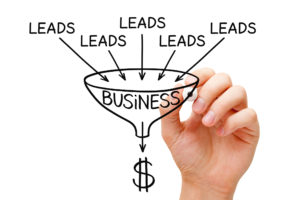
Strong GTM marketing services combine planning, execution, and cross-team alignment. The exact scope varies by business model, but the best engagements usually focus on a few essential building blocks first.
Market Research, Positioning, And Ideal Customer Definition
Without solid research, businesses end up guessing. We start by looking at the market, customer demand, competitors, buying triggers, and the language people actually use when searching for solutions.
This stage often includes:
- market opportunity analysis
- competitor reviews
- customer pain point mapping
- buyer persona development
- ideal customer profile (ICP) creation
- messaging and positioning frameworks
Positioning matters because even a strong offer can underperform if it sounds generic. Clear positioning explains why a business is different, who it helps, and why buyers should care now. For B2B companies especially, defining the ideal customer profile can improve lead quality and shorten the path from marketing inquiry to sales conversation.
Channel Strategy, Campaign Execution, And Sales Alignment
Once the market and message are clear, the next step is deciding how to reach buyers efficiently. That means choosing the right mix of channels based on budget, sales cycle, and audience behavior.
Depending on the business, this may include:
- SEO and content marketing
- paid search and paid social
- email marketing and nurture sequences
- landing page design and CRO
- outbound support and lead generation
- CRM setup and marketing automation
But channel strategy alone is not enough. Sales and marketing need to work from the same definitions, offers, and funnel stages. If marketing chases volume while sales wants fit, friction shows up quickly. A good GTM partner helps align campaign goals, handover criteria, reporting, and follow-up processes so leads do not fall through the cracks.
How GTM Marketing Services Support Different Business Stages
Go-to-market support is useful at more than one point in a company’s growth. The priorities just change.
Startups often need help validating demand, refining messaging, and choosing early acquisition channels without burning cash. The focus is usually speed, clarity, and learning what resonates.
Growing businesses tend to need stronger systems. They may already be generating leads but lack consistency across campaigns, sales follow-up, and reporting. In that case, GTM services help build a repeatable demand generation engine.
Established or enterprise businesses often use GTM support when launching a new offer, entering a new geographic market, or modernizing legacy processes. Here the challenge is less about starting from zero and more about managing complexity, stakeholder alignment, and channel performance at scale.
We also see value in GTM strategy during digital transformation projects. When a business is investing in automation, software, AI tools, or a redesigned customer experience, the market rollout needs just as much attention as the build itself. Otherwise, the capability exists but adoption lags.
What To Look For In A GTM Marketing Services Partner
Choosing a GTM partner is not just about finding a marketing agency with a polished pitch deck. You need a team that can connect commercial goals with execution.
Here’s what we recommend looking for:
- Strategic depth: They should be able to explain market selection, positioning, channel mix, and funnel design clearly.
- Execution capability: Strategy is useful only if it can be implemented across campaigns, content, automation, reporting, and sales support.
- Cross-functional thinking: GTM work touches marketing, sales, product, and operations.
- Measurement discipline: They should define success metrics early and report on them in plain language.
- Industry adaptability: Different sectors have different buying cycles, compliance issues, and customer expectations.
It also helps to ask practical questions:
- How do they define an ICP?
- How do they validate messaging?
- What happens in the first 30, 60, and 90 days?
- How do they align with internal sales teams?
- What technology stacks do they support?
At AGR Technology, we approach GTM work as part strategy, part delivery. That matters because many businesses do not need another standalone consultant. They need a partner that can help with the plan and then support the actual rollout through digital marketing, automation, web, and technical execution.
How To Measure Success After A GTM Engagement Begins
The success of a GTM engagement should not be judged on activity alone. More campaigns, more clicks, or more meetings do not automatically mean better outcomes. The real question is whether the strategy is improving market traction and commercial performance.
Useful metrics often include:
- lead quality, not just lead volume
- cost per qualified opportunity
- conversion rates across the funnel
- sales cycle length
- customer acquisition cost (CAC)
- pipeline contribution by channel
- revenue influenced or sourced by marketing
For some businesses, early wins come from clearer messaging and better-fit leads. For others, success shows up as faster follow-up, improved CRM visibility, or better conversion from landing pages and nurture flows.
We generally recommend measuring GTM performance in phases:
- Early phase: messaging fit, campaign traction, audience response
- Mid phase: lead quality, funnel efficiency, handover to sales
- Growth phase: pipeline impact, revenue contribution, scalability
A good partner should also be honest about timing. SEO, positioning shifts, and sales cycle changes rarely produce perfect results overnight. What matters is whether the data shows steady improvement and whether the business is learning faster than before.
If you’re planning a launch, expansion, or growth reset, AGR Technology can help you build a go-to-market strategy that’s practical, measurable, and aligned with real business outcomes. Contact us to discuss your GTM marketing needs and map out the next step.
Frequently Asked Questions about GTM Marketing Services
What are GTM marketing services and why are they important?
GTM marketing services help businesses develop a practical go-to-market plan by researching their market, defining ideal customers, crafting messaging, selecting channels, and aligning sales with marketing to drive revenue.
When should a business consider using GTM marketing services?
Businesses typically need GTM marketing services when launching new products, entering new markets, repositioning after slow growth, improving lead quality, aligning sales and marketing, or replacing disconnected tactics with a clear growth plan.
What are the core components of effective GTM marketing services?
Effective GTM marketing services include market research, competitor analysis, ideal customer profiling, messaging and positioning, channel strategy, campaign execution, sales and marketing alignment, CRM setup, and performance measurement.
How do GTM marketing services support businesses at different growth stages?
Startups use GTM to validate demand and messaging quickly, growing businesses to build repeatable demand engines and improve consistency, and established companies to manage complexity in new offers, markets, or digital transformations.
How can I choose the right GTM marketing services partner?
Look for a partner with strategic depth, execution ability, cross-functional experience, measurement discipline, and industry adaptability. Ask about their approach to ICP definition, messaging validation, sales alignment, timelines, and technology support.
What metrics indicate success after starting a GTM marketing engagement?
Success metrics include lead quality, cost per qualified opportunity, conversion rates, sales cycle length, customer acquisition cost, channel pipeline contribution, and revenue influenced by marketing efforts, tracked over early, mid, and growth phases.
Related content:
Digital Marketing Solutions For Franchises
Franchise Social Media Advertising Services
Inbound Marketing for B2B SaaS Companies
AI Marketing Services For Startups
Enterprise Search Market Domination
Source(s) cited:
[Online]. Available at: https://th.bing.com/th/id/OIP.q_QXaxxvRo-OSwwa1YTOKAHaEK?r=0&o=7rm=3&rs=1&pid=ImgDetMain&o=7&rm=3 (Accessed: 14 July 2026).

Alessio Rigoli is the founder of AGR Technology and got his start working in the IT space originally in Education and then in the private sector helping businesses in various industries. Alessio maintains the blog and is interested in a number of different topics emerging and current such as Digital marketing, Software development, Cryptocurrency/Blockchain, Cyber security, Linux and more.
Alessio Rigoli, AGR Technology