![logo-new-23[1]](https://agrtech.com.au/wp-content/uploads/elementor/thumbs/logo-new-231-qad2sqbr9f0wlvza81xod18hkirbk9apc0elfhpco4.png "logo-new-23[1]")
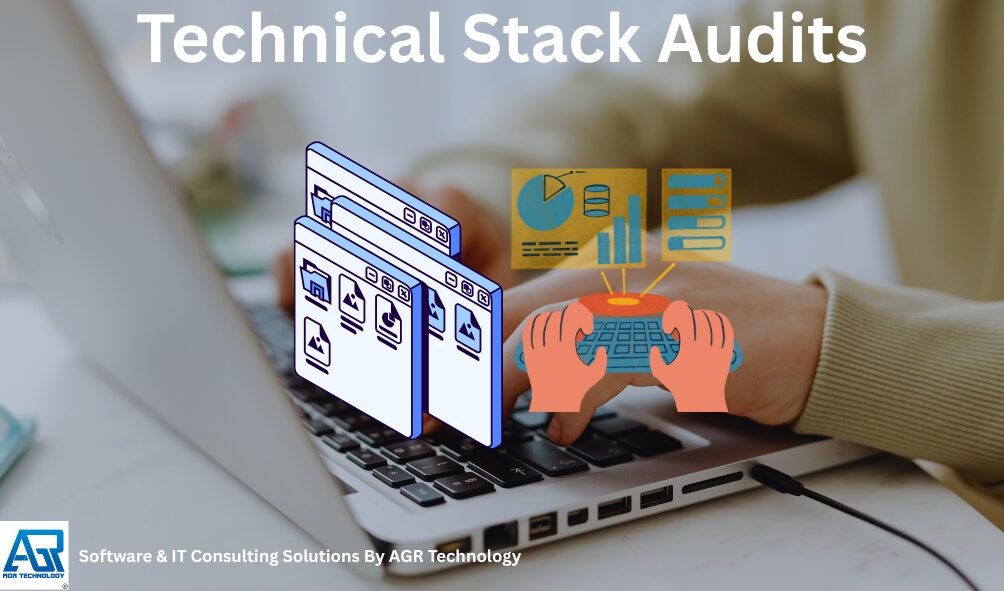
If your tools, apps, and cloud services have quietly multiplied over the last few years, you’re not alone. Most teams end up with a messy technology ecosystem: overlapping platforms, manual workarounds, surprise invoices, and nagging performance issues.
We help organisations bring order to that chaos with structured, practical technical stack audits. On this page, we’ll walk through what a technical stack audit is, what we look at, warning signs you need one, and how we turn findings into a roadmap you can actually execute.
AGR Technology works with Australian & global businesses that rely on software, data, and cloud infrastructure to operate. If you need a clear picture of what you’re running today – and a plan for what to do next – this is for you.
Reviews from our happy clients:

Justine Brummans
Alessio is both incredibly knowledgeable and personable! He gave me great advice that was catered to me and my situation. Thank you Alessio! Super helpful!

Springfield Equestrian Park
Alessio is amazing! I can not speak highly enough of how helpful and knowledgeable he is, my website he created far exceeded my expectations, he is so accomodating and I can only wish him every success with his business. I rate AGR technology 10 out of 10.
Legacy Energy
We used AGR Technology and dealt with Alessio to design and build our website as well as host our emails. Alessio was a pleasure to deal with and had plenty of ideas that we could implement into our site. He has a great attention to detail, he is also very polite in understanding our goals and what we wanted to achieve with our website.
Thanks mate,
Alex & Rob
Excellent Service
Alessio developed our website for our business and has done a wonderful job. He is very personable and knowledgeable. We have enjoyed working with him. We will be referring others to him and highly recommend him to those who need Tech advice.
MRC Performance
I have been in business for over 10 Years and recently moved to AGR Technology for all our IT needs. They are able to fix nearly anything remotely and always very helpful in recommending appropriate hardware upgrades that do the job as required but not costing more than needed.

Alessio provided an excellent service. He was very dedicated in his method of finding solutions to problems. He continued to try different avenues until he found the reason as to why a particular application was not working. He was very knowledgeable in his understanding of the internet and of applications and how they work, and he was able to apply this knowledge in understanding how to resolve the obstacles that continued to appear. He is understanding towards his client's needs and goals and he is willing to work with his client in achieving those goals. He is a very polite and well mannered person and very calm and gentle in his approach. I would highly recommend Alessio's services to anyone.

Palmira Rigoli
Great work ethics Alessio! We at Totally Gluten Free Products are very happy to have you on board as our IT and SEO master. Very reliable, trustworthy and knowledgeable in the field.
YouTube Comment
Nat's Custom Designs
Alessio from AGR Technology has recently helped me create a website for my business.
Throughout the whole process from start to finish Alessio made the process easy for me, by calling me and explaining each step of the way. I'm not very computer savvy, but with Alessio taking the time to explain in detail everything I needed to know from putting inventory in to having it shipped. He even remotely joined my computer to help guide me through everything.
He's very knowledgeable and is experienced in everything I needed and if there was anything else I needed to know that wasn't something he was familiar with, he researched it.
I would HIGHLY recommend Alessio to anyone. He has not only helped me for now but I know that if I ever needed help with anything else he would definitely go above and beyond to help. Thank you so much for everything you have done. It's been a long process but well worth it 🙂
Byron Macumber
AGR Technology is amazing. not only do they stick with you through out the process, they also accommodate to your wants and needs. They are efficient in their work and they have high integrity. Their capabilities are shown through their website design, and appropriate knowledge of utilities regarding software. over the many years of working with them they have been fantastic. I would recommend to everyone
Very helpful
Alessio was thorough, diligent and kept me updated at all time points. I was very impressed with his performance, passion and dedication. I will continue to use his services.
Wantrup & Associates
Alessio of AGR Technology is an IT guy we rely on whenever we need IT help. His professionalism impressed us right at the first time. He solved many of our IT problems in no time. Excellent communication and speedy response.
We highly recommend this company
From a happy customer
Valeria Bianco
I received AGR contact information from a previous client, who had found their service excellent. So I contacted AGR with some expectations, and I can say they exceeded them. Professional, honest, punctual, reliable, their service is faultless. We can't recommend them highly enough.
Very fast, value for money and a comprehensive service
AGR is professional, organised and very skilled at what they do. They take the initiative, looking after all the details that you would not have thought of to enhance your website presence, marketing funnel and automated appointment bookings. Big bonus - pricings are at a fraction of the cost of competitors.
Customer testimonial
Alessio from AGR Technology is wonderful at gently guiding the less technically savvy users to solve problems. Back up service excellent. Highly recommended
SEO for website
The team is very cooperative and delivers clean and very efficient work.

Raimond Volpe
Nothing but good things to say about Alessio. He has been great service and great at communicating with me by both phone and email. Very good knowledge and problem-solving ability with our web development. I would thoroughly recommend Alessio and AGR Technology to anyone wanting online marketing or web development
Website design
Big thank you to Alessio at AGR Technology for a smooth and easy website development process. Nothing was to difficult to accomplish, I can highly recommend his first class service.
Proudly supporting clients of all sizes to succeed through digital solutions




Why work with us?

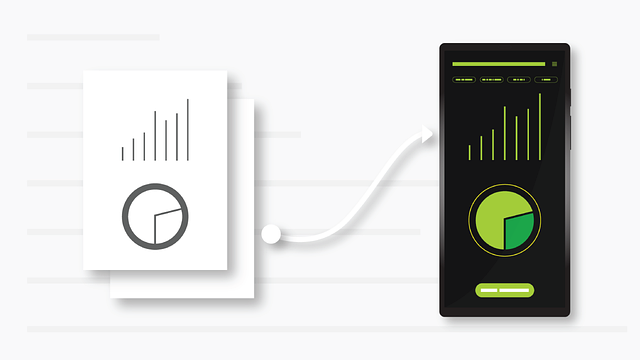




What Is A Technical Stack Audit?

A technical stack audit is a structured review of all the technology that keeps your business running – from cloud platforms and databases to SaaS tools and integrations.
We look at what you have, how it’s connected, who uses it, what it costs, and how it lines up with your goals. The aim isn’t to rip everything out. It’s to understand your current state and optimise it.
Defining The Scope: Systems, Tools, And Integrations
When we kick off an audit at AGR Technology, the first job is to define the scope:
- Core business systems (ERP, CRM, finance, HR, line-of-business apps)
- SaaS tools (collaboration, marketing, sales, service, dev tools)
- Custom applications and internal tools
- Cloud services, hosting, and on‑premise infrastructure
- Integrations, APIs, middleware, and file-based data exchanges
We agree upfront which business units, regions, and environments (prod, test, dev) are in-scope so nothing important slips through.
Data Flows, Ownership, And Governance
Next, we map how data moves through your ecosystem:
- Where data is created, processed, and stored
- Who owns each dataset and who is accountable for quality
- How data is shared between systems (APIs, ETL, exports, manual uploads)
- Existing governance policies and where they’re breaking down
This gives us a clear view of single sources of truth, duplication, and the risk of inconsistent or stale data.
Security, Compliance, And Risk Considerations
A technical stack audit also surfaces security and compliance risks baked into your current setup, including:
- Weak access controls, shared accounts, and missing MFA
- Unpatched systems or unsupported software
- Data residency and retention issues
- Industry or regulatory obligations (e.g. privacy, financial records, SOC / SOC2)
We’re not just ticking boxes: we’re looking at how your current stack exposes the business – and what needs to change to reduce that risk.
If you want an independent, vendor-neutral view of your environment, we can run a tailored technical stack audit and provide a clear, prioritised plan for improvement.
Core Components Of A Modern Tech Stack

A healthy tech stack isn’t just a pile of apps. It’s a set of layers that work together: applications, data, infrastructure, and the people and processes around them.
Application Layer: Tools, Platforms, And Services
This is everything your team touches day to day:
- CRM, ERP, accounting, HRIS, ticketing, and industry-specific systems
- Collaboration tools like Microsoft 365, Google Workspace, Slack
- Marketing, sales, and support platforms
- Developer tools, CI/CD, and code repositories
We assess functionality, overlap, user experience, and the true adoption of each tool.
Data Layer: Databases, Warehouses, And Pipelines
Here we look at:
- Operational databases and line-of-business data stores
- Data warehouses and lakes used for reporting and analytics
- ETL/ELT pipelines and integration services
- Data quality, lineage, and retention policies
Our goal is to see where data is duplicated, where it’s trusted, and how hard it is to get reliable reporting.
Infrastructure Layer: Hosting, Cloud, And Networking
Under the hood, we review:
- Cloud platforms (AWS, Azure, Google Cloud, local providers)
- On‑premise servers and virtualisation platforms
- Container platforms and orchestration (e.g. Kubernetes)
- Networking, VPNs, and connectivity between sites and clouds
We check reliability, scalability, resilience, and whether your current setup matches your performance and uptime needs.
People And Processes: How The Stack Is Actually Used
Even the best tools fail if processes are unclear. So we look closely at:
- How teams actually use the systems day to day
- Shadow IT and unsanctioned tools that have crept in
- Handoffs between teams, especially where manual work fills integration gaps
- Training, documentation, and support
This is often where we uncover the most valuable quick wins – the small changes that make life easier for your staff without major re‑platforming.
Need clarity on your current application, data, and infrastructure layers? We can run a structured review and give you a clear, visual map of your stack.
Signs Your Tech Stack Needs An Audit
You don’t need to wait for a major outage to know something’s off. Most clients come to us after noticing a mix of these issues.
Redundant Or Underused Tools
Common signs include:
- Paying for several apps that do essentially the same thing
- Teams using only a small fraction of a platform’s features
- New tools bought to “fix” problems that are really process issues
We help you rationalise tools so you’re not burning budget on software no one really needs.
Integration Gaps And Manual Workarounds
If your staff are:
- Exporting CSVs every week just to reconcile data
- Copy‑pasting between systems to keep records in sync
- Relying on spreadsheets as glue between apps
…that’s a clear signal your stack isn’t integrated properly.
Performance, Reliability, And Scalability Issues
You might see:
- Slow systems during peak periods
- Frequent timeouts, crashes, or sync failures
- Difficulty scaling up for growth or seasonal spikes
A technical stack audit highlights where infrastructure or architecture is holding you back.
Runaway Costs And Overlapping Licenses
We often find:
- Old subscriptions that were never cancelled
- Higher‑tier licenses purchased “just in case”
- Cloud resources left running long after projects ended
We benchmark spend, identify waste, and suggest options like consolidation, rightsizing, or alternative platforms.
Security Blind Spots And Compliance Risks
Warning signs include:
- Unknown admin accounts and poor identity management
- Inconsistent backup and recovery practices
- Sensitive data stored in unmanaged tools or personal devices
Our audits surface these risks and prioritise remediation actions so you can address the highest-impact issues first.
If a few of these points feel uncomfortably familiar, it’s probably time to talk to us about a structured audit of your technology stack.
Step-By-Step Process For Running A Technical Stack Audit
At AGR Technology, we follow a clear, repeatable process so you know exactly what to expect from a technical stack audit.
Step 1: Inventory Your Entire Stack
We start by building a single, accurate list of:
- All applications, platforms, and cloud services
- Environments (production, test, dev)
- Owners, user counts, and main stakeholders
- Contract terms, renewal dates, and headline costs
We combine documentation, procurement records, and stakeholder interviews to uncover everything – including shadow IT.
Step 2: Map Capabilities To Business Objectives
Next, we connect technology back to strategy:
- Which systems directly support revenue, compliance, or core operations
- Where tools were bought for projects that have since finished
- Which capabilities you’ll need in the next 12–36 months
This helps us distinguish “must keep” platforms from those that are nice-to-have or no longer aligned with your roadmap.
Step 3: Assess Usage, Adoption, And Satisfaction
We gather both numbers and stories:
- Login and usage data where available
- Surveys and interviews with end users
- Pain points, wish lists, and workarounds
Our goal is to understand which tools your teams rely on, which they avoid, and why.
Step 4: Evaluate Cost, Performance, And Risk
For each major component, we assess:
- Total cost of ownership (licenses, infrastructure, support)
- Performance, reliability, and scalability
- Security posture, compliance exposure, and vendor risk
We then weight these against business criticality so we can highlight high‑risk, high‑impact items.
Step 5: Identify Gaps, Redundancies, And Quick Wins
Finally, we pull it all together:
- Gaps where key capabilities are missing or fragile
- Redundancies where multiple tools overlap
- Misalignments between tech and business process
- Quick wins that deliver value without major change
You get a structured set of findings, not a vague list of issues. From here we move into planning and prioritisation.
If you’d like us to run this process for your organisation, we can tailor the depth and scope to match your size, complexity, and budget.
Translating Audit Findings Into An Actionable Roadmap
An audit is only useful if it leads to practical change. We focus heavily on turning insights into a roadmap your team can realistically deliver.
Prioritizing Changes With A Simple Impact–Effort Matrix
We sort recommendations into:
- Quick wins: low effort, high impact (e.g. cancelling unused licenses)
- High-value projects: higher effort, high impact (e.g. consolidating CRMs)
- Low‑priority tasks: lower impact items to tackle later or fold into other work
This makes it easy for leadership to see where to start and how to phase investment.
Sequencing Projects And Managing Dependencies
We then work through dependencies and sequencing:
- What has to happen before we can retire or replace a system
- How integration work affects multiple teams
- How to phase changes to minimise disruption
We can provide a timeline with clear milestones so you can track progress.
Building A Business Case And Getting Stakeholder Buy-In
To move from plan to action, we help you build a straightforward business case:
- Cost savings from consolidation and optimisation
- Risk reduction from addressing security and reliability issues
- Productivity gains from better processes and integrations
We can present findings and recommendations to your leadership team or board, giving you an independent, expert voice to support your internal champions.
If you need a technology roadmap that senior stakeholders can understand and support, we can turn your audit into that plan.
Best Practices For Maintaining A Healthy Tech Stack Over Time
A one‑off technical stack audit is valuable, but the biggest gains come when you treat optimisation as an ongoing practice.
Governance Models And Decision-Making Frameworks
We help you set up simple governance so technology decisions are consistent and transparent:
- Clear ownership for systems and data domains
- Approval paths for new tools and major changes
- Standards for integration, security, and documentation
The aim isn’t bureaucracy: it’s avoiding surprises and making decisions with the full picture in mind.
Cadence For Future Audits And Ongoing Optimization
Healthy organisations treat audits as a regular health check:
- Light‑touch reviews annually to catch drift in costs and usage
- Deeper audits every 2–3 years or after major business change
- Continuous monitoring of key metrics (uptime, response times, adoption)
We can stay involved as an ongoing partner or hand you a framework your internal team can run.
Documentation, Training, And Change Management
Finally, we focus on the human side:
- Up‑to‑date documentation for key workflows and integrations
- Training so teams understand how and why things are changing
- Clear communication plans for major system changes or deprecations
When people know what’s happening and why, adoption improves and resistance drops. That’s what keeps your stack stable and effective over the long term.
If you’d like support beyond the initial audit, we can help with governance setup, documentation, and training tailored to your teams.
Conclusion
A growing tech stack is a sign your organisation is moving quickly – but without structure, it also becomes a source of cost, risk, and frustration.
A technical stack audit gives you a clear view of your current environment, highlights what’s working and what isn’t, and lays out practical steps to optimise your applications, data, infrastructure, and processes.
At AGR Technology, we’ve helped organisations across Australia rationalise complex stacks, reduce unnecessary spend, and strengthen their security and resilience. We take a vendor‑neutral approach and focus on outcomes you can measure.
If you’re ready to:
- Get a single, accurate picture of your technology ecosystem
- Cut waste and simplify overlapping tools
- Improve security, reliability, and user experience
- Build a roadmap that actually matches your business goals
…we’d be happy to help.
Ready to talk about a technical stack audit?
Contact AGR Technology today to book an initial consultation. We’ll discuss your current challenges, outline the right level of audit for your organisation, and give you a clear proposal so you know exactly what you’ll get and when.
Technical Stack Audit FAQs
What is a technical stack audit and why would my business need one?
A technical stack audit is a structured review of all the technology supporting your business—applications, data, infrastructure, and integrations. It helps you identify redundant tools, security risks, performance bottlenecks, and wasted spend so you can align your tech stack with your business goals and roadmap.
What does a technical stack audit typically include?
A technical stack audit usually covers your core business systems, SaaS tools, custom apps, cloud and on‑premise infrastructure, and integrations. It also looks at data flows, ownership, governance, security, compliance, costs, and how people actually use the tools day to day, highlighting gaps, risks, and quick wins.
How can a technical stack audit help reduce software and cloud costs?
During a technical stack audit, your tools, licenses, and cloud resources are mapped against actual usage and business value. This makes it easier to spot overlapping platforms, unused subscriptions, over‑provisioned cloud services, and higher‑tier licenses you don’t need, so you can consolidate, rightsize, and negotiate better contracts.
How often should organizations run a technical stack audit?
Most organizations benefit from light‑touch reviews every 12 months to catch cost creep and usage drift, with deeper technical stack audits every 2–3 years or after major changes like mergers, rebrands, or new product lines. High‑growth or highly regulated businesses may need more frequent reviews and continuous monitoring.
What should I prepare before starting a technical stack audit?
It helps to gather existing system inventories, vendor contracts, license counts, cloud billing reports, and any architecture or integration diagrams. Having clear business objectives, upcoming initiatives, and key stakeholders identified also speeds the process and ensures the audit focuses on the systems that matter most.
What are the main benefits of a technical stack audit for security and compliance?
A technical stack audit can uncover weak access controls, shared accounts, missing MFA, unpatched or unsupported systems, and data stored in unmanaged tools. It also highlights data residency, retention, and regulatory gaps, then prioritizes remediation steps so you can reduce security risk and improve compliance in a structured way.