

Most businesses are sitting on a goldmine of HR data, and doing very little with it. Headcount, turnover, performance reviews, recruitment pipelines, it’s all there, scattered across spreadsheets and siloed systems that don’t talk to each other. That’s where HR data dashboard services come in. At AGR Technology, we help businesses centralize and visualize their workforce data so HR leaders and executives can make faster, more informed decisions. Whether you’re managing 20 employees or 2,000, the right dashboard changes everything.
Get in touch to see how we can help streamline your business operations with smart data solutions
Reviews from our happy clients:

Justine Brummans
Alessio is both incredibly knowledgeable and personable! He gave me great advice that was catered to me and my situation. Thank you Alessio! Super helpful!

Springfield Equestrian Park
Alessio is amazing! I can not speak highly enough of how helpful and knowledgeable he is, my website he created far exceeded my expectations, he is so accomodating and I can only wish him every success with his business. I rate AGR technology 10 out of 10.
Legacy Energy
We used AGR Technology and dealt with Alessio to design and build our website as well as host our emails. Alessio was a pleasure to deal with and had plenty of ideas that we could implement into our site. He has a great attention to detail, he is also very polite in understanding our goals and what we wanted to achieve with our website.
Thanks mate,
Alex & Rob
Excellent Service
Alessio developed our website for our business and has done a wonderful job. He is very personable and knowledgeable. We have enjoyed working with him. We will be referring others to him and highly recommend him to those who need Tech advice.
MRC Performance
I have been in business for over 10 Years and recently moved to AGR Technology for all our IT needs. They are able to fix nearly anything remotely and always very helpful in recommending appropriate hardware upgrades that do the job as required but not costing more than needed.

Alessio provided an excellent service. He was very dedicated in his method of finding solutions to problems. He continued to try different avenues until he found the reason as to why a particular application was not working. He was very knowledgeable in his understanding of the internet and of applications and how they work, and he was able to apply this knowledge in understanding how to resolve the obstacles that continued to appear. He is understanding towards his client's needs and goals and he is willing to work with his client in achieving those goals. He is a very polite and well mannered person and very calm and gentle in his approach. I would highly recommend Alessio's services to anyone.

Palmira Rigoli
Great work ethics Alessio! We at Totally Gluten Free Products are very happy to have you on board as our IT and SEO master. Very reliable, trustworthy and knowledgeable in the field.
YouTube Comment
Nat's Custom Designs
Alessio from AGR Technology has recently helped me create a website for my business.
Throughout the whole process from start to finish Alessio made the process easy for me, by calling me and explaining each step of the way. I'm not very computer savvy, but with Alessio taking the time to explain in detail everything I needed to know from putting inventory in to having it shipped. He even remotely joined my computer to help guide me through everything.
He's very knowledgeable and is experienced in everything I needed and if there was anything else I needed to know that wasn't something he was familiar with, he researched it.
I would HIGHLY recommend Alessio to anyone. He has not only helped me for now but I know that if I ever needed help with anything else he would definitely go above and beyond to help. Thank you so much for everything you have done. It's been a long process but well worth it 🙂
Byron Macumber
AGR Technology is amazing. not only do they stick with you through out the process, they also accommodate to your wants and needs. They are efficient in their work and they have high integrity. Their capabilities are shown through their website design, and appropriate knowledge of utilities regarding software. over the many years of working with them they have been fantastic. I would recommend to everyone
Very helpful
Alessio was thorough, diligent and kept me updated at all time points. I was very impressed with his performance, passion and dedication. I will continue to use his services.
Wantrup & Associates
Alessio of AGR Technology is an IT guy we rely on whenever we need IT help. His professionalism impressed us right at the first time. He solved many of our IT problems in no time. Excellent communication and speedy response.
We highly recommend this company
From a happy customer
Valeria Bianco
I received AGR contact information from a previous client, who had found their service excellent. So I contacted AGR with some expectations, and I can say they exceeded them. Professional, honest, punctual, reliable, their service is faultless. We can't recommend them highly enough.
Very fast, value for money and a comprehensive service
AGR is professional, organised and very skilled at what they do. They take the initiative, looking after all the details that you would not have thought of to enhance your website presence, marketing funnel and automated appointment bookings. Big bonus - pricings are at a fraction of the cost of competitors.
Customer testimonial
Alessio from AGR Technology is wonderful at gently guiding the less technically savvy users to solve problems. Back up service excellent. Highly recommended
SEO for website
The team is very cooperative and delivers clean and very efficient work.

Raimond Volpe
Nothing but good things to say about Alessio. He has been great service and great at communicating with me by both phone and email. Very good knowledge and problem-solving ability with our web development. I would thoroughly recommend Alessio and AGR Technology to anyone wanting online marketing or web development
Website design
Big thank you to Alessio at AGR Technology for a smooth and easy website development process. Nothing was to difficult to accomplish, I can highly recommend his first class service.
Proudly supporting clients of all sizes to succeed through digital solutions











Why work with us?




What Is an HR Data Dashboard and Why Does It Matter?
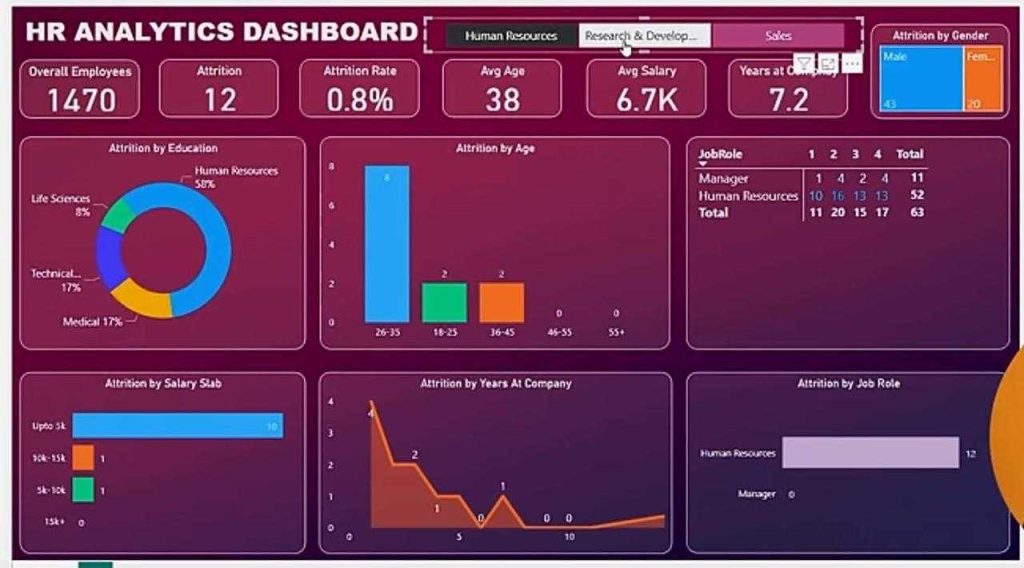
An HR data dashboard is a visual reporting tool that pulls data from your HR systems, payroll, ATS, performance management, time tracking, and presents it in one place, in real time. Instead of manually compiling monthly reports or chasing down numbers from different departments, your HR team gets a live view of what’s happening across your workforce.
Why does it matter? Because slow, fragmented reporting leads to slow, reactive decisions. If your business only finds out about a turnover spike after it’s happened, or realizes a team is under-performing three months into a quarter, you’re always playing catch-up.
With a well-built HR dashboard, you shift from reactive to proactive. Leaders can spot trends early, allocate resources more effectively, and back their people decisions with actual data rather than gut feel. For HR professionals and executives alike, that’s a significant competitive advantage.
And it’s not just about convenience, it’s about accountability. When metrics are visible and consistently tracked, teams perform better and strategic priorities stay on course.
Key Capabilities That Make HR Dashboards Powerful
Not all HR dashboards are built the same. A basic reporting tool might pull last month’s headcount. A properly engineered dashboard does a lot more than that.
Data Consolidation, Automation, and Real-Time Reporting
The real value of an HR dashboard comes from what happens under the hood. Here’s what separates a functional dashboard from a genuinely powerful one:
- Data consolidation: Connect multiple data sources, HRIS, payroll, LMS, recruitment platforms, into a single unified view. No more toggling between systems or reconciling conflicting reports.
- Automated reporting: Schedule reports to run automatically and deliver insights to the right people at the right time, without manual effort. Your HR team gets time back: your executives get consistent visibility.
- Real-time and historical data: See what’s happening now and compare it against historical trends. This is critical for tracking workforce changes over time and measuring the impact of HR initiatives.
- Role-based access: Different stakeholders need different views. Executives want the big picture: managers need team-level data: HR ops need the detail. A well-configured dashboard serves all three.
- Custom alerts and thresholds: Set triggers for key metrics, like attrition rates crossing a certain point, so your team can act before a small issue becomes a big problem.
At AGR Technology, we build HR dashboards that integrate with your existing tools and scale as your business grows. Get in touch with our team to discuss your data environment.
Essential HR Dashboard Examples for Every Business Need
One dashboard rarely fits all use cases. Depending on your organization’s priorities, you may need several focused views, each designed for a specific audience or decision-making function.
Executive, Performance, Diversity, and Recruitment Dashboards
Executive HR Dashboard
Designed for C-suite and senior leadership, this gives a high-level view of total headcount, workforce costs, overall turnover rate, and key HR risks. It answers the question: how is our people strategy tracking against business goals?
Employee Performance Dashboard
Tracks individual and team performance metrics, goal completion rates, performance review scores, productivity benchmarks, and manager ratings. Useful for identifying high performers and flagging teams that need support.
Diversity, Equity & Inclusion (DEI) Dashboard
Monitors gender balance, pay equity, representation across seniority levels, and diversity hiring trends. Increasingly important for compliance, employer branding, and building genuinely inclusive workplaces.
Recruitment and Talent Acquisition Dashboard
Tracks time-to-hire, cost-per-hire, source-of-hire effectiveness, offer acceptance rates, and pipeline conversion. Helps recruiters and talent teams optimise their process and reduce hiring bottlenecks.
Employee Engagement and Retention Dashboard
Combines survey data, absenteeism rates, eNPS scores, and voluntary turnover to give HR a clear picture of workforce sentiment and flight risk.
Each of these can be built as standalone tools or integrated into a broader HR analytics platform. AGR Technology designs dashboard solutions tailored to your structure, your data, and your reporting needs.
Critical HR KPIs and Metrics Your Dashboard Should Track
A dashboard is only as useful as the metrics it tracks. Many organizations make the mistake of pulling in every data point available, which leads to noise, not insight. Here are the KPIs that actually move the needle:
Workforce Composition
- Total headcount by department, location, and employment type
- Headcount growth over time
- Full-time vs. part-time vs. contractor ratios
Turnover and Retention
- Overall and voluntary turnover rate
- Average tenure by department or role
- Retention rate of high performers
- Early attrition (employees leaving within 12 months)
Recruitment Efficiency
- Time-to-fill and time-to-hire
- Cost-per-hire
- Offer acceptance rate
- Quality-of-hire indicators
Performance and Productivity
- Goal attainment rates
- Performance review completion rates
- Training completion and skill development progress
Workforce Costs
- Labour cost as a percentage of revenue
- Overtime hours and costs
- Absenteeism cost impact
Engagement and Wellbeing
- Employee Net Promoter Score (eNPS)
- Absenteeism rate
- Pulse survey results and trends
The right selection of KPIs depends on your industry, company size, and strategic objectives. We work with you to identify the metrics that matter most for your business, and build a dashboard that surfaces them clearly, without the clutter.
Talk to AGR Technology about building a custom HR metrics framework for your organization.
Conclusion
HR data doesn’t need to live in spreadsheets or quarterly reports that are already outdated by the time they’re read. A well-built HR data dashboard gives your team real visibility, real-time, so decisions are faster and grounded in fact.
AGR Technology designs and builds HR dashboard solutions for businesses across industries, from growing SMEs to large enterprises. If you’re ready to get more from your workforce data, reach out to our team today and let’s build something that works for your business.
Frequently Asked Questions About HR Data Dashboards
What is an HR data dashboard and how does it help businesses?
An HR data dashboard is a visual reporting tool that consolidates data from HR systems, payroll, ATS, and performance management into one real-time view. It enables HR leaders and executives to make faster, data-driven decisions by shifting from reactive to proactive workforce management.
How does an HR data dashboard improve decision-making?
HR dashboards provide real-time visibility into workforce trends, allowing leaders to spot issues early, allocate resources effectively, and make decisions backed by actual data rather than assumptions. This shifts organizations from reactive problem-solving to proactive strategy.
What key features should an HR data dashboard include?
Essential features include data consolidation from multiple sources, automated reporting, real-time and historical data tracking, role-based access for different stakeholders, and custom alerts for critical metrics like attrition rates.
What types of HR dashboards do businesses typically need?
Common HR dashboards include Executive (high-level workforce overview), Performance (team and individual metrics), Diversity & Inclusion (pay equity and representation), Recruitment (hiring metrics), and Engagement & Retention (employee sentiment and turnover).
Which HR KPIs are most important to track in a data dashboard?
Critical KPIs include headcount and turnover rates, time-to-hire and cost-per-hire, performance review completion rates, employee engagement scores (eNPS), labor costs as a percentage of revenue, and retention rates of high performers.
Can HR data dashboards integrate with existing HR systems?
Yes, modern HR data dashboards are designed to integrate with your existing tools and systems, pulling data from HRIS, payroll, LMS, and recruitment platforms into a unified view without requiring manual data entry or system replacement.
Related content:
Custom Data Dashboards for Analytics
Data Analysis & Consulting for Trades Businesses
Strategic Business Consulting & Advisory
Custom Digital Reporting Dashboards for Businesses: Turn Your Data Into Decisions
eCommerce Sales Dashboard Services

Alessio Rigoli is the founder of AGR Technology and got his start working in the IT space originally in Education and then in the private sector helping businesses in various industries. Alessio maintains the blog and is interested in a number of different topics emerging and current such as Digital marketing, Software development, Cryptocurrency/Blockchain, Cyber security, Linux and more.
Alessio Rigoli, AGR Technology