

Running an eCommerce business without clear visibility into your numbers is like driving without a dashboard, you’re moving, but you don’t really know how fast, how far, or whether the engine’s about to give out. That’s the problem we solve at AGR Technology. Our eCommerce sales dashboard services give businesses a real-time, centralized view of the data that actually drives decisions, from revenue and conversions to customer lifetime value and marketing spend. Whether you’re a growing online store or a large-scale enterprise, having the right data in front of you changes everything.
Get in touch to see how we can help streamline your business operations with smart data solutions
Reviews from our happy clients:

Justine Brummans
Alessio is both incredibly knowledgeable and personable! He gave me great advice that was catered to me and my situation. Thank you Alessio! Super helpful!

Springfield Equestrian Park
Alessio is amazing! I can not speak highly enough of how helpful and knowledgeable he is, my website he created far exceeded my expectations, he is so accomodating and I can only wish him every success with his business. I rate AGR technology 10 out of 10.
Legacy Energy
We used AGR Technology and dealt with Alessio to design and build our website as well as host our emails. Alessio was a pleasure to deal with and had plenty of ideas that we could implement into our site. He has a great attention to detail, he is also very polite in understanding our goals and what we wanted to achieve with our website.
Thanks mate,
Alex & Rob
Excellent Service
Alessio developed our website for our business and has done a wonderful job. He is very personable and knowledgeable. We have enjoyed working with him. We will be referring others to him and highly recommend him to those who need Tech advice.
MRC Performance
I have been in business for over 10 Years and recently moved to AGR Technology for all our IT needs. They are able to fix nearly anything remotely and always very helpful in recommending appropriate hardware upgrades that do the job as required but not costing more than needed.

Alessio provided an excellent service. He was very dedicated in his method of finding solutions to problems. He continued to try different avenues until he found the reason as to why a particular application was not working. He was very knowledgeable in his understanding of the internet and of applications and how they work, and he was able to apply this knowledge in understanding how to resolve the obstacles that continued to appear. He is understanding towards his client's needs and goals and he is willing to work with his client in achieving those goals. He is a very polite and well mannered person and very calm and gentle in his approach. I would highly recommend Alessio's services to anyone.

Palmira Rigoli
Great work ethics Alessio! We at Totally Gluten Free Products are very happy to have you on board as our IT and SEO master. Very reliable, trustworthy and knowledgeable in the field.
YouTube Comment

Nat's Custom Designs
Alessio from AGR Technology has recently helped me create a website for my business.
Throughout the whole process from start to finish Alessio made the process easy for me, by calling me and explaining each step of the way. I'm not very computer savvy, but with Alessio taking the time to explain in detail everything I needed to know from putting inventory in to having it shipped. He even remotely joined my computer to help guide me through everything.
He's very knowledgeable and is experienced in everything I needed and if there was anything else I needed to know that wasn't something he was familiar with, he researched it.
I would HIGHLY recommend Alessio to anyone. He has not only helped me for now but I know that if I ever needed help with anything else he would definitely go above and beyond to help. Thank you so much for everything you have done. It's been a long process but well worth it 🙂
Byron Macumber
AGR Technology is amazing. not only do they stick with you through out the process, they also accommodate to your wants and needs. They are efficient in their work and they have high integrity. Their capabilities are shown through their website design, and appropriate knowledge of utilities regarding software. over the many years of working with them they have been fantastic. I would recommend to everyone
Very helpful
Alessio was thorough, diligent and kept me updated at all time points. I was very impressed with his performance, passion and dedication. I will continue to use his services.
Wantrup & Associates
Alessio of AGR Technology is an IT guy we rely on whenever we need IT help. His professionalism impressed us right at the first time. He solved many of our IT problems in no time. Excellent communication and speedy response.
We highly recommend this company
From a happy customer
Valeria Bianco
I received AGR contact information from a previous client, who had found their service excellent. So I contacted AGR with some expectations, and I can say they exceeded them. Professional, honest, punctual, reliable, their service is faultless. We can't recommend them highly enough.
Very fast, value for money and a comprehensive service
AGR is professional, organised and very skilled at what they do. They take the initiative, looking after all the details that you would not have thought of to enhance your website presence, marketing funnel and automated appointment bookings. Big bonus - pricings are at a fraction of the cost of competitors.
Customer testimonial
Alessio from AGR Technology is wonderful at gently guiding the less technically savvy users to solve problems. Back up service excellent. Highly recommended
SEO for website
The team is very cooperative and delivers clean and very efficient work.

Raimond Volpe
Nothing but good things to say about Alessio. He has been great service and great at communicating with me by both phone and email. Very good knowledge and problem-solving ability with our web development. I would thoroughly recommend Alessio and AGR Technology to anyone wanting online marketing or web development
Website design
Big thank you to Alessio at AGR Technology for a smooth and easy website development process. Nothing was to difficult to accomplish, I can highly recommend his first class service.
Proudly supporting clients of all sizes to succeed through digital solutions













Why work with us?








What Is an eCommerce Sales Dashboard?
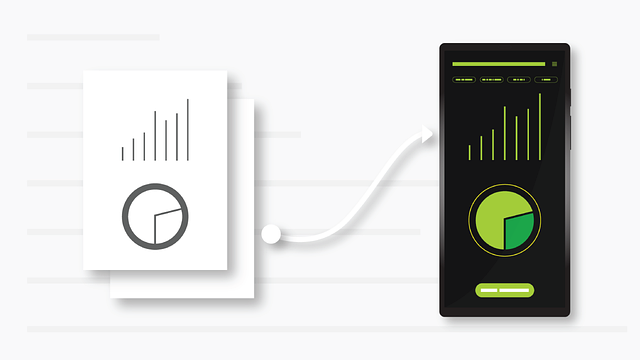
An eCommerce sales dashboard is a centralized reporting interface that pulls data from multiple sources, your store platform, ad accounts, CRM, logistics tools, and more, and presents it in a clear, visual format. Instead of logging into five different platforms to piece together a picture of your business performance, you get everything in one place.
A well-built dashboard doesn’t just display numbers. It highlights trends, flags anomalies, and gives your team the context needed to act quickly. Think of it as your business’s command center.
At AGR Technology, we design and build custom eCommerce dashboards tailored to your specific platforms, data sources, and reporting needs. Whether you’re running on Shopify, WooCommerce, Magento, or a headless commerce setup, we connect the dots so nothing gets missed.
Key Metrics and KPIs Every eCommerce Dashboard Should Track
Not every metric deserves a place on your dashboard. The goal is focus, surfacing the numbers that directly influence growth, profitability, and customer experience. Here’s what we recommend every eCommerce business should be tracking.
Sales, Revenue, and Conversion Essentials
These are the non-negotiables. Your dashboard should give you immediate visibility into:
- Total revenue and gross profit, broken down by day, week, month, and product category
- Conversion rate, the percentage of visitors who complete a purchase
- Average order value (AOV), a key lever for increasing revenue without increasing traffic
- Cart abandonment rate, often where significant revenue is being quietly lost
- Return and refund rates, essential for spotting fulfillment or product quality issues early
Tracking these in real time means you’re not waiting until end-of-month reports to discover a problem. You can act the same day.
Customer Behavior, Lifetime Value, and Marketing ROI
Beyond the immediate sale, understanding your customers over time is what separates sustainable businesses from short-term ones.
- Customer lifetime value (CLV), tells you how much a customer is worth over their entire relationship with your brand
- Customer acquisition cost (CAC), when compared against CLV, this shows whether your marketing spend is actually profitable
- Repeat purchase rate, a strong indicator of customer satisfaction and loyalty
- Traffic sources and channel attribution, so you know which channels are genuinely driving revenue, not just clicks
- Marketing ROI by channel, paid search, social, email, and organic all need to justify their spend
When these metrics live alongside your sales data in a single dashboard, the connections become obvious, and so do the opportunities.
Core Features of a High-Performance eCommerce Dashboard Service
A great dashboard isn’t just about what data it shows, it’s about how that data is delivered, organized, and made actionable. When we build eCommerce dashboard solutions at AGR Technology, we focus on the features that make a real operational difference.
Real-time data syncing
Your data should reflect what’s happening right now, not what happened six hours ago. We build dashboards with live data pipelines that update continuously, so your team always has an accurate picture.
Multi-platform integrations
Most eCommerce businesses run across several tools, Shopify or WooCommerce for the store, Google Ads and Meta for paid traffic, Klaviyo or Mailchimp for email, and maybe a third-party logistics provider on top of that. We connect all of them into a single reporting layer.
Custom reporting views
Different roles need different views. A CEO wants high-level revenue trends. A marketing manager wants channel attribution. A warehouse team wants inventory and order fulfillment data. We build role-specific views so each team sees what’s relevant to them.
Automated alerts and anomaly detection
If your conversion rate drops 30% overnight, you want to know immediately, not during next week’s review. We set up automated alerts that flag significant changes as they happen.
Historical trend analysis
Understanding where you are today means very little without context. Our dashboards include historical comparisons, year-over-year, quarter-over-quarter, and custom date ranges, so you can spot seasonal patterns and measure real growth.
Why Custom eCommerce Dashboard Solutions Outperform Generic Tools
Off-the-shelf analytics platforms like Google Analytics, native Shopify reports, or standalone BI tools like Tableau and Power BI all have their place. But they also have significant limitations when it comes to eCommerce-specific needs.
Generic tools are built for broad use cases. They require substantial configuration, often can’t connect all your data sources cleanly, and rarely surface the eCommerce-specific metrics that actually matter without significant manual setup. You end up spending time wrestling with the tool instead of using the data.
Custom eCommerce dashboards built by AGR Technology are designed around your business, not the other way around. Here’s what that means in practice:
- Your data, your structure, we model the data to reflect how your business actually operates, not a generic template
- Seamless integrations, we connect directly to your existing platforms without forcing workarounds
- Scalability, as your business grows and your data volumes increase, your dashboard scales with you
- No irrelevant noise, every metric on your dashboard has a reason to be there
Generic tools also tend to create data silos. Your ad platform reports one number, your CRM reports another, and your store reports a third. Reconciling them manually is time-consuming and error-prone. A custom solution eliminates that problem entirely.
Businesses that invest in proper data infrastructure consistently make faster, more confident decisions. That translates directly to better performance, whether that’s identifying a high-performing product line, cutting spend on underperforming channels, or spotting churn before it becomes a serious issue.
If you’re serious about scaling your eCommerce operation in 2026, the right dashboard isn’t a nice-to-have. It’s a competitive advantage. Get in touch with AGR Technology to discuss what a custom eCommerce sales dashboard could look like for your business.
Conclusion
The businesses growing fastest in eCommerce aren’t just selling more, they’re making smarter decisions, faster. That starts with having the right data, presented in a way that’s actually usable.
At AGR Technology, we build eCommerce sales dashboards that give you clarity, not complexity. If you’re ready to stop guessing and start growing, reach out to our team today, we’d be glad to help.
Frequently Asked Questions About eCommerce Sales Dashboard Services
What is an eCommerce sales dashboard and why do I need one?
An eCommerce sales dashboard is a centralized reporting interface that consolidates data from your store, ads, CRM, and logistics tools into one visual command center. It provides real-time visibility into critical metrics, enabling faster, smarter business decisions without logging into multiple platforms.
What key metrics should my eCommerce dashboard track?
Essential metrics include total revenue, conversion rate, average order value, cart abandonment rate, customer lifetime value (CLV), customer acquisition cost (CAC), repeat purchase rate, and marketing ROI by channel. These focus on profitability, customer behavior, and sustainable growth.
How do custom eCommerce dashboards differ from generic analytics tools?
Custom dashboards are built around your specific business structure and integrate all your data sources seamlessly without manual workarounds. Generic tools like Google Analytics require substantial configuration, create data silos, and lack eCommerce-specific metrics that custom solutions provide.
Can an eCommerce sales dashboard integrate with multiple platforms?
Yes, professional eCommerce dashboard services connect multiple platforms including Shopify, WooCommerce, Magento, Google Ads, Meta, email marketing tools, and logistics providers. This eliminates data silos and provides a unified reporting view across your entire business.
What features should a high-performance eCommerce dashboard have?
Top features include real-time data syncing, multi-platform integrations, role-specific custom views, automated alerts for anomalies, and historical trend analysis. These capabilities ensure your team has accurate, actionable data when decisions need to be made.
How does real-time data help eCommerce businesses make better decisions?
Real-time data allows you to detect issues immediately—like a 30% conversion rate drop—and act the same day rather than waiting for end-of-month reports. This quick response capability directly impacts revenue protection and growth acceleration across your eCommerce operation.
Related content:
Custom Data Dashboards for Analytics
Shopify SEO Services for Sustainable eCommerce Growth
Product Sourcing & Procurement Services For eCommerce Aggregator Companies
eCommerce Marketplace Development

Alessio Rigoli is the founder of AGR Technology and got his start working in the IT space originally in Education and then in the private sector helping businesses in various industries. Alessio maintains the blog and is interested in a number of different topics emerging and current such as Digital marketing, Software development, Cryptocurrency/Blockchain, Cyber security, Linux and more.
Alessio Rigoli, AGR Technology