

Most businesses are drowning in data, but starving for insight. You’ve got spreadsheets, reports, and platform exports piling up, yet making a clear, confident decision still feels harder than it should. That’s where custom data dashboards come in. Unlike generic reporting tools that give you a one-size-fits-all view, a custom analytics dashboard is built around your actual KPIs, your team, and your workflow. At AGR Technology, we build dashboards that turn raw data into real clarity, so you can stop guessing and start acting.
Get in touch to see how we can help streamline your business operations with smart data solutions
Reviews from our happy clients:

Justine Brummans
Alessio is both incredibly knowledgeable and personable! He gave me great advice that was catered to me and my situation. Thank you Alessio! Super helpful!

Springfield Equestrian Park
Alessio is amazing! I can not speak highly enough of how helpful and knowledgeable he is, my website he created far exceeded my expectations, he is so accomodating and I can only wish him every success with his business. I rate AGR technology 10 out of 10.
Legacy Energy
We used AGR Technology and dealt with Alessio to design and build our website as well as host our emails. Alessio was a pleasure to deal with and had plenty of ideas that we could implement into our site. He has a great attention to detail, he is also very polite in understanding our goals and what we wanted to achieve with our website.
Thanks mate,
Alex & Rob
Excellent Service
Alessio developed our website for our business and has done a wonderful job. He is very personable and knowledgeable. We have enjoyed working with him. We will be referring others to him and highly recommend him to those who need Tech advice.
MRC Performance
I have been in business for over 10 Years and recently moved to AGR Technology for all our IT needs. They are able to fix nearly anything remotely and always very helpful in recommending appropriate hardware upgrades that do the job as required but not costing more than needed.

Alessio provided an excellent service. He was very dedicated in his method of finding solutions to problems. He continued to try different avenues until he found the reason as to why a particular application was not working. He was very knowledgeable in his understanding of the internet and of applications and how they work, and he was able to apply this knowledge in understanding how to resolve the obstacles that continued to appear. He is understanding towards his client's needs and goals and he is willing to work with his client in achieving those goals. He is a very polite and well mannered person and very calm and gentle in his approach. I would highly recommend Alessio's services to anyone.

Palmira Rigoli
Great work ethics Alessio! We at Totally Gluten Free Products are very happy to have you on board as our IT and SEO master. Very reliable, trustworthy and knowledgeable in the field.
YouTube Comment

Nat's Custom Designs
Alessio from AGR Technology has recently helped me create a website for my business.
Throughout the whole process from start to finish Alessio made the process easy for me, by calling me and explaining each step of the way. I'm not very computer savvy, but with Alessio taking the time to explain in detail everything I needed to know from putting inventory in to having it shipped. He even remotely joined my computer to help guide me through everything.
He's very knowledgeable and is experienced in everything I needed and if there was anything else I needed to know that wasn't something he was familiar with, he researched it.
I would HIGHLY recommend Alessio to anyone. He has not only helped me for now but I know that if I ever needed help with anything else he would definitely go above and beyond to help. Thank you so much for everything you have done. It's been a long process but well worth it 🙂
Byron Macumber
AGR Technology is amazing. not only do they stick with you through out the process, they also accommodate to your wants and needs. They are efficient in their work and they have high integrity. Their capabilities are shown through their website design, and appropriate knowledge of utilities regarding software. over the many years of working with them they have been fantastic. I would recommend to everyone
Very helpful
Alessio was thorough, diligent and kept me updated at all time points. I was very impressed with his performance, passion and dedication. I will continue to use his services.
Wantrup & Associates
Alessio of AGR Technology is an IT guy we rely on whenever we need IT help. His professionalism impressed us right at the first time. He solved many of our IT problems in no time. Excellent communication and speedy response.
We highly recommend this company
From a happy customer
Valeria Bianco
I received AGR contact information from a previous client, who had found their service excellent. So I contacted AGR with some expectations, and I can say they exceeded them. Professional, honest, punctual, reliable, their service is faultless. We can't recommend them highly enough.
Very fast, value for money and a comprehensive service
AGR is professional, organised and very skilled at what they do. They take the initiative, looking after all the details that you would not have thought of to enhance your website presence, marketing funnel and automated appointment bookings. Big bonus - pricings are at a fraction of the cost of competitors.
Customer testimonial
Alessio from AGR Technology is wonderful at gently guiding the less technically savvy users to solve problems. Back up service excellent. Highly recommended
SEO for website
The team is very cooperative and delivers clean and very efficient work.

Raimond Volpe
Nothing but good things to say about Alessio. He has been great service and great at communicating with me by both phone and email. Very good knowledge and problem-solving ability with our web development. I would thoroughly recommend Alessio and AGR Technology to anyone wanting online marketing or web development
Website design
Big thank you to Alessio at AGR Technology for a smooth and easy website development process. Nothing was to difficult to accomplish, I can highly recommend his first class service.
Proudly supporting clients of all sizes to succeed through digital solutions













Why work with us?






What Is a Custom Data Analytics Dashboard?
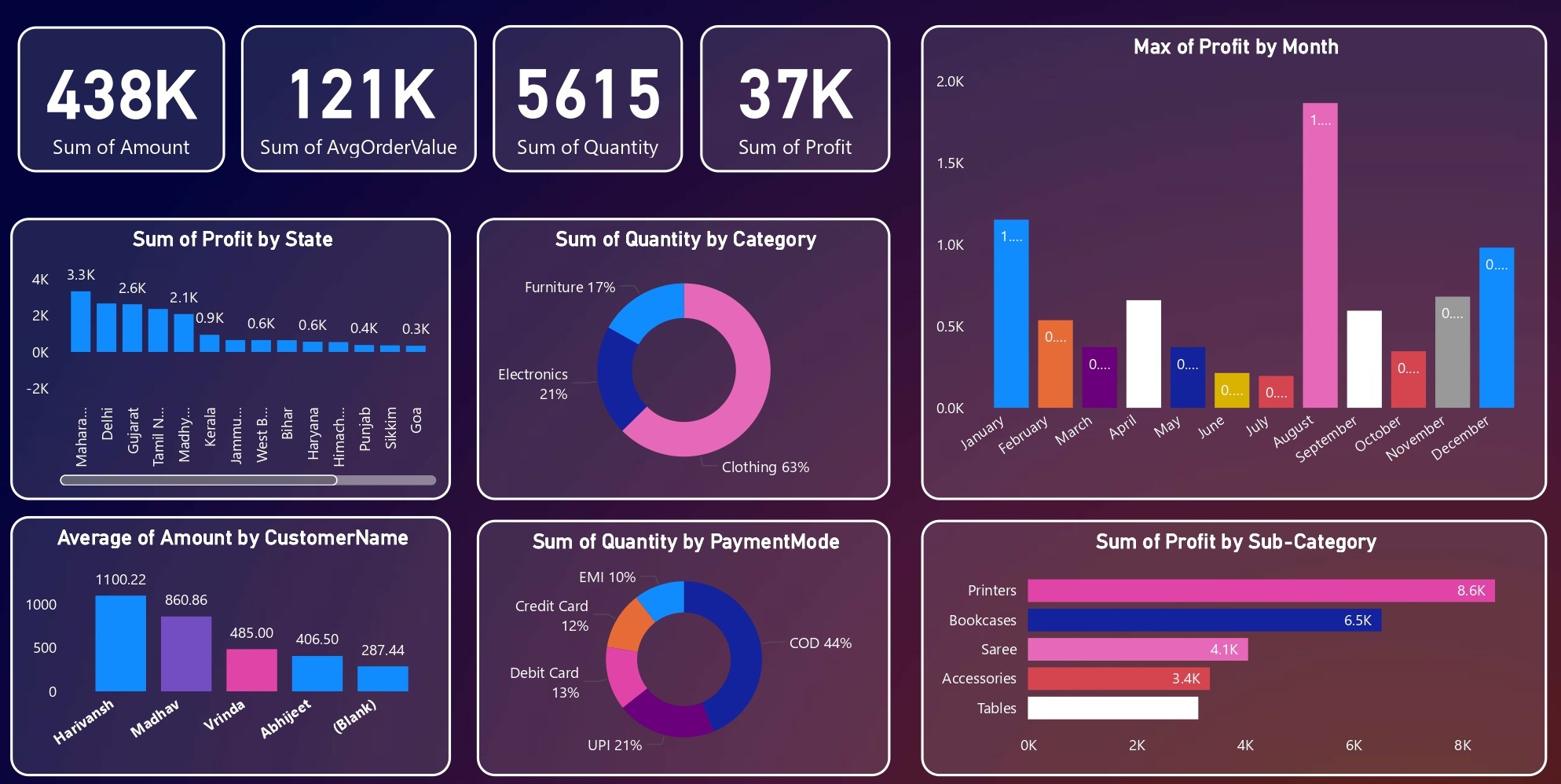
(An example dashboard showcasing eCommerce sales data, see more examples here)
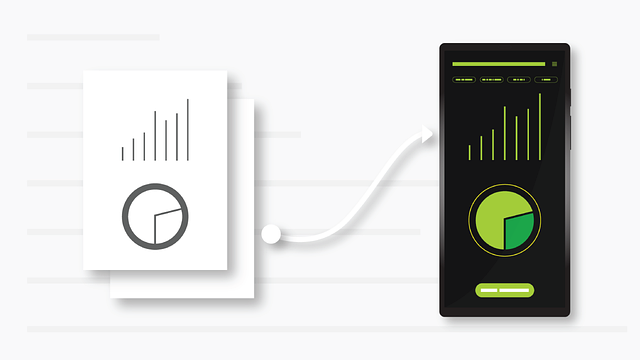
A custom data analytics dashboard is a tailored, visual reporting interface that consolidates data from multiple sources into a single, structured view. Unlike pre-built tools, think standard Google Analytics reports or out-of-the-box BI templates, a custom dashboard is designed specifically around your business metrics, data sources, and decision-making needs.
Instead of adapting your reporting to fit a tool, the tool adapts to you.
These dashboards can pull data from CRMs, e-commerce platforms, Google Analytics 4, ad networks, databases, ERPs, and more, presenting it all in real time through charts, tables, KPI cards, and trend graphs. The result is a single source of truth your whole team can trust.
For businesses managing multiple channels, departments, or revenue streams, a custom analytics solution isn’t a luxury, it’s a necessity. Whether you’re tracking marketing performance, operational output, or financial health, a purpose-built dashboard ensures you’re always looking at the right numbers, not just the available ones.
Key Benefits of Custom Dashboards Over Off-the-Shelf Solutions
Off-the-shelf dashboard tools can get you started, but they tend to hit a ceiling fast. Here’s where custom-built solutions pull ahead:
- Built around your KPIs, You define the metrics that matter. No more filtering through irrelevant data to find what you actually need.
- Seamless data integration, Connect any data source: SQL databases, APIs, third-party platforms, proprietary systems. Custom dashboards aren’t limited by native integrations.
- Scalability, As your business grows, your dashboard grows with it. Add new data streams, users, or modules without starting from scratch.
- User-specific access and views, Executives see the big picture. Operations teams see the detail. Role-based access means everyone gets what they need without information overload.
- Reduced manual reporting, Automated data pipelines eliminate the hours spent pulling, cleaning, and formatting reports every week.
- Branded and intuitive UI, A dashboard your team actually wants to use. Custom interfaces reduce friction and improve adoption across departments.
The ROI case is straightforward: fewer hours wasted on manual reporting, faster decisions, and a clearer view of what’s working, and what isn’t.
Types of Custom Data Dashboards and What They Track
Not every dashboard serves the same purpose. The type you need depends on who’s using it and what decisions it needs to support.
Operational, Strategic, and Executive Dashboards
Operational Dashboards track day-to-day activity in real time. These are designed for frontline teams and managers who need up-to-the-minute data, things like inventory levels, support ticket volumes, production rates, or order fulfilment status. Speed and accuracy are the priority here.
Strategic Dashboards sit a level above operations. They track progress toward medium and long-term goals, think monthly revenue targets, customer acquisition costs, campaign ROI, or market share trends. These are the dashboards marketing and sales leaders check weekly to steer direction.
Executive Dashboards give leadership a high-level view of overall business health. They consolidate the most critical metrics across every department, revenue, profit margin, customer retention, headcount, and growth trends, in a clean, digestible format. No noise, just signal.
Beyond these three, you’ll also find analytical dashboards (used for deeper data exploration and pattern recognition) and marketing-specific dashboards (tracking SEO performance, paid media, email, and social channels in one place). At AGR Technology, we build across all these types depending on what your business actually needs.
Essential Features to Look for in an Analytics Dashboard
A great analytics dashboard isn’t just visually polished, it’s functional, reliable, and built to actually improve decision-making. Here’s what to look for:
- Real-time or near-real-time data refresh, Stale data leads to stale decisions. Your dashboard should update automatically at meaningful intervals.
- Multi-source data integration, It should connect across your entire tech stack without requiring manual exports.
- Interactive filters and drill-downs, Users should be able to slice data by date, region, product, channel, or any relevant dimension without needing a developer.
- Mobile responsiveness, Executives and managers don’t always work from a desktop. A well-built dashboard works across devices.
- Alerting and anomaly detection, Automated alerts when a metric falls outside expected ranges are worth their weight in gold, especially for operational or financial dashboards.
- Custom visualisations, Charts, heatmaps, funnels, KPI cards, Gantt charts, the right visualisation depends on the data type and audience.
- Secure access controls, Especially important for enterprise environments. Role-based permissions ensure sensitive data stays with the right people.
If a dashboard tool can’t deliver most of these, it’s going to create more work than it saves.
How the Custom Dashboard Development Process Works
Building a custom data dashboard isn’t just a design job, it’s a technical and strategic process. Here’s how we approach it at AGR Technology:
1. Discovery and requirements gathering
We start by understanding your business goals, the decisions you need to support, and the data sources currently in play. This shapes everything that follows.
2. Data audit and integration planning
We map your existing data landscape, databases, APIs, SaaS tools, spreadsheets, and plan how to consolidate it into a unified data pipeline. This step catches the messy reality most templates ignore.
3. Architecture and tech stack selection
Depending on your scale and technical environment, we select the right tools, whether that’s a custom-built solution using Python, Node.js, or a BI layer like Looker Studio, Power BI, or Tableau with customised connectors.
4. Dashboard design and UX
We design the interface around your users. Executives need simplicity. Analysts need depth. We build for both without sacrificing usability.
5. Build, test, and iterate
We build in sprints, testing data accuracy, performance, and usability at each stage. You see progress early and can provide feedback before full deployment.
6. Training and handover
We don’t just hand you a finished product and walk away. We train your team, document the system, and remain available for ongoing support and enhancements.
The outcome is a dashboard your team owns, understands, and actually uses, not something that gets ignored after week two.
Conclusion
A custom data dashboard isn’t just a reporting tool, it’s a competitive advantage. When your team has instant access to accurate, relevant data, decisions get faster and smarter.
At AGR Technology, we specialize in building custom analytics dashboards that fit your business, not the other way around. Ready to stop guessing and start knowing? Get in touch with our team to discuss your requirements.
Related content:
The Software You Bought Vs The Software You Wish You Had

Alessio Rigoli is the founder of AGR Technology and got his start working in the IT space originally in Education and then in the private sector helping businesses in various industries. Alessio maintains the blog and is interested in a number of different topics emerging and current such as Digital marketing, Software development, Cryptocurrency/Blockchain, Cyber security, Linux and more.
Alessio Rigoli, AGR Technology