![logo-new-23[1]](https://cdn-ihdfn.nitrocdn.com/eZVJvoSTyVixkEUySRKiaseNtUlmgCyu/assets/images/optimized/rev-b7ced37/agrtech.com.au/wp-content/uploads/elementor/thumbs/logo-new-231-qad2sqbr9f0wlvza81xod18hkirbk9apc0elfhpco4.png "logo-new-23[1]")

Most B2B marketing strategies cast a wide net. You create content, run ads, generate leads, and hope the right ones make it through your funnel. But what if you flipped that model entirely, and started with the accounts you actually want to win?
That’s the core idea behind account-based marketing (ABM). Instead of marketing to the masses and filtering down, ABM focuses your resources on a defined set of high-value target accounts. You treat each account as a market of one, with tailored messaging, personalized outreach, and coordinated sales and marketing efforts designed to land the clients that matter most.
For businesses navigating complex B2B sales cycles in April 2026, ABM isn’t just a nice-to-have. It’s become a competitive necessity. In this guide, we break down how ABM works, why it delivers stronger returns than traditional lead generation, and how to build a strategy that actually moves the needle for your business.
Book a free consultation call with AGR Technology to see how we can help scale your brand with proven online marketing strategies
What our clients are saying

Justine Brummans
Alessio is both incredibly knowledgeable and personable! He gave me great advice that was catered to me and my situation. Thank you Alessio! Super helpful!

Springfield Equestrian Park
Alessio is amazing! I can not speak highly enough of how helpful and knowledgeable he is, my website he created far exceeded my expectations, he is so accomodating and I can only wish him every success with his business. I rate AGR technology 10 out of 10.
Legacy Energy
We used AGR Technology and dealt with Alessio to design and build our website as well as host our emails. Alessio was a pleasure to deal with and had plenty of ideas that we could implement into our site. He has a great attention to detail, he is also very polite in understanding our goals and what we wanted to achieve with our website.
Thanks mate,
Alex & Rob
Excellent Service
Alessio developed our website for our business and has done a wonderful job. He is very personable and knowledgeable. We have enjoyed working with him. We will be referring others to him and highly recommend him to those who need Tech advice.
MRC Performance
I have been in business for over 10 Years and recently moved to AGR Technology for all our IT needs. They are able to fix nearly anything remotely and always very helpful in recommending appropriate hardware upgrades that do the job as required but not costing more than needed.

Alessio provided an excellent service. He was very dedicated in his method of finding solutions to problems. He continued to try different avenues until he found the reason as to why a particular application was not working. He was very knowledgeable in his understanding of the internet and of applications and how they work, and he was able to apply this knowledge in understanding how to resolve the obstacles that continued to appear. He is understanding towards his client's needs and goals and he is willing to work with his client in achieving those goals. He is a very polite and well mannered person and very calm and gentle in his approach. I would highly recommend Alessio's services to anyone.

Palmira Rigoli
Great work ethics Alessio! We at Totally Gluten Free Products are very happy to have you on board as our IT and SEO master. Very reliable, trustworthy and knowledgeable in the field.
YouTube Comment

Nat's Custom Designs
Alessio from AGR Technology has recently helped me create a website for my business.
Throughout the whole process from start to finish Alessio made the process easy for me, by calling me and explaining each step of the way. I'm not very computer savvy, but with Alessio taking the time to explain in detail everything I needed to know from putting inventory in to having it shipped. He even remotely joined my computer to help guide me through everything.
He's very knowledgeable and is experienced in everything I needed and if there was anything else I needed to know that wasn't something he was familiar with, he researched it.
I would HIGHLY recommend Alessio to anyone. He has not only helped me for now but I know that if I ever needed help with anything else he would definitely go above and beyond to help. Thank you so much for everything you have done. It's been a long process but well worth it 🙂
Byron Macumber
AGR Technology is amazing. not only do they stick with you through out the process, they also accommodate to your wants and needs. They are efficient in their work and they have high integrity. Their capabilities are shown through their website design, and appropriate knowledge of utilities regarding software. over the many years of working with them they have been fantastic. I would recommend to everyone
Very helpful
Alessio was thorough, diligent and kept me updated at all time points. I was very impressed with his performance, passion and dedication. I will continue to use his services.
Wantrup & Associates
Alessio of AGR Technology is an IT guy we rely on whenever we need IT help. His professionalism impressed us right at the first time. He solved many of our IT problems in no time. Excellent communication and speedy response.
We highly recommend this company
From a happy customer
Valeria Bianco
I received AGR contact information from a previous client, who had found their service excellent. So I contacted AGR with some expectations, and I can say they exceeded them. Professional, honest, punctual, reliable, their service is faultless. We can't recommend them highly enough.
Very fast, value for money and a comprehensive service
AGR is professional, organised and very skilled at what they do. They take the initiative, looking after all the details that you would not have thought of to enhance your website presence, marketing funnel and automated appointment bookings. Big bonus - pricings are at a fraction of the cost of competitors.
Customer testimonial
Alessio from AGR Technology is wonderful at gently guiding the less technically savvy users to solve problems. Back up service excellent. Highly recommended
SEO for website
The team is very cooperative and delivers clean and very efficient work.

Raimond Volpe
Nothing but good things to say about Alessio. He has been great service and great at communicating with me by both phone and email. Very good knowledge and problem-solving ability with our web development. I would thoroughly recommend Alessio and AGR Technology to anyone wanting online marketing or web development
Website design
Big thank you to Alessio at AGR Technology for a smooth and easy website development process. Nothing was to difficult to accomplish, I can highly recommend his first class service.
Supporting businesses of all sizes to get ahead with digital solutions










Why work with us?






How Account-Based Marketing Works

At its simplest, account-based marketing flips the traditional funnel upside down. Rather than attracting a broad audience and qualifying leads after the fact, ABM starts by identifying the specific companies you want as clients, then builds campaigns around engaging those accounts directly.
Here’s the typical flow:
- Identify target accounts, Select companies that match your ideal customer profile based on demographic data, revenue potential, and strategic fit.
- Research key stakeholders, Map the buying committee within each account. B2B purchases rarely involve a single decision-maker.
- Create personalized campaigns, Develop messaging, content, and offers tailored to each account’s specific pain points and goals.
- Engage across multiple channels, Reach stakeholders through email, LinkedIn, paid media, direct mail, events, and personalized landing pages.
- Measure account-level engagement, Track progress by account, not just individual leads.
The result? Your sales and marketing teams spend time on accounts with the highest likelihood of converting, and closing at higher contract values.
ABM vs. Traditional Lead Generation
Traditional lead generation is volume-driven. You publish blog posts, run PPC campaigns, and gate content behind forms. Leads come in, get scored, and (hopefully) get passed to sales. The problem? A large percentage of those leads will never be a good fit.
ABM takes the opposite approach:
| Traditional Lead Gen | Account-Based Marketing | |
|---|---|---|
| Focus | High volume of leads | High-value target accounts |
| Targeting | Broad audience segments | Specific companies and stakeholders |
| Messaging | Generic, one-size-fits-all | Personalized to each account |
| Success metric | Lead quantity (MQLs) | Account engagement and pipeline value |
| Sales alignment | Often misaligned | Tightly coordinated |
Neither approach is inherently wrong, and many businesses use both. But for companies selling high-value products or services with long sales cycles, ABM consistently outperforms traditional methods in terms of deal size and conversion rates.
Key Benefits of an ABM Strategy
Why are more B2B organizations investing in ABM? Because it directly addresses the inefficiencies that plague traditional demand generation.
Sales and Marketing Alignment
One of the biggest friction points in B2B organizations is the disconnect between sales and marketing. Marketing generates leads that sales doesn’t want. Sales blames marketing for poor lead quality. Sound familiar?
ABM forces alignment by design. Both teams agree on target accounts upfront, collaborate on messaging, and share accountability for pipeline and revenue outcomes. When sales and marketing are working the same account list with coordinated outreach, the results speak for themselves.
Higher ROI and Shorter Sales Cycles
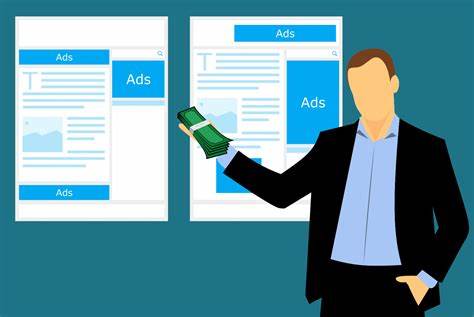
ABM consistently delivers stronger returns than broad-based marketing. According to ITSMA research, 87% of marketers who measure ROI say ABM outperforms every other marketing investment. That’s not a marginal improvement, it’s a clear signal.
Why does it work so well?
- Less waste, You’re not spending budget on audiences that will never buy.
- Faster engagement, Personalised outreach resonates more quickly with decision-makers.
- Larger deal sizes, Targeting enterprise accounts naturally leads to higher-value contracts.
- Shorter cycles, Engaging multiple stakeholders simultaneously reduces the back-and-forth that drags out B2B sales.
For businesses looking to make every marketing dollar count, ABM provides a level of efficiency that broad campaigns simply can’t match.
Types of Account-Based Marketing: One-to-One, One-to-Few, and One-to-Many
Not all ABM looks the same. The right approach depends on your resources, deal size, and the number of accounts you’re targeting.
- One-to-One (Strategic ABM), The most resource-intensive tier. You build fully bespoke campaigns for individual accounts, often involving custom content, executive engagement, and dedicated account teams. Best suited for enterprise deals with six- or seven-figure contract values.
- One-to-Few (ABM Lite), You group 5–15 accounts that share similar characteristics (industry, challenges, company size) and create semi-personalised campaigns for each cluster. This balances personalisation with scalability.
- One-to-Many (Programmatic ABM), Technology-driven ABM that targets hundreds or even thousands of accounts using intent data, personalised ads, and dynamic content. Less personalised per account, but highly efficient at scale.
Most mature ABM programmes use a blended approach, investing heavily in a small number of strategic accounts while running programmatic campaigns across a broader target list. The key is matching your level of investment to the potential value of each account.
How to Build an Effective ABM Strategy Step by Step
Getting ABM right requires more than just buying a platform and selecting a few logos. Here’s a practical framework.
Define Your Ideal Customer Profile and Target Accounts
Start with your best existing customers. What do they have in common? Look at:
- Industry and vertical
- Company size and revenue
- Technology stack
- Growth stage and funding
- Geographic location
Use this data to build your ideal customer profile (ICP), then identify target accounts that match it. Layer in intent data, signals that indicate a company is actively researching solutions like yours, to prioritise accounts that are most likely in-market right now.
Develop Personalized Content and Multi-Channel Outreach
Generic content won’t cut it in ABM. Each account (or account cluster) needs messaging that speaks to their specific situation.
This might include:
- Personalized landing pages addressing the account’s industry challenges
- Custom case studies featuring similar companies
- Targeted LinkedIn campaigns aimed at key stakeholders
- Direct outreach from sales with tailored value propositions
- Personalized video messages or executive briefings
The multi-channel element is critical. Decision-makers in B2B don’t live on a single platform. Your outreach needs to meet them across email, social, paid media, and even offline channels.
Measure, Optimize, and Iterate
ABM metrics look different from traditional marketing KPIs. Instead of tracking MQLs, focus on:
- Account engagement scores, Are target accounts interacting with your content?
- Pipeline velocity, How quickly are accounts moving through your sales process?
- Deal size and win rate, Are ABM-sourced deals larger and more likely to close?
- Account penetration, How many stakeholders within each account are you reaching?
Review performance regularly and adjust. ABM is iterative, the more you learn about what resonates with your target accounts, the sharper your campaigns become.
Essential ABM Tactics and Channels That Drive Results
The tactics you choose will depend on your ABM tier and resources. But certain channels consistently perform well across ABM programs:
- LinkedIn advertising and outreach, Still the most effective B2B platform for reaching decision-makers by company, role, and seniority.
- Personalized email sequences, Not mass emails. Thoughtful, researched messages that reference the account’s specific context.
- Retargeting and display ads, Serve tailored ads to stakeholders at your target accounts as they browse the web.
- Content syndication, Distribute gated assets (whitepapers, reports) to contacts at target accounts through third-party platforms.
- Direct mail, Yes, physical mail. In an era of inbox overload, a well-crafted direct mail piece can stand out.
- Webinars and events, Invite target accounts to exclusive sessions addressing their industry challenges.
- SEO and personalized landing pages, Create dedicated pages optimized for the search terms your target accounts are using.
At AGR Technology, we help businesses build and execute multi-channel ABM campaigns, from SEO strategy and content creation to marketing automation and custom technology solutions that support account-level tracking and personalization. If you’re looking to move beyond generic lead generation, we can help you build an ABM engine that targets the right accounts with the right message.
Overcoming Common ABM Challenges
ABM delivers strong results, but it’s not without hurdles. Here are the most common challenges we see, and how to address them.
- Lack of sales and marketing alignment, ABM fails without it. Establish shared KPIs, regular check-ins, and joint account planning sessions from day one.
- Data quality issues, Your strategy is only as good as your account data. Invest in data enrichment tools and maintain clean, up-to-date CRM records.
- Content production bottlenecks, Personalized content at scale is demanding. Prioritize templates and modular content frameworks that can be customized efficiently.
- Difficulty measuring ROI, ABM attribution can be complex, especially with long sales cycles. Use account-level dashboards and multi-touch attribution models rather than last-click reporting.
- Scaling beyond pilot programs, Many teams nail one-to-one ABM but struggle to scale. Start with a clear tiering model and invest in technology (like marketing automation and intent data platforms) to support programmatic ABM alongside strategic efforts.
The reality is that ABM requires commitment. It’s not a quick fix. But for businesses selling complex solutions to enterprise buyers, the payoff is well worth the investment.
Conclusion
Account-based marketing isn’t a trend, it’s a fundamental shift in how B2B companies approach growth. By focusing your resources on the accounts that matter most, aligning your sales and marketing teams, and delivering personalized experiences at every touchpoint, ABM helps you win higher-value deals more efficiently.
Whether you’re just exploring ABM or ready to scale an existing programs, the principles remain the same: know your ideal customers, engage them with relevant messaging, and measure what matters.
At AGR Technology, we partner with businesses to carry out ABM strategies backed by data, automation, and custom technology. From building your target account list to executing multi-channel campaigns and tracking account-level results, we provide the strategic and technical support you need.
Ready to start targeting the accounts that will actually grow your business? Get in touch with our team and let’s build an ABM strategy that works.
Frequently Asked Questions About Account-Based Marketing (ABM)
What is account-based marketing (ABM) and how does it work?
Account-based marketing (ABM) is a B2B strategy that targets specific high-value accounts instead of broad audiences. It flips traditional lead generation by identifying ideal customer profiles, researching stakeholders, creating personalized campaigns, and engaging accounts across multiple channels with coordinated messaging and sales efforts.
How does ABM differ from traditional lead generation?
Traditional lead generation focuses on high-volume lead acquisition with generic messaging, while ABM targets specific companies with personalized campaigns. ABM measures success by account engagement and pipeline value rather than lead quantity, resulting in larger deal sizes and higher conversion rates for complex B2B sales.
What are the main benefits of implementing an ABM strategy?
ABM delivers stronger ROI, higher-value deals, and shorter sales cycles. It aligns sales and marketing teams, reduces marketing waste by focusing on accounts likely to convert, enables personalized stakeholder engagement, and according to ITSMA research, 87% of marketers report ABM outperforms other marketing investments.
What are the three types of account-based marketing approaches?
One-to-One (Strategic ABM) creates fully bespoke campaigns for individual high-value accounts; One-to-Few (ABM Lite) groups 5-15 similar accounts with semi-personalized campaigns; One-to-Many (Programmatic ABM) uses technology to target hundreds of accounts with dynamic content and intent data at scale.
What metrics should I track to measure ABM success?
Focus on account-level metrics including account engagement scores, pipeline velocity, deal size and win rates, and account penetration (number of stakeholders reached). Avoid traditional MQL tracking and use account-level dashboards with multi-touch attribution models instead of last-click reporting.
What channels and tactics work best for executing ABM campaigns?
Effective ABM channels include LinkedIn advertising and outreach, personalized email sequences, retargeting display ads, content syndication, direct mail, webinars and events, and SEO with personalized landing pages. Success depends on coordinated multi-channel outreach to reach decision-makers across platforms.
Related content:
Digital Marketing Services for Roofers: Local SEO, PPC, Content & Reviews That Drive Leads
Digital Marketing Agency Melbourne
Digital Marketing Services Canberra
Digital Marketing Services for B2B SaaS Companies
Digital Marketing Services For Business
Wealth Tech Digital Transformation Solutions

Alessio Rigoli is the founder of AGR Technology and got his start working in the IT space originally in Education and then in the private sector helping businesses in various industries. Alessio maintains the blog and is interested in a number of different topics emerging and current such as Digital marketing, Software development, Cryptocurrency/Blockchain, Cyber security, Linux and more.
Alessio Rigoli, AGR Technology