![logo-new-23[1]](https://agrtech.com.au/wp-content/uploads/elementor/thumbs/logo-new-231-qad2sqbr9f0wlvza81xod18hkirbk9apc0elfhpco4.png "logo-new-23[1]")
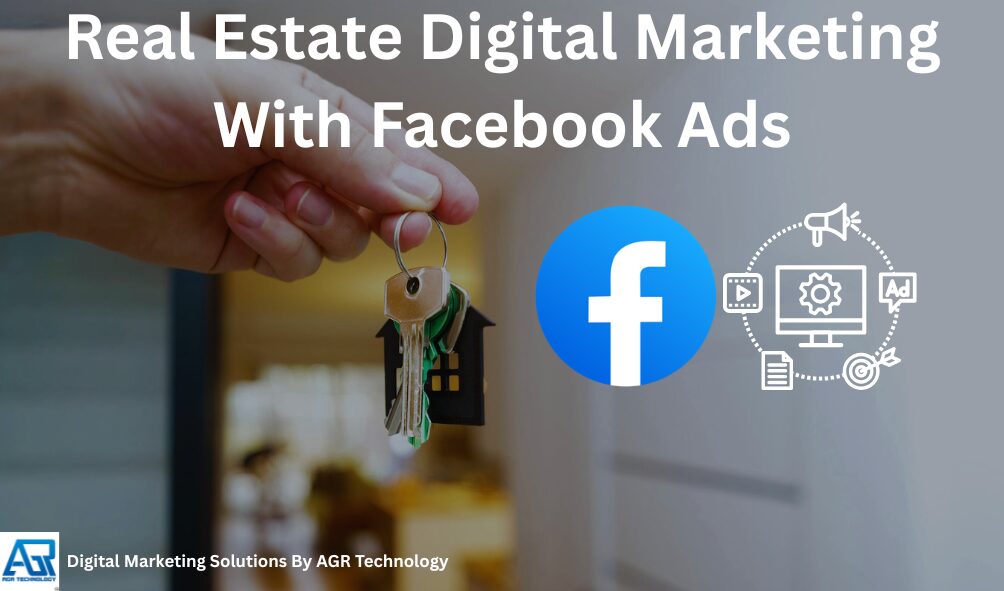
If you’ve ever run Facebook ads for real estate and ended up with a pile of “leads” who stop replying the second you call, you already know the frustrating part: Facebook can generate enquiries fast, but it doesn’t automatically generate qualified appointments.
On the other hand, when the offer is right, the funnel is tight, and follow-up is immediate, real estate digital marketing with Facebook ads can become a reliable pipeline for buyer consultations, appraisals, and listing opportunities, without relying on referrals alone.
In this practical playbook, we’ll walk through the exact building blocks we use (and carry out for clients at AGR Technology) to turn Facebook into a lead engine you can actually trust: targeting, creative, tracking, campaign setup, automation, and the KPIs that tell you what’s working. If you want help building this into a repeatable system, you can also talk to us via AGR Technology and we’ll map out a plan based on your market and team capacity.
Book a free consultation call with AGR Technology to see how we can help scale your brand with proven online marketing strategies
Reviews from some of our happy customers:

Justine Brummans
Alessio is both incredibly knowledgeable and personable! He gave me great advice that was catered to me and my situation. Thank you Alessio! Super helpful!

Springfield Equestrian Park
Alessio is amazing! I can not speak highly enough of how helpful and knowledgeable he is, my website he created far exceeded my expectations, he is so accomodating and I can only wish him every success with his business. I rate AGR technology 10 out of 10.
Legacy Energy
We used AGR Technology and dealt with Alessio to design and build our website as well as host our emails. Alessio was a pleasure to deal with and had plenty of ideas that we could implement into our site. He has a great attention to detail, he is also very polite in understanding our goals and what we wanted to achieve with our website.
Thanks mate,
Alex & Rob
Excellent Service
Alessio developed our website for our business and has done a wonderful job. He is very personable and knowledgeable. We have enjoyed working with him. We will be referring others to him and highly recommend him to those who need Tech advice.
MRC Performance
I have been in business for over 10 Years and recently moved to AGR Technology for all our IT needs. They are able to fix nearly anything remotely and always very helpful in recommending appropriate hardware upgrades that do the job as required but not costing more than needed.

Alessio provided an excellent service. He was very dedicated in his method of finding solutions to problems. He continued to try different avenues until he found the reason as to why a particular application was not working. He was very knowledgeable in his understanding of the internet and of applications and how they work, and he was able to apply this knowledge in understanding how to resolve the obstacles that continued to appear. He is understanding towards his client's needs and goals and he is willing to work with his client in achieving those goals. He is a very polite and well mannered person and very calm and gentle in his approach. I would highly recommend Alessio's services to anyone.

Palmira Rigoli
Great work ethics Alessio! We at Totally Gluten Free Products are very happy to have you on board as our IT and SEO master. Very reliable, trustworthy and knowledgeable in the field.
YouTube Comment

Nat's Custom Designs
Alessio from AGR Technology has recently helped me create a website for my business.
Throughout the whole process from start to finish Alessio made the process easy for me, by calling me and explaining each step of the way. I'm not very computer savvy, but with Alessio taking the time to explain in detail everything I needed to know from putting inventory in to having it shipped. He even remotely joined my computer to help guide me through everything.
He's very knowledgeable and is experienced in everything I needed and if there was anything else I needed to know that wasn't something he was familiar with, he researched it.
I would HIGHLY recommend Alessio to anyone. He has not only helped me for now but I know that if I ever needed help with anything else he would definitely go above and beyond to help. Thank you so much for everything you have done. It's been a long process but well worth it 🙂
Byron Macumber
AGR Technology is amazing. not only do they stick with you through out the process, they also accommodate to your wants and needs. They are efficient in their work and they have high integrity. Their capabilities are shown through their website design, and appropriate knowledge of utilities regarding software. over the many years of working with them they have been fantastic. I would recommend to everyone
Very helpful
Alessio was thorough, diligent and kept me updated at all time points. I was very impressed with his performance, passion and dedication. I will continue to use his services.
Wantrup & Associates
Alessio of AGR Technology is an IT guy we rely on whenever we need IT help. His professionalism impressed us right at the first time. He solved many of our IT problems in no time. Excellent communication and speedy response.
We highly recommend this company
From a happy customer
Valeria Bianco
I received AGR contact information from a previous client, who had found their service excellent. So I contacted AGR with some expectations, and I can say they exceeded them. Professional, honest, punctual, reliable, their service is faultless. We can't recommend them highly enough.
Very fast, value for money and a comprehensive service
AGR is professional, organised and very skilled at what they do. They take the initiative, looking after all the details that you would not have thought of to enhance your website presence, marketing funnel and automated appointment bookings. Big bonus - pricings are at a fraction of the cost of competitors.
Customer testimonial
Alessio from AGR Technology is wonderful at gently guiding the less technically savvy users to solve problems. Back up service excellent. Highly recommended
SEO for website
The team is very cooperative and delivers clean and very efficient work.

Raimond Volpe
Nothing but good things to say about Alessio. He has been great service and great at communicating with me by both phone and email. Very good knowledge and problem-solving ability with our web development. I would thoroughly recommend Alessio and AGR Technology to anyone wanting online marketing or web development
Website design
Big thank you to Alessio at AGR Technology for a smooth and easy website development process. Nothing was to difficult to accomplish, I can highly recommend his first class service.
Supporting businesses of all sizes to get ahead with digital solutions











Why work with us?




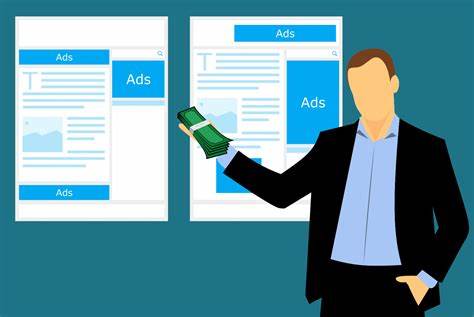


Why Facebook Ads Work For Real Estate (And When They Don’t)
Facebook works in real estate because it can do two things at once:
- Create demand (reach people who aren’t actively searching yet but will be moving in 3–12 months)
- Capture demand (convert people who are already curious about prices, listings, or selling timelines)
But it’s not magic. Facebook is an interruption platform, people are scrolling, not “shopping for an agent.” The ads that win are the ones that match intent without feeling like an ad.
How Facebook’s Targeting Matches Real Estate Buyer And Seller Intent
Even with privacy changes, Facebook is still strong for local real estate because we can combine:
- Location targeting (suburbs, postcodes, radius around a neighbourhood)
- Life-stage signals (age bands, household makeup proxies, relationship status, used carefully and compliantly)
- Engagement behaviour (video views, page engagement, website traffic)
- First-party data (your CRM lists, past leads, open home registrations, uploaded as Custom Audiences)
What that means in practice: we can run one campaign aimed at seller curiosity (e.g., “What’s my home worth right now?”) and another aimed at buyer momentum (e.g., “Get the weekly list of off-market and pre-market homes”). Different intent, different message, different follow-up.
Common Pitfalls: Low-Intent Leads, Compliance, And Follow-Up Gaps
Most “Facebook doesn’t work” stories come down to a few predictable issues:
- Low-intent offers (too broad: “Looking to buy or sell?”)
- No lead filtering (instant forms with zero friction = lots of junk)
- Slow response times (speed-to-lead matters: if your team calls tomorrow, you’re often calling second or third)
- Weak tracking (no clear attribution from ad → appointment → signed listing)
- Compliance errors (housing-related restrictions, special ad categories, and local advertising rules)
If you’re seeing cheap CPL but no listings, we usually don’t “turn ads off.” We fix the system: offer, funnel, qualification, and follow-up, then scale.
Set The Foundation: Offers, Funnels, And Tracking
Before we touch campaign settings, we set the foundation. Real estate Facebook ads fail most often upstream: the offer is generic, the funnel is leaky, or tracking is missing.
Choose The Right Offer: Listing Consult, Home Valuation, Buyer Guide, Or Inspection List
Your offer should answer a real question someone has today. A few that consistently perform:
- Home valuation / price update: “What would your home sell for in the current market?”
- Listing consult: “Get a 15-minute pricing and strategy call, no pressure.”
- Buyer guide: “The suburb-by-suburb buyer checklist + current median price snapshot.”
- Inspection list / weekly alerts: “New listings + opens in your area every Thursday.”
We match the offer to your goal:
- Want listings? Lead with valuation + selling strategy.
- Want buyers? Lead with alerts + shortlisting help.
- Want both? Split campaigns by intent (don’t blend messages into one ad set).
Build A Simple Funnel: Instant Forms Vs Landing Pages
Both can work, what matters is choosing the right tool for the right stage.
Instant Forms (Lead Ads)
- Best for: speed, volume, mobile-first users
- Risk: lower intent unless we add friction
- Fix: add qualifying questions and “Higher Intent” form type
Landing Pages
- Best for: higher intent, stronger branding, better pre-sell
- Requirements: fast load speed, clear copy, minimal fields, strong social proof
In many markets, we’ll run both:
- Lead form for volume (with qualification)
- Landing page funnel for quality (and retargeting)
Install Tracking: Pixel, Conversions API, Events, And Offline Conversions
If we can’t measure it, we can’t scale it.
A solid tracking setup typically includes:
- Meta Pixel on all key pages
- Conversions API (CAPI) to improve data quality (especially with iOS privacy limits)
- Defined events (ViewContent, Lead, Schedule, Contact, etc.)
- Offline conversions to connect closed deals back to campaigns (when possible)
For real estate, offline conversions are where things get serious, because the real win isn’t the lead: it’s the appointment, the signed authority, and the commission.
If you’re not sure whether your tracking is clean, we can audit and carry out Pixel + CAPI as part of our marketing systems work at AGR Technology.
Audience Strategy: Who To Target And How To Segment
Audience strategy is where we stop wasting spend. The goal isn’t “reach everyone in 20km.” The goal is to reach the right locals with the right message, then keep improving quality over time.
Local Prospecting: Geo Radius, Suburbs, And Demographic Filters
For prospecting, we typically build ad sets around:
- Suburb clusters (grouped by price point and housing type)
- Radius targeting (useful around new estates, high-turnover pockets)
- Separate campaigns for sellers vs buyers
A practical approach we use:
- One campaign per region (or per office)
- Ad sets split into 3–6 suburb clusters
- Creatives localised to the cluster (street-level vibe matters)
Demographic filters should be used carefully. They can help reduce irrelevant clicks, but over-filtering can shrink delivery and increase CPMs. We prefer to filter by intent signals (warm audiences, engagement, lead quality questions) rather than trying to “guess” the perfect demographic.
Warm Audiences: Video Viewers, Page Engagers, Website Visitors, And CRM Lists
Warm audiences are where cost per appointment often drops.
We usually build these segments:
- Video viewers (25% / 50% / 95% watched)
- Facebook/Instagram engagers (365 days)
- Website visitors (30/60/180 days)
- Lead lists from your CRM (past leads, past appraisals, past buyers)
Then we run retargeting that feels natural:
- “Still thinking about selling in 2026? Here’s what’s moving in your suburb.”
- “Want the current list of opens this weekend?”
Lookalikes And Exclusions To Reduce Wasted Spend
Lookalikes can still work well when the source list is high quality.
We’ll often create lookalikes from:
- Booked appointments (best)
- Qualified leads (better than all leads)
- Past sellers / settled buyers (if you can segment them)
And we exclude:
- Existing leads currently being worked
- Past clients (unless you’re running a referral campaign)
- People who already converted on the same offer in the last 30–90 days
That simple exclusion work often saves more budget than people expect.
If you want us to build your audience structure and integrate your CRM lists properly, reach out to AGR Technology.
Creative That Converts: Ads Built For Scroll-Stopping Local Trust
In real estate, creative isn’t about being clever. It’s about being trusted quickly. People don’t need a perfect brand film, they need to believe you know their streets, their price brackets, and how to get a result.
Listing Ads Vs Lead Ads: Copy And Visuals That Match The Goal
We build creative around the outcome:
Listing-style ads (property-focused)
- Great for: buyers, retargeting, building awareness
- Use: high-quality images, carousel, short walk-through video
- Copy: highlight location benefits + inspection times + clear CTA
Lead ads (service-focused)
- Great for: sellers and appraisals
- Use: agent-to-camera video, simple suburb graphics, testimonial overlays
- Copy: direct, local, specific
Example copy structure that performs:
- Hook: “Thinking of selling in [Suburb]?”
- Proof: “We’re seeing strong demand for 3-bed homes within [range].”
- Offer: “Get a free, no-pressure price update.”
- CTA: “Request your valuation.”
Proof And Credibility: Testimonials, Market Stats, And Neighborhood Expertise
Real trust signals we like (because they’re verifiable):
- Short testimonials with the suburb mentioned
- “Just sold” snapshots (avoid hype: keep it factual)
- Simple market stats with source noted (e.g., state real estate institute, CoreLogic, or your internal sales data)
- Your process: how you price, how you market, how you negotiate
A small but important point: if you include stats, make sure they’re current and sourced. If you’re not set up to maintain that consistently, we’ll often use softer proof like “recent comparable sales” and “buyer enquiry levels” without quoting exact numbers.
Creative Testing Plan: Hooks, Formats, And Frequency Control
We don’t test 20 things at once. We run a clean plan:
- 3 hooks (price curiosity, timeframe, problem/solution)
- 2 formats (agent-to-camera video + carousel/static)
- 2 offers max per campaign
And we watch:
- Thumbstop rate / 3-second views for video
- CTR (link click-through rate)
- Cost per lead and downstream appointment rate
Frequency matters in local markets. If the same people see the same ad too often, performance drops and comments get snarky. We rotate creatives, cap retargeting frequency where appropriate, and refresh every few weeks.
Need help producing ad creative that looks local and converts? We can handle strategy, creative direction, and rollout at AGR Technology.
Campaign Setup: Objectives, Budgets, And Optimization
Campaign settings won’t save a weak offer, but once the foundation is set, clean setup is how we stabilise results.
Pick The Right Objective: Leads, Sales, Traffic, Or Engagement
For real estate lead generation, we generally prioritise:
- Leads objective (Instant Forms or website conversions)
- Sales objective (when optimising for conversion events on-site and you have enough data)
We avoid Traffic for lead gen unless it’s part of a broader testing plan. Traffic can send visitors, but it doesn’t train the algorithm to find people who complete your form.
Engagement can be useful for:
- Warming up cold audiences with short video
- Building retargeting pools
But we still want a clear next step: valuation request, buyer alert signup, or consultation booking.
Budgeting And Bidding: Daily Vs Lifetime, Learning Phase, And Scaling Rules
Most accounts perform better when we:
- Start with a daily budget that can generate consistent conversions
- Allow enough time to exit the learning phase (Meta still needs conversion volume to optimise)
- Scale gradually (think increments, not doubling overnight)
A practical scaling approach:
- If lead quality is good for 5–7 days: increase budget 15–30%
- If CPL is fine but appointments are down: fix follow-up or tighten qualification
- If CPM spikes: refresh creative and check audience overlap
Lead Quality Controls: Form Questions, Higher Intent Options, And Scheduling
If you want better leads, add friction in smart ways:
- Use “Higher Intent” forms (review step reduces accidental submissions)
- Add 2–4 qualifying questions (timeline, suburb, price range, ownership status)
- Offer booking: connect to a calendar or prompt “Pick a time” after submit
We’re not trying to interrogate people. We’re trying to stop the “clicked by accident” leads and prioritise genuine sellers and motivated buyers.
If your campaigns are generating leads but not appointments, we can rebuild the qualification and booking flow through AGR Technology.
Follow-Up And Automation: Turning Leads Into Appointments
This is where the money is. The ad gets attention, but follow-up gets the appointment.
Speed-To-Lead Systems: Notifications, Routing, And Response Scripts
We aim for a fast first response, ideally minutes, not hours.
A simple system looks like:
- Instant notification to the right person (not a shared inbox no one checks)
- Lead routing by suburb/agent/team
- A short call + SMS script that feels human
Example first SMS (works because it’s direct):
- “Hi [Name], it’s [Agent]. Got your request for a [valuation/buyer list] in [Suburb]. Are you free for a quick 5-min call now, or would later today suit?”
Not fancy. Just timely.
Nurture Sequences: Email/SMS, Retargeting, And Content Drip
Most sellers aren’t ready today. So we nurture without spamming.
We typically build:
- A 7–14 day short nurture (answers FAQs, sets expectations, offers a quick consult)
- A 60–120 day long nurture (market updates, recent sales, “what to do before listing”)
- Retargeting ads that mirror the nurture content
This is where AGR Technology’s automation work helps: we can connect Meta leads to your CRM, trigger sequences, and keep your pipeline warm without manual chasing.
CRM Hygiene: Tagging, Stages, And Attribution To Closed Deals
If your CRM is messy, your ads will always feel “unpredictable.” We keep it clean with:
- Tags: buyer/seller, suburb, timeframe, source campaign
- Stages: new lead → contacted → appointment booked → appraisal completed → listing signed
- Notes: pain points, property type, decision drivers
Then we can attribute outcomes properly:
- Which offer produces the most appointments?
- Which suburb cluster produces the most listing opportunities?
- Which creative brings the most qualified conversations?
If you want us to carry out the CRM + automation layer so your team spends time on conversations (not admin), talk to AGR Technology.
Measure What Matters: KPIs, Reporting, And Continuous Improvement
We don’t manage Facebook ads by vibes. We manage them by a small set of metrics that connect to revenue.
Key Metrics: CPL, Cost Per Appointment, Conversion Rate, And ROAS/Revenue
CPL (cost per lead) is useful, but it’s not the goal.
We track:
- CPL (are we generating enquiries efficiently?)
- Cost per appointment (are we generating meetings?)
- Lead-to-appointment rate (follow-up and quality indicator)
- Landing page conversion rate (if using website funnel)
- Revenue / pipeline influenced (where attribution allows)
ROAS is tricky in real estate because sales cycles are long and revenue isn’t always tracked back cleanly. That’s why offline conversion tracking and CRM discipline matter.
A/B Tests That Actually Move Results: Audience, Offer, Creative, And Landing Page
We keep testing simple and meaningful. The four tests that usually move the needle:
- Offer (valuation vs consult vs buyer alerts)
- Creative hook (price curiosity vs timeframe vs local proof)
- Audience type (cold suburb cluster vs warm retargeting)
- Funnel (instant form vs landing page)
We run one primary test at a time per campaign so we can actually trust the result.
Compliance And Brand Safety: Privacy, Housing Categories, And Local Regulations
Real estate advertising sits in a sensitive category.
We stay compliant by:
- Using Meta’s Special Ad Category (Housing) when required (this changes targeting options)
- Avoiding discriminatory language or targeting that could imply protected attributes
- Keeping privacy practices clear (especially when using CRM uploads and tracking)
- Using truthful claims and substantiated testimonials
If you’re unsure whether your ads, forms, or privacy setup are compliant, we recommend a proper review. It’s cheaper than dealing with a restricted ad account.
For a reporting dashboard and continuous optimisation process (not just “monthly impressions”), we can help at AGR Technology.
Conclusion
Facebook can be a strong channel for real estate, when we treat it like a system, not a gamble. The wins usually come from the unsexy stuff: a clear offer, a clean funnel, reliable tracking, qualification that protects your time, and fast follow-up that turns curiosity into conversations.
If you want a practical plan tailored to your market, plus the tech to track leads through to appointments and signed listings, let’s talk. Reach out to AGR Technology via agrtech.com.au and we’ll help you build a Facebook ads engine that your team can actually run week after week.
Frequently Asked Questions (Real Estate Facebook Ads)
Why does real estate digital marketing with Facebook ads get leads but not appointments?
Facebook can generate enquiries quickly, but many leads are low-intent if the offer is broad, the form has no filtering, and follow-up is slow. To turn leads into appointments, tighten the offer and funnel, add qualifying questions or “Higher Intent” forms, and respond within minutes.
What’s the best offer for real estate Facebook ads: valuation, listing consult, or buyer alerts?
Match the offer to the goal. For listings, lead with a home valuation or a short pricing/strategy consult. For buyers, promote weekly listing or inspection alerts and shortlisting help. If you want both, run separate campaigns for seller intent vs buyer intent—don’t blend messages.
Should I use Facebook Instant Forms or a landing page for real estate digital marketing with Facebook ads?
Instant Forms are great for speed and volume, but they can produce lower-intent leads unless you add friction (Higher Intent mode and 2–4 qualifiers). Landing pages often deliver higher quality with better pre-sell and branding, but they must load fast and stay simple.
What tracking setup do I need to make Facebook ads work for real estate?
At minimum, install the Meta Pixel on key pages and define events like ViewContent, Lead, and Schedule/Contact. Add Conversions API (CAPI) to improve data quality after privacy changes, and use offline conversions when possible to connect appointments and closed deals back to campaigns.
How do I target sellers and buyers locally on Facebook without wasting ad spend?
Start with location targeting (suburbs, postcodes, or radius) and segment by intent: separate campaigns for sellers vs buyers. Build warm audiences from video viewers, page engagers, website visitors, and CRM lists, then exclude recent converters and active leads to reduce overlap and wasted spend.
What is a good cost per lead (CPL) for real estate Facebook ads?
There isn’t one universal “good” CPL because markets, offers, and follow-up systems vary. A cheaper CPL can still be unprofitable if appointments don’t happen. Track cost per appointment, lead-to-appointment rate, and revenue/pipeline influenced—those KPIs show whether your Facebook ads are truly working.
Other resources:
Facebook / Meta Ads Management
Google Ads For Real Estate Agents
Google Ads For Commercial Real Estate
Real Estate Reputation Management Services

Alessio Rigoli is the founder of AGR Technology and got his start working in the IT space originally in Education and then in the private sector helping businesses in various industries. Alessio maintains the blog and is interested in a number of different topics emerging and current such as Digital marketing, Software development, Cryptocurrency/Blockchain, Cyber security, Linux and more.
Alessio Rigoli, AGR Technology