![logo-new-23[1]](https://agrtech.com.au/wp-content/uploads/elementor/thumbs/logo-new-231-qad2sqbr9f0wlvza81xod18hkirbk9apc0elfhpco4.png "logo-new-23[1]")
Running a restaurant is already a daily sprint, rosters, suppliers, last-minute reservations, delivery platforms, and the constant pressure to keep service fast and consistent. Then the question lands: should we build a restaurant app? And if so, who do we trust to build it without blowing the budget or disrupting operations?
As a software & mobile app development provider, we’ve seen the same pattern again and again: the “app” isn’t the hard part. The hard part is building the right product for your service model (dine-in, takeaway, QSR, multi-location, franchise), integrating it cleanly with your POS and kitchen flow, and maintaining it so it keeps paying you back.
In this landing page, we’ll walk you through what a restaurant app development partner actually does, which app types make sense, the features and integrations that matter, and a practical way to compare vendors. If you’re looking for a team that can handle app development and the wider digital picture (SEO, performance marketing, automation), AGR Technology is built for that.
Get in contact with us to discuss your project
Reviews from our happy clients:

Justine Brummans
Alessio is both incredibly knowledgeable and personable! He gave me great advice that was catered to me and my situation. Thank you Alessio! Super helpful!

Springfield Equestrian Park
Alessio is amazing! I can not speak highly enough of how helpful and knowledgeable he is, my website he created far exceeded my expectations, he is so accomodating and I can only wish him every success with his business. I rate AGR technology 10 out of 10.
Legacy Energy
We used AGR Technology and dealt with Alessio to design and build our website as well as host our emails. Alessio was a pleasure to deal with and had plenty of ideas that we could implement into our site. He has a great attention to detail, he is also very polite in understanding our goals and what we wanted to achieve with our website.
Thanks mate,
Alex & Rob
Excellent Service
Alessio developed our website for our business and has done a wonderful job. He is very personable and knowledgeable. We have enjoyed working with him. We will be referring others to him and highly recommend him to those who need Tech advice.
MRC Performance
I have been in business for over 10 Years and recently moved to AGR Technology for all our IT needs. They are able to fix nearly anything remotely and always very helpful in recommending appropriate hardware upgrades that do the job as required but not costing more than needed.

Alessio provided an excellent service. He was very dedicated in his method of finding solutions to problems. He continued to try different avenues until he found the reason as to why a particular application was not working. He was very knowledgeable in his understanding of the internet and of applications and how they work, and he was able to apply this knowledge in understanding how to resolve the obstacles that continued to appear. He is understanding towards his client's needs and goals and he is willing to work with his client in achieving those goals. He is a very polite and well mannered person and very calm and gentle in his approach. I would highly recommend Alessio's services to anyone.

Palmira Rigoli
Great work ethics Alessio! We at Totally Gluten Free Products are very happy to have you on board as our IT and SEO master. Very reliable, trustworthy and knowledgeable in the field.
YouTube Comment

Nat's Custom Designs
Alessio from AGR Technology has recently helped me create a website for my business.
Throughout the whole process from start to finish Alessio made the process easy for me, by calling me and explaining each step of the way. I'm not very computer savvy, but with Alessio taking the time to explain in detail everything I needed to know from putting inventory in to having it shipped. He even remotely joined my computer to help guide me through everything.
He's very knowledgeable and is experienced in everything I needed and if there was anything else I needed to know that wasn't something he was familiar with, he researched it.
I would HIGHLY recommend Alessio to anyone. He has not only helped me for now but I know that if I ever needed help with anything else he would definitely go above and beyond to help. Thank you so much for everything you have done. It's been a long process but well worth it 🙂
Byron Macumber
AGR Technology is amazing. not only do they stick with you through out the process, they also accommodate to your wants and needs. They are efficient in their work and they have high integrity. Their capabilities are shown through their website design, and appropriate knowledge of utilities regarding software. over the many years of working with them they have been fantastic. I would recommend to everyone
Very helpful
Alessio was thorough, diligent and kept me updated at all time points. I was very impressed with his performance, passion and dedication. I will continue to use his services.
Wantrup & Associates
Alessio of AGR Technology is an IT guy we rely on whenever we need IT help. His professionalism impressed us right at the first time. He solved many of our IT problems in no time. Excellent communication and speedy response.
We highly recommend this company
From a happy customer
Valeria Bianco
I received AGR contact information from a previous client, who had found their service excellent. So I contacted AGR with some expectations, and I can say they exceeded them. Professional, honest, punctual, reliable, their service is faultless. We can't recommend them highly enough.
Very fast, value for money and a comprehensive service
AGR is professional, organised and very skilled at what they do. They take the initiative, looking after all the details that you would not have thought of to enhance your website presence, marketing funnel and automated appointment bookings. Big bonus - pricings are at a fraction of the cost of competitors.
Customer testimonial
Alessio from AGR Technology is wonderful at gently guiding the less technically savvy users to solve problems. Back up service excellent. Highly recommended
SEO for website
The team is very cooperative and delivers clean and very efficient work.

Raimond Volpe
Nothing but good things to say about Alessio. He has been great service and great at communicating with me by both phone and email. Very good knowledge and problem-solving ability with our web development. I would thoroughly recommend Alessio and AGR Technology to anyone wanting online marketing or web development
Website design
Big thank you to Alessio at AGR Technology for a smooth and easy website development process. Nothing was to difficult to accomplish, I can highly recommend his first class service.
Proudly supporting clients of all sizes to succeed through digital solutions









Why work with us?







What A Restaurant Mobile App Development Company Actually Does

A restaurant mobile app isn’t just “an ordering screen”. It’s a system, customer experience, staff workflow, payments, integrations, data, and ongoing improvements.
Here’s what we actually do (and what you should expect from any serious restaurant mobile app development company).
Discovery, Strategy, And Product Planning
Before a single screen is designed, we map the business reality:
- Your service model: dine-in, click-and-collect, delivery, catering, subscriptions, or all of the above.
- Operational constraints: prep times, kitchen capacity, peak periods, menu complexity, modifiers, split payments.
- Tech environment: POS brand/version, KDS setup, third-party delivery aggregators, accounting tools.
- Customer journey: how guests find you, order, pay, and come back (loyalty loops).
Deliverables you should ask for:
- A clear MVP scope (what’s “must-have” vs “nice-to-have”)
- User flows and wireframes
- A realistic timeline, dependencies, and risk register
- Integration plan (what’s real-time vs batch sync, what’s manual fallback)
If a vendor jumps straight to quoting without discovery, that’s usually where projects drift.
Design, Development, QA, And Ongoing Support
After planning, execution should be structured, not chaotic.
A capable partner covers:
- UI/UX design for speed (fewer taps, fewer mistakes, accessible layouts)
- Development (iOS/Android, backend, admin portal)
- QA testing (device coverage, payment edge cases, load testing during peak)
- Release management (App Store/Google Play compliance, staged rollouts)
- Ongoing support (bug fixes, OS updates, feature iteration)
At AGR Technology, we treat restaurants as high-stakes, high-traffic environments. That means we plan for the Friday-night rush from day one, performance, reliability, and fallbacks matter as much as design.
Restaurant App Types And When Each Makes Sense
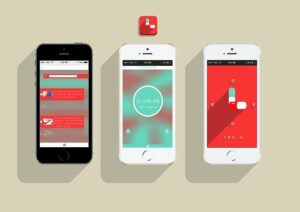
Not every restaurant needs the same app. In fact, building the wrong type is one of the fastest ways to waste money.
Customer-Facing Apps For Ordering, Loyalty, And Engagement
These are the apps your guests use. They make sense when:
- You want to reduce aggregator fees by driving direct ordering
- Repeat customers are a big part of revenue (loyalty pays off)
- You need better data ownership (customer profiles, order history)
- You run campaigns regularly (new menu drops, limited offers)
Common customer-facing app formats:
- Branded ordering app (pickup/delivery)
- Table ordering (scan-to-order, pay at table)
- Loyalty app (points, tiers, offers, gift cards)
If you’re a multi-location brand or franchise, a unified app can also enforce consistency, menu rules, pricing, and brand experience.
Operational Apps For Staff, Kitchen, Inventory, And Delivery
These are internal tools that make service smoother and margins healthier. They’re ideal when:
- Orders are coming from multiple channels (in-store, web, app, aggregators)
- Staff are losing time to manual tasks (phone orders, rekeying tickets)
- Inventory accuracy is hurting availability or waste
- Dispatch and delivery coordination is messy
Operational apps might include:
- Kitchen display / KDS companion workflows
- Driver management (if you run in-house delivery)
- Inventory and stocktake tools
- Staff task lists and incident reporting
Often the best ROI comes from a paired approach: a customer app that grows revenue, plus an ops layer that keeps fulfillment tight.
Must-Have Features For Modern Restaurant Apps
Feature lists get out of control quickly. We prefer to design around outcomes: fewer abandoned carts, faster fulfillment, higher repeat rate, and fewer staff errors.
Online Ordering, Payments, And Order Tracking
For most restaurants, this is the core.
Key capabilities:
- Menu browsing that’s fast (filters, favorites, clear modifiers)
- Modifier logic that matches real kitchen rules (required choices, add-ons, exclusions)
- Scheduled orders (especially useful for lunch peaks and catering)
- Integrated payments (cards, Apple Pay/Google Pay where available)
- Live order status (confirmed → preparing → ready → out for delivery)
A practical detail we always check: what happens when something goes wrong, item out of stock, payment fails, store is slammed. The app needs graceful fallbacks, not dead ends.
Loyalty, Offers, Push Notifications, And CRM
If you want customers to come back without constant discounting, you need a smart retention layer.
Common loyalty and engagement features:
- Points or stamp-based rewards
- Tiered loyalty (VIP tiers for high-frequency guests)
- Personalized offers based on order history
- Push notifications with sensible controls (frequency, opt-in, quiet hours)
- CRM segmentation (e.g., lapsed customers, weekend-only customers, high AOV customers)
When done well, loyalty isn’t just “10th coffee free”. It’s a feedback loop that helps you understand demand and protect margins.
Admin, Menus, Multi-Location Controls, And Analytics
The admin side is where restaurant apps either become a delight, or a daily headache.
We look for:
- Menu and pricing management (including modifiers, combos, day-part menus)
- Availability controls (86 items instantly, pause ordering by channel)
- Multi-location controls (shared menus with local overrides)
- Role-based access (store managers vs head office)
- Analytics dashboards (conversion rate, repeat purchase rate, popular items, channel mix)
If you’re serious about scale, admin tooling is not optional. It’s what keeps growth from turning into chaos.
Tech Stack And Integrations That Matter In Restaurant App Development
Restaurant apps live or die on integrations. If your app can’t talk to your POS or kitchen workflow reliably, staff end up re-entering orders, and customers end up waiting.
POS, KDS, Delivery Aggregators, And Accounting Integrations
Integrations we commonly plan for:
- POS integration (menu sync, orders, refunds, tax rules)
- KDS integration (routing orders to the right prep station)
- Delivery aggregators (where relevant) so you can consolidate order flows
- Accounting (reconciliation, reporting exports, payout matching)
Integration questions we ask early:
- Is there an official API, or are we using middleware?
- What needs to be real-time (order injection, stock availability) vs what can be scheduled (menu sync)?
- What’s the fallback when the POS is offline?
We won’t pretend every POS ecosystem is the same, some are cleanly documented, others require more careful engineering. The important thing is transparency before build starts.
Native Vs Cross-Platform, Backend, Hosting, And Performance
There’s no one “best” approach. The right choice depends on budget, timeline, and long-term roadmap.
- Native apps (Swift/Kotlin): best performance and platform polish: great for complex experiences.
- Cross-platform (e.g., React Native/Flutter): faster iteration and shared code: often a good fit for MVP-to-scale.
On the backend side, we care about:
- Scalable hosting (handling spikes during promotions and peak periods)
- Caching and performance (menu loads quickly even on poor mobile reception)
- Observability (logs, monitoring, alerts, so issues are caught before reviews hit)
If you’re comparing vendors, ask them how they handle load testing and what their uptime/incident process looks like. A restaurant app isn’t a brochure site: it’s a transaction engine.
Security, Privacy, And Compliance Considerations
Payments, personal data, and location permissions put restaurant apps in a category where “near enough” isn’t good enough.
PCI, Tokenization, Roles, And Data Retention Policies
If your app takes payments, PCI DSS considerations are unavoidable. In practice, many modern builds reduce risk by using reputable payment gateways so your systems don’t store raw card details.
What we build and document:
- Tokenised payments via trusted providers (so sensitive card data isn’t stored on your servers)
- Role-based access control (RBAC) for admin and staff tools
- Audit logs for key actions (refunds, menu edits, permissions)
- Data retention policies (what’s stored, for how long, and why)
You should also know where data is hosted, how it’s backed up, and who has access. If a vendor can’t answer that clearly, keep looking.
Accessibility, Consent, And Location/Notification Permissions
Good compliance also means respecting customers.
We recommend:
- Accessible design (readable contrast, scalable text, screen reader support where practical)
- Clear consent flows for marketing messages
- Permission prompts that explain the value:
- Location for “find my nearest store”
- Notifications for order status and offers (with easy opt-out)
This isn’t just about avoiding complaints. It’s about building trust, because trust is what drives repeat orders.
If you operate across regions, we’ll also help you think through privacy obligations and app store requirements so you’re not rebuilding later.
Implementation Roadmap: From MVP To Scale
A good restaurant app launch feels calm. That’s not luck, it’s planning.
Launch Checklist: Store Listings, Training, And Operational Readiness
Before we go live, we run a practical checklist so staff aren’t learning under pressure.
Launch essentials:
- App Store / Google Play setup (screenshots, descriptions, privacy labels)
- Payment gateway verification and test transactions
- POS/KDS integration testing in a real environment
- Staff training (FOH, BOH, managers) with simple SOPs
- Soft launch plan (single location or limited hours first)
- Support plan for launch week (who to call, what gets prioritised)
We also recommend having signage and staff scripts ready, because adoption often comes down to one simple moment at the counter: “Do you want to order ahead next time?”
Post-Launch Growth: Iteration, A/B Testing, And Marketing Alignment
After launch, the real advantage is speed: you can improve the app based on real data.
Typical growth work:
- Funnel tracking (menu views → add to cart → checkout)
- A/B testing offers and menu layouts
- Improving search and category navigation
- Loyalty tuning (better rewards, smarter triggers)
- Marketing alignment (SEO landing pages, paid campaigns, email/SMS where permitted)
Because AGR Technology covers both software development and digital marketing, we can connect product decisions to growth outcomes, so you’re not guessing what to build next.
Conclusion
Choosing a restaurant mobile app development company comes down to one thing: can they build a product that fits how your restaurant actually runs, and keep it reliable when it matters most.
If you want a partner who can handle strategy, design, development, integrations, and post-launch growth under one roof, we can help.
Talk to AGR Technology about your restaurant app idea and we’ll map a clear MVP, integration approach, and rollout plan. Visit AGR Technology to book a call or request a proposal.
Frequently Asked Questions About Restaurant Mobile App Development Companies
What does a restaurant mobile app development company actually do?
A restaurant mobile app development company builds more than an ordering screen. It handles discovery and MVP planning, UI/UX, iOS/Android and backend development, QA (including payment and peak-load testing), App Store/Google Play releases, and ongoing support—plus POS/KDS integrations and admin tools so operations stay smooth.
How do I choose the right restaurant mobile app development company for my restaurant model?
Start with fit for your service model (dine-in, QSR, takeaway, multi-location, franchise). Ask for a discovery phase, an integration plan for your POS/KDS, weekly demos, and a clear QA and rollback process. Also confirm code/IP ownership, support SLAs, and references from similar restaurant builds.
Which type of restaurant app should I build: customer ordering, loyalty, or an operations app?
Customer apps are best for direct ordering, loyalty, and data ownership—especially if repeat customers matter or you want to cut aggregator fees. Operations apps improve speed and accuracy across kitchen, inventory, and delivery workflows. Many restaurants get the best ROI by pairing a customer app with an ops layer.
What features are must-haves in restaurant app development today?
Most successful builds prioritize fast menu browsing, correct modifier logic, scheduled orders, integrated payments (including Apple Pay/Google Pay where available), and live order tracking. Add loyalty (points or tiers), push notifications with opt-in controls, and a strong admin portal for menus, 86’ing items, multi-location rules, and analytics.
Why are POS and KDS integrations so important in restaurant app development?
Because the app is a transaction engine, not a brochure. If POS/KDS integrations aren’t reliable, staff must re-enter orders, errors rise, and tickets slow down—especially during peak periods. A good partner defines what must be real-time (order injection) vs scheduled (menu sync) and designs fallbacks for outages.
How long does it take to build a restaurant app, and what affects the cost?
Timeline and cost depend on MVP scope, number of locations, and how complex your POS/KDS integrations and admin controls are. Native apps can offer top performance; cross-platform can ship faster for MVPs. Contract model matters too (fixed price vs time-and-materials vs retainer), along with testing and post-launch support.
Related content:
Google Ads For Catering Companies: A Practical Guide To Getting More Bookings
Cheapest POS System for Restaurants (Affordable Options)
Best Restaurant Business Loans in Australia

Alessio Rigoli is the founder of AGR Technology and got his start working in the IT space originally in Education and then in the private sector helping businesses in various industries. Alessio maintains the blog and is interested in a number of different topics emerging and current such as Digital marketing, Software development, Cryptocurrency/Blockchain, Cyber security, Linux and more.
Alessio Rigoli, AGR Technology