★★★★★ Trusted Technology & Digital Partner · Australian-based

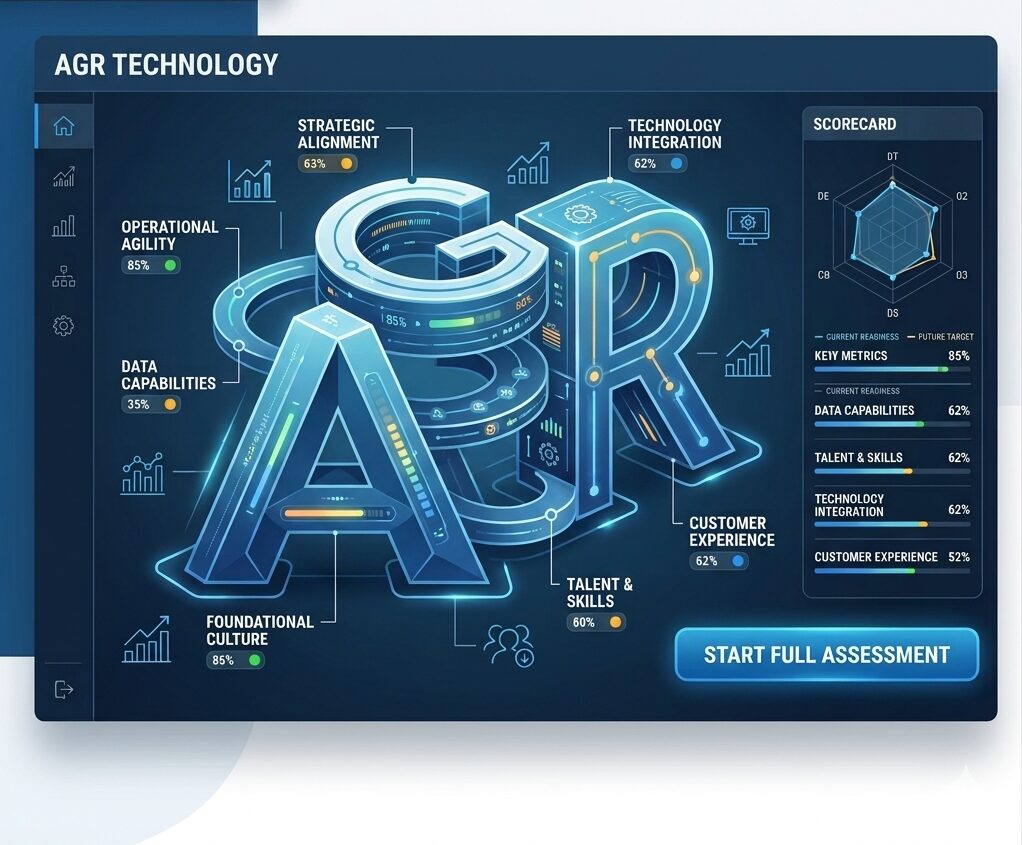
Plenty of transformation programs start with excitement, budget approval, and a slide deck full of ambition. Then reality shows up: unclear ownership, patchy data, resistant teams, and systems that don’t talk to each other.
A business transformation readiness assessment helps organizations catch those risks before they become expensive delays.
It shows whether the business is genuinely prepared for change, not just eager for it. For companies investing in digital transformation, process redesign, AI automation, or custom technology, readiness is the difference between momentum and chaos. Done well, this assessment turns a vague “we need to change” into a practical view of what must happen first.
A business transformation readiness assessment measures how prepared an organization is to absorb, support, and sustain change. That goes far beyond checking whether leadership has approved a project.
At its core, the assessment looks at organizational capacity. Are leaders aligned on goals? Do teams understand why change is needed? Are current processes documented well enough to improve? Is the technology stack stable, scalable, and connected? And maybe most important: does the business have the time, skills, and operating discipline to execute while still running day-to-day operations?
It also measures risk concentration. A company might have a strong strategy but weak data governance. Or capable teams but fragmented systems. Those weak points often become the exact places where transformation stalls.
For businesses working with digital partners such as AGR Technology, a readiness assessment can also clarify which solutions should come first, SEO, automation, software integration, analytics, or broader modernization, so investment follows business reality, not hype.
A solid assessment should review several readiness dimensions together. Looking at only one, technology, for example, usually creates blind spots. Transformation succeeds when strategy, people, processes, and systems move in the same direction.
Transformation tends to struggle when executives use the same words but mean different things. One leader may want cost reduction, another wants faster service delivery, and another wants a completely new business model. That kind of misalignment creates conflicting priorities and confused teams.
A readiness review should test whether leadership agrees on the case for change, expected outcomes, timeline, funding model, and decision rights. It should also confirm whether the transformation connects to measurable business goals such as revenue growth, customer retention, operational efficiency, or compliance improvement.
If strategy isn’t clear, teams end up chasing activity instead of outcomes. Clear leadership alignment gives the organization a stable reference point when trade-offs get hard, which they always do.
This is where ambition meets operational reality. The assessment should review workforce capability, change readiness, process consistency, system limitations, and data quality. Businesses often discover they are asking teams to adopt new tools while old workflows remain broken.
People readiness includes skills, training needs, and openness to change. Process maturity looks at whether work is standardized, measurable, and repeatable. Technology maturity covers integration, scalability, security, and technical debt. Data maturity examines availability, ownership, quality, and reporting confidence.
These areas are tightly connected. Poor data undermines automation. Weak processes limit software ROI. Skill gaps slow adoption. A credible readiness assessment maps these dependencies early so the transformation plan reflects how the organization actually operates, not how it wishes it operated.
The most useful assessments are structured, fast enough to maintain momentum, and grounded in evidence. A practical process usually starts by defining the transformation scope: what is changing, why now, and which business units are affected.
Next comes stakeholder input. That typically includes leadership interviews, team surveys, workflow reviews, and workshops with operational managers. The goal is to compare executive assumptions with frontline reality. Those two versions don’t always match.
Then the organization reviews current-state evidence: process maps, system architecture, customer pain points, delivery metrics, staff capability, and data issues. Scoring each readiness dimension on a simple scale, such as low, medium, high, or one to five, helps create a usable picture without pretending to be mathematically perfect.
After scoring, the business identifies critical blockers, dependencies, and quick wins. From there, it can define what must be fixed before launch, what can improve during implementation, and what is nonessential for phase one. That sequencing is what turns assessment work into something operationally useful.
Most failed transformations do not collapse because the vision was too small. They fail because the basics were shaky.
One common gap is underestimating change fatigue. If teams have lived through restructures, platform rollouts, or constant shifting priorities, they may not resist openly, but adoption drops anyway. Another frequent issue is unclear governance. When nobody knows who owns decisions, approval cycles drag out and project teams lose speed.
Technology fragmentation is another major culprit. Businesses may run on disconnected platforms, duplicated tools, and manual workarounds that were never designed for scale. Add poor data quality, and even a well-funded transformation starts making bad decisions faster.
There is also the capability gap: organizations want advanced automation, analytics, or customer experience improvements without enough internal expertise to manage them. In those cases, external support from a partner with strategy, development, marketing, and AI capability can reduce risk, but only if the readiness issues are acknowledged first. Pretending the business is ready rarely ends well.
Assessment findings are only valuable if they shape decisions. The next step is to convert insights into a prioritized action plan based on business impact, urgency, and dependency.
Start by separating findings into three groups: critical preconditions, parallel improvements, and longer-term enhancements. Critical preconditions are the issues that can sink the initiative early, missing executive sponsorship, broken core data, unclear ownership, or severe integration risks. Those need immediate action. Parallel improvements can run alongside transformation, such as training programs or process documentation. Longer-term enhancements can wait until the foundation is stable.
Each action should have an owner, timeline, required investment, and success measure. That sounds obvious, but many transformation plans still stop at recommendations. Real progress needs accountability.
Finally, leadership should revisit the readiness assessment at key milestones. Readiness is not static. As scope expands, new risks appear. The organizations that adapt fastest are the ones that treat readiness as an ongoing management discipline, not a one-time checkpoint.
A sharp assessment doesn’t slow transformation down. It prevents the expensive kind of speed, the kind that sends a business in the wrong direction, quickly.
A business transformation readiness assessment evaluates how prepared an organization is to absorb, support, and sustain change by measuring leadership alignment, process maturity, technology stability, people readiness, and risk concentration.
Leadership alignment ensures all executives agree on the transformation goals, outcomes, timeline, and funding, preventing conflicting priorities that can confuse teams and stall progress during transformation.
It identifies gaps in people, processes, technology, and data maturity, helping organizations prioritize investments like automation, analytics, or system integration to match business reality and reduce costly risks.
Common gaps include change fatigue, unclear governance, technology fragmentation, poor data quality, and insufficient internal expertise, all of which can delay or derail the transformation process.
Organizations should convert assessment insights into a prioritized action plan with clear owners, timelines, and success measures, addressing critical preconditions first and treating readiness as an ongoing management discipline.
A readiness assessment should be conducted before launching a transformation program to catch risks early and ensure the organization has the capacity and alignment to execute change effectively, maintaining momentum and avoiding costly delays.
Other resources:
Business Consulting Services & Strategy