![logo-new-23[1]](https://cdn-ihdfn.nitrocdn.com/eZVJvoSTyVixkEUySRKiaseNtUlmgCyu/assets/images/optimized/rev-b7ced37/agrtech.com.au/wp-content/uploads/elementor/thumbs/logo-new-231-qad2sqbr9f0wlvza81xod18hkirbk9apc0elfhpco4.png "logo-new-23[1]")

If you’re exploring Unreal Engine development services, you’re probably chasing one of three outcomes: a higher-impact customer experience, faster training and decision-making, or a more efficient way to visualize complex products and environments in real time. The catch is that “Unreal development” can mean anything from a quick prototype to a full production pipeline with integrations, security, and long-term support.
On this page, we’ll break down what Unreal Engine development services typically include, where they create the most business value, what the delivery process looks like, and how to choose the right partner. And if you want a team that can connect real-time 3D work to your broader digital transformation (software, integrations, AI automation, and even go-to-market visibility), that’s exactly where AGR Technology fits in.
Get in contact with us to discuss your project
What our clients are saying:

Justine Brummans
Alessio is both incredibly knowledgeable and personable! He gave me great advice that was catered to me and my situation. Thank you Alessio! Super helpful!

Springfield Equestrian Park
Alessio is amazing! I can not speak highly enough of how helpful and knowledgeable he is, my website he created far exceeded my expectations, he is so accomodating and I can only wish him every success with his business. I rate AGR technology 10 out of 10.
Legacy Energy
We used AGR Technology and dealt with Alessio to design and build our website as well as host our emails. Alessio was a pleasure to deal with and had plenty of ideas that we could implement into our site. He has a great attention to detail, he is also very polite in understanding our goals and what we wanted to achieve with our website.
Thanks mate,
Alex & Rob
Excellent Service
Alessio developed our website for our business and has done a wonderful job. He is very personable and knowledgeable. We have enjoyed working with him. We will be referring others to him and highly recommend him to those who need Tech advice.
MRC Performance
I have been in business for over 10 Years and recently moved to AGR Technology for all our IT needs. They are able to fix nearly anything remotely and always very helpful in recommending appropriate hardware upgrades that do the job as required but not costing more than needed.

Alessio provided an excellent service. He was very dedicated in his method of finding solutions to problems. He continued to try different avenues until he found the reason as to why a particular application was not working. He was very knowledgeable in his understanding of the internet and of applications and how they work, and he was able to apply this knowledge in understanding how to resolve the obstacles that continued to appear. He is understanding towards his client's needs and goals and he is willing to work with his client in achieving those goals. He is a very polite and well mannered person and very calm and gentle in his approach. I would highly recommend Alessio's services to anyone.

Palmira Rigoli
Great work ethics Alessio! We at Totally Gluten Free Products are very happy to have you on board as our IT and SEO master. Very reliable, trustworthy and knowledgeable in the field.
YouTube Comment

Nat's Custom Designs
Alessio from AGR Technology has recently helped me create a website for my business.
Throughout the whole process from start to finish Alessio made the process easy for me, by calling me and explaining each step of the way. I'm not very computer savvy, but with Alessio taking the time to explain in detail everything I needed to know from putting inventory in to having it shipped. He even remotely joined my computer to help guide me through everything.
He's very knowledgeable and is experienced in everything I needed and if there was anything else I needed to know that wasn't something he was familiar with, he researched it.
I would HIGHLY recommend Alessio to anyone. He has not only helped me for now but I know that if I ever needed help with anything else he would definitely go above and beyond to help. Thank you so much for everything you have done. It's been a long process but well worth it 🙂
Byron Macumber
AGR Technology is amazing. not only do they stick with you through out the process, they also accommodate to your wants and needs. They are efficient in their work and they have high integrity. Their capabilities are shown through their website design, and appropriate knowledge of utilities regarding software. over the many years of working with them they have been fantastic. I would recommend to everyone
Very helpful
Alessio was thorough, diligent and kept me updated at all time points. I was very impressed with his performance, passion and dedication. I will continue to use his services.
Wantrup & Associates
Alessio of AGR Technology is an IT guy we rely on whenever we need IT help. His professionalism impressed us right at the first time. He solved many of our IT problems in no time. Excellent communication and speedy response.
We highly recommend this company
From a happy customer
Valeria Bianco
I received AGR contact information from a previous client, who had found their service excellent. So I contacted AGR with some expectations, and I can say they exceeded them. Professional, honest, punctual, reliable, their service is faultless. We can't recommend them highly enough.
Very fast, value for money and a comprehensive service
AGR is professional, organised and very skilled at what they do. They take the initiative, looking after all the details that you would not have thought of to enhance your website presence, marketing funnel and automated appointment bookings. Big bonus - pricings are at a fraction of the cost of competitors.
Customer testimonial
Alessio from AGR Technology is wonderful at gently guiding the less technically savvy users to solve problems. Back up service excellent. Highly recommended
SEO for website
The team is very cooperative and delivers clean and very efficient work.

Raimond Volpe
Nothing but good things to say about Alessio. He has been great service and great at communicating with me by both phone and email. Very good knowledge and problem-solving ability with our web development. I would thoroughly recommend Alessio and AGR Technology to anyone wanting online marketing or web development
Website design
Big thank you to Alessio at AGR Technology for a smooth and easy website development process. Nothing was to difficult to accomplish, I can highly recommend his first class service.
Proudly supporting clients of all sizes to succeed through digital solutions













Why work with us?









What Unreal Engine Development Services Include
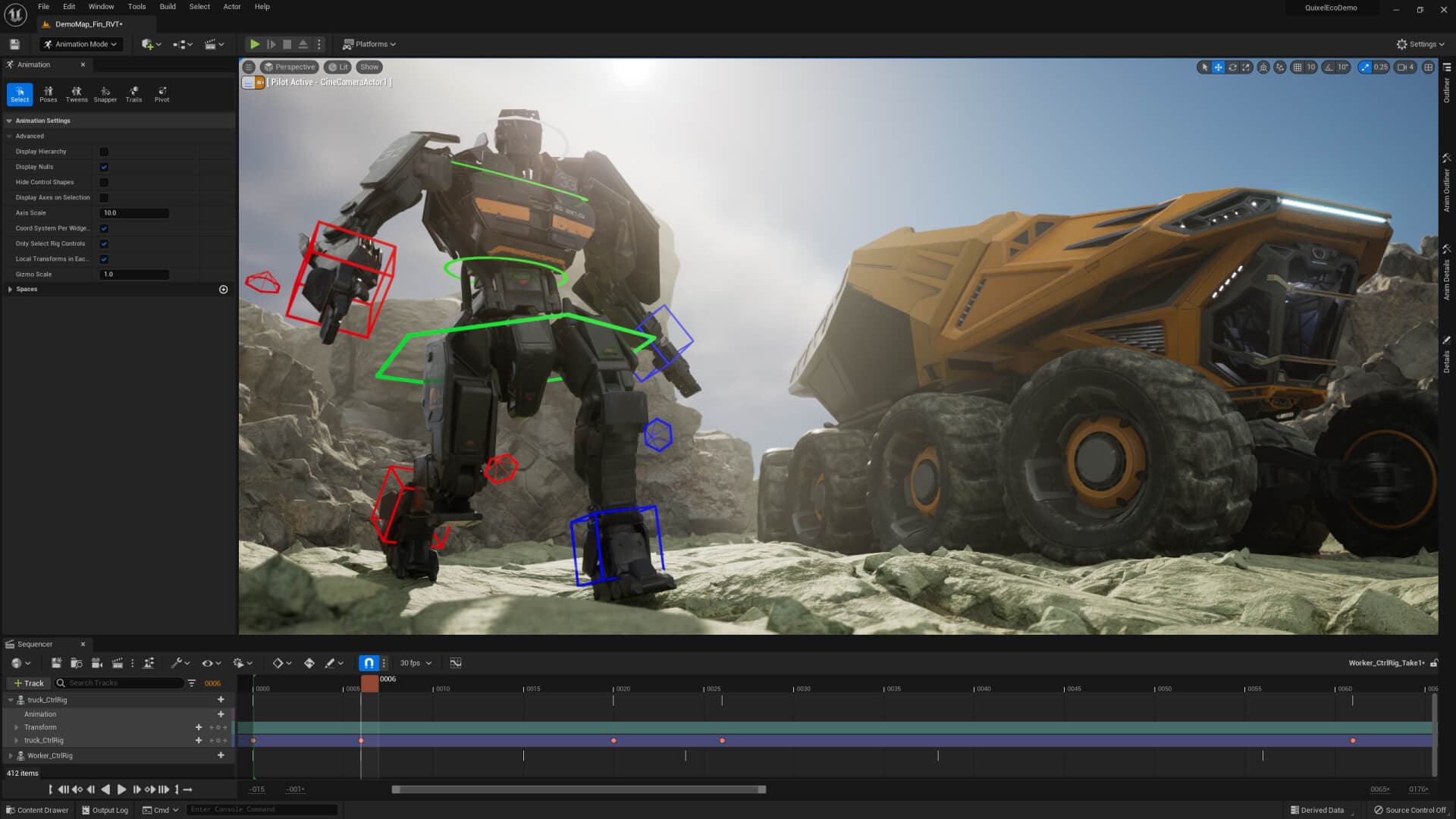
Unreal Engine development services cover far more than “building something in 3D.” In a commercial setting, they usually combine real-time rendering, interactive systems, content pipelines, deployment engineering, and ongoing support.
Core Service Categories And Deliverables
Here’s what we typically deliver when a business engages us for Unreal Engine work:
- Discovery + solution design: requirements, user journeys, platform targets (PC, mobile, XR, web streaming), and success metrics.
- Real-time 3D application development (Unreal Engine 5): interaction logic, UI/UX, data flows, and scene systems.
- 3D content production: asset optimization, LODs, materials, lighting, PBR workflows, animation, and environment building.
- Systems and tooling: custom editor tools, importers, configurator logic, rules engines, and automation to reduce manual work.
- Integrations: APIs, product data (PIM/ERP), IoT feeds, analytics, SSO, and enterprise identity providers.
- Deployment packaging: installers, kiosk builds, device provisioning, store submissions, or streaming setups.
- Optimization: frame-time profiling, shader/material tuning, memory budgets, and platform-specific performance passes.
- Documentation + handover: technical docs, content guidelines, admin tooling, and onboarding.
From a buyer’s perspective, the most important deliverable isn’t the “cool demo.” It’s a solution that can be maintained by real people, updated with new content, and measured against business KPIs.
Common Engagement Models And Team Roles
Unreal projects fail most often when the team structure doesn’t match the scope. Common models we see:
- Fixed-scope delivery (best for clearly defined outcomes): agreed milestones, acceptance criteria, and a change-control process.
- Time-and-materials (best for evolving products): flexible backlog, sprint cadence, and continuous prioritization.
- Dedicated team / staff augmentation: your product owner leads, we supply specialized roles to accelerate delivery.
Typical roles on a serious Unreal Engine engagement include:
- Technical lead / solutions architect (overall system decisions)
- Unreal developers (Blueprints + C++)
- 3D artists (hard-surface, environment, materials)
- Technical artist (performance, shaders, pipeline glue)
- UI/UX designer (interaction design for non-gamers)
- QA tester (device matrix, regression, performance)
- DevOps / release engineer (build pipelines, packaging, deployment)
At AGR Technology, we can blend Unreal delivery with our broader capabilities, custom software development, AI automation, and digital strategy, so the experience doesn’t live in a silo.
Business Use Cases Across Industries
Unreal Engine isn’t “just for games.” The real shift is that real-time 3D has become a practical business tool, especially for teams that need to visualize complex products, train people safely, or sell high-consideration offerings.
Real-Time 3D Product Experiences And Configurators
If you sell configurable products (or anything that benefits from “seeing it before buying”), Unreal can power:
- Interactive product configurators for sales teams, showrooms, and websites (often via streaming)
- Photoreal product visualization without reshooting photography for every variant
- Guided demos that highlight features based on a buyer’s industry or role
A common pattern: connect Unreal to product catalogs (PIM/ERP) so pricing, options, and availability aren’t manually maintained. That’s where a tech partner with integration experience matters.
Training, Simulation, And Digital Twins
For operations-heavy businesses, real-time simulation can reduce training risk and improve readiness:
- Safety and compliance training in realistic scenarios
- Equipment operation simulations (repeatable, measurable training)
- Digital twins that visualize environments, facilities, or equipment states
When data is involved (IoT feeds, operational dashboards), the Unreal work quickly becomes an “application” problem, not just a visual one, authentication, role-based access, logging, and reliability all matter.
Games, Interactive Experiences, And Virtual Production
Yes, games are still a major category, but many commercial projects look like “game development” under the hood:
- Branded interactive experiences for events and product launches
- Serious games for training and assessment
- Virtual production assets and tools, including real-time environments for film and marketing
If your goal is marketing performance (visibility + conversions), we can also align interactive experiences with your broader funnel, landing pages, analytics, SEO, and campaign measurement, so the project earns its keep.
The Unreal Engine Development Process From Discovery To Deployment
Most Unreal projects go smoother when the process is treated like modern software delivery, discovery, iterative builds, testing, deployment, and support. The 3D side adds complexity, but it shouldn’t add chaos.
Discovery, Technical Feasibility, And Prototyping
We typically start with a short, structured phase to remove guesswork:
- Define the “why”: business goal, target users, and success metrics (time saved, conversion lift, training outcomes)
- Confirm constraints: devices, environment (offline/online), security requirements, data sources
- Prototype critical interactions: not just visuals, controls, UI, data calls, streaming feasibility
- Performance assumptions: frame-rate targets and quality bars (especially for XR and mobile)
A good prototype answers the uncomfortable questions early: “Will this run on the hardware?” “Can we stream it?” “Can we keep assets updated without rebuilding everything?”
Production: Content, Systems, And Tooling
Production is where the project either becomes maintainable, or becomes a fragile demo.
We build in parallel:
- Content pipeline: asset naming standards, versioning, import rules, LOD strategy
- Gameplay-style systems (even for non-games): interaction frameworks, state machines, UI screens
- Tooling: internal tools to let your team update content (products, scenes, training steps) without touching code
- Integrations: APIs, data caching, authentication, analytics events
We’ll also agree on what is “source of truth” for data, because duplicating product rules in three places is how budgets quietly explode.
Testing, Optimization, And Release Management
Real-time apps can look great on a dev workstation and then fall apart on target hardware. We plan for that.
Our release discipline typically includes:
- Device and platform testing (GPU/CPU, memory, thermal constraints)
- Profiling + optimization using Unreal’s tooling (frame timing, draw calls, shader cost)
- Build automation for repeatable releases
- Release checklists: permissions, content validation, crash reporting, rollback plan
For enterprise deployments, we’ll also factor in packaging requirements, kiosk mode, device management, and IT handover expectations.
Key Capabilities To Look For In An Unreal Engine Development Partner
Choosing an Unreal Engine development partner isn’t about who can make the prettiest scene. It’s about who can deliver a working product, on your platforms, on your timelines, with your data, and with a clear plan for maintenance.
3D Pipeline Expertise: DCC Tools, Assets, And PBR Workflows
A strong partner should be fluent in the practical 3D pipeline, including:
- DCC tools commonly used for production (for example: Blender, Maya, 3ds Max, Substance 3D)
- PBR material workflows that behave consistently under different lighting
- Asset optimization: polygon budgets, LODs, texture streaming, lightmap strategy (where relevant)
- Content governance: naming conventions, folder structure, version control for binary assets
If the team can’t explain how they’ll keep your asset library maintainable six months from now, you’re buying future rework.
Engineering Strength: C++, Blueprints, Networking, And Integrations
Blueprints are powerful, but commercial projects often need both Blueprints and C++ for performance, structure, and maintainability.
Look for evidence they can handle:
- Clean architecture (modular systems, data-driven design)
- Networking / multiplayer where applicable (collaboration, shared sessions)
- External integrations: REST APIs, databases, identity providers, telemetry
- Secure coding and deployment practices for enterprise environments
At AGR Technology, this is where we’re different from “3D-only” studios: we’re a one-stop digital partner, so integration and software engineering are core to how we deliver.
Performance And Platform Readiness: PC, Mobile, Console, XR, Web Streaming
Platform readiness is often the hidden make-or-break factor.
A credible partner should be comfortable discussing:
- Target frame rates by platform (and how they’ll hit them)
- XR constraints (latency, comfort, interaction design)
- Mobile GPU realities (materials, overdraw, texture sizes)
- Web delivery via streaming when native installs aren’t practical
Cost, Timelines, And Scope Drivers
Budget conversations go better when everyone is honest about what drives scope in Unreal Engine projects. It’s rarely “hours of coding” alone, it’s fidelity, content volume, interactivity, and the number of platforms you’re supporting.
What Impacts Budget: Fidelity, Interactivity, Data, And Platforms
The biggest cost drivers typically include:
- Visual fidelity: photoreal lighting, high-res materials, complex environments, cinematic animation
- Interactivity depth: configurators, physics, guided workflows, multi-step training logic
- Content volume: number of SKUs, variants, scenes, languages, and training modules
- Data + integrations: ERP/PIM links, IoT feeds, SSO, audit logging
- Platforms: PC vs mobile vs XR vs kiosk vs streaming, each adds testing and optimization work
One practical tip: if stakeholders disagree about “how real it needs to look,” settle it with references early (screenshots, short clips, and a prototype). That single decision influences everything downstream.
How To Reduce Risk With MVPs And Milestone-Based Delivery
We’re big fans of MVPs in Unreal, because they prevent the classic trap of building a gorgeous experience that doesn’t fit the real business workflow.
Ways we reduce delivery risk:
- Milestone-based delivery with acceptance criteria (so progress is measurable)
- Vertical-slice MVP: one scenario end-to-end (data → UI → interaction → deployment)
- Performance gates early, not at the end
- Content-first planning: lock pipeline rules before producing hundreds of assets
If you’re considering Unreal Engine development services and want realistic numbers, we can scope a proof-of-concept quickly and use it to set a confident roadmap.
Security, Compliance, And Long-Term Maintenance Considerations
For business use, Unreal projects often touch sensitive product data, operational workflows, or internal networks. Security and maintenance can’t be an afterthought, especially if the solution will scale across teams or sites.
Data Handling, Access Control, And Enterprise Environments
Security requirements vary by industry, but common needs include:
- Role-based access control (RBAC): different permissions for admins, trainers, sales reps, and partners
- SSO and identity integration (where required by enterprise IT)
- Secure API communication and least-privilege access patterns
- Auditability: logging key actions for compliance and troubleshooting
- Network constraints: offline modes, restricted environments, or on-prem connectivity requirements
We align Unreal applications with the same expectations as other business software, clear access controls, predictable data flows, and documented environments.
Post-Launch Support: Analytics, Content Updates, And Performance Monitoring
A real-time 3D experience is only valuable if it stays current.
Post-launch support typically includes:
- Analytics instrumentation (what users click, where they drop off, session duration)
- Crash reporting and issue triage with clear SLAs
- Content updates: new products, new training scenarios, seasonal changes
- Performance monitoring: regression tracking as content grows
- Upgrade planning: Unreal Engine version upgrades and plugin dependency management
At AGR Technology, we can also connect analytics back to your broader reporting, so leadership can see how the Unreal experience impacts leads, training completion, or operational KPIs.
Conclusion
Unreal Engine development services are at their best when they combine three things: real-time visuals that match your brand, software engineering that holds up in production, and a delivery process that’s built for updates, not just launch day.
If you’re aiming for a product configurator, a training simulation, a digital twin, or an interactive experience that ties into your existing systems, we can help you scope it quickly and build it in a way your team can actually run.
Ready to get practical? Contact AGR Technology to schedule a discovery call and we’ll map your use case to an MVP, a realistic timeline, and a delivery plan you can defend internally.
Frequently Asked Questions About Unreal Engine Development Services
What do Unreal Engine development services typically include for businesses?
Unreal Engine development services usually cover discovery and solution design, UE5 app development (UI, interaction, data flows), 3D content production (PBR materials, lighting, LODs), tooling, integrations (APIs, PIM/ERP, analytics, SSO), deployment packaging, performance optimization, plus documentation, handover, and ongoing support to keep the solution maintainable.
What are the most common business use cases for Unreal Engine development services?
Common use cases include real-time 3D product visualization and configurators, sales and showroom experiences, training simulations and serious games, digital twins connected to IoT or operational data, and branded interactive launches. Many teams also use web streaming to deliver Unreal experiences without installing native apps on every device.
How does the Unreal Engine development process work from discovery to deployment?
A strong process starts with discovery to define goals, users, platforms, success metrics, and constraints (security, data sources, offline/online). Teams then prototype critical interactions and performance assumptions, move into parallel production (content pipeline, systems, tooling, integrations), and finish with device testing, profiling/optimization, build automation, release checklists, and IT-ready packaging.
How do I choose the right partner for Unreal Engine development services?
Look beyond visuals. Evaluate 3D pipeline discipline (PBR workflow, asset governance, optimization), engineering depth (Blueprints + C++, modular architecture, integrations), platform readiness (PC, mobile, XR, kiosk, streaming), and proof of QA and long-term support. Ask how they’ll handle updates, performance targets, and real enterprise integrations.
How much do Unreal Engine development services cost, and what drives the budget?
Costs vary widely because scope is driven by visual fidelity, interactivity depth, content volume (SKUs, variants, scenes, languages), integrations (ERP/PIM, IoT, SSO, logging), and the number of target platforms—each requiring extra testing and optimization. A practical way to estimate is a milestone-based MVP or vertical-slice proof of concept.
Do Unreal Engine applications support enterprise security like SSO and role-based access control?
Yes—when treated like business software. Unreal solutions can integrate SSO/identity providers, enforce role-based access control (RBAC), use secure API communication, and add audit logging for compliance. You’ll also want plans for offline/restricted networks, least-privilege access, and post-launch monitoring (crash reporting, analytics, and upgrades).
Other solutions:
AR/VR Game Development Services
Source(s) cited:
[Online]. Available at: https://external-content.duckduckgo.com/iu/?u=https%3A%2F%2Fcdn2.unrealengine.com%2F03-body-1920×1080-1920×1080-ee3e03f0914f.jpg%3Fresize%3D1%26w%3D1920&f=1&nofb=1&ipt=6db30b8a3437dc7218c22843f1f53ae1d57c180f8e6471b4eb3c7cfe0aeb6b71 (Accessed: 29 March 2026).