![logo-new-23[1]](https://agrtech.com.au/wp-content/uploads/elementor/thumbs/logo-new-231-qad2sqbr9f0wlvza81xod18hkirbk9apc0elfhpco4.png "logo-new-23[1]")
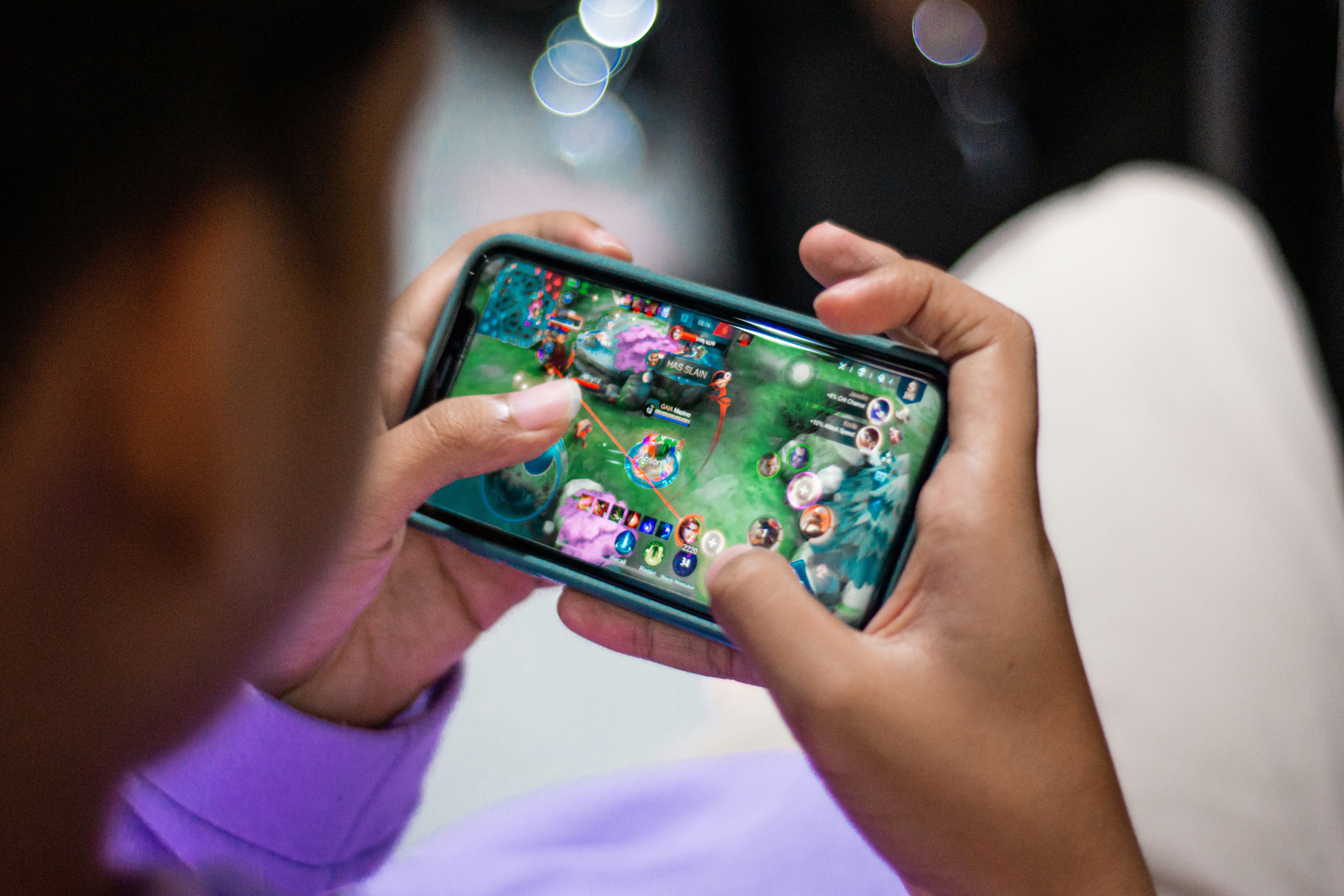
A mobile game can be a growth channel, a brand experience, a training tool, or even a full new product line. But it can also turn into a slow, expensive “almost launch” if the scope, tech choices, and live operations plan aren’t nailed early.
On this page, we explain what mobile game development services actually include, the types of games businesses build (and why), the technology decisions that will shape your budget, and what a healthy delivery process looks like. We’ll also show you how we approach game development at AGR Technology, as a practical, business-first build that’s designed to ship, scale, and keep players coming back.
Get in contact with us to discuss your project
What our clients are saying

Justine Brummans
Alessio is both incredibly knowledgeable and personable! He gave me great advice that was catered to me and my situation. Thank you Alessio! Super helpful!

Springfield Equestrian Park
Alessio is amazing! I can not speak highly enough of how helpful and knowledgeable he is, my website he created far exceeded my expectations, he is so accomodating and I can only wish him every success with his business. I rate AGR technology 10 out of 10.
Legacy Energy
We used AGR Technology and dealt with Alessio to design and build our website as well as host our emails. Alessio was a pleasure to deal with and had plenty of ideas that we could implement into our site. He has a great attention to detail, he is also very polite in understanding our goals and what we wanted to achieve with our website.
Thanks mate,
Alex & Rob
Excellent Service
Alessio developed our website for our business and has done a wonderful job. He is very personable and knowledgeable. We have enjoyed working with him. We will be referring others to him and highly recommend him to those who need Tech advice.
MRC Performance
I have been in business for over 10 Years and recently moved to AGR Technology for all our IT needs. They are able to fix nearly anything remotely and always very helpful in recommending appropriate hardware upgrades that do the job as required but not costing more than needed.

Alessio provided an excellent service. He was very dedicated in his method of finding solutions to problems. He continued to try different avenues until he found the reason as to why a particular application was not working. He was very knowledgeable in his understanding of the internet and of applications and how they work, and he was able to apply this knowledge in understanding how to resolve the obstacles that continued to appear. He is understanding towards his client's needs and goals and he is willing to work with his client in achieving those goals. He is a very polite and well mannered person and very calm and gentle in his approach. I would highly recommend Alessio's services to anyone.

Palmira Rigoli
Great work ethics Alessio! We at Totally Gluten Free Products are very happy to have you on board as our IT and SEO master. Very reliable, trustworthy and knowledgeable in the field.
YouTube Comment

Nat's Custom Designs
Alessio from AGR Technology has recently helped me create a website for my business.
Throughout the whole process from start to finish Alessio made the process easy for me, by calling me and explaining each step of the way. I'm not very computer savvy, but with Alessio taking the time to explain in detail everything I needed to know from putting inventory in to having it shipped. He even remotely joined my computer to help guide me through everything.
He's very knowledgeable and is experienced in everything I needed and if there was anything else I needed to know that wasn't something he was familiar with, he researched it.
I would HIGHLY recommend Alessio to anyone. He has not only helped me for now but I know that if I ever needed help with anything else he would definitely go above and beyond to help. Thank you so much for everything you have done. It's been a long process but well worth it 🙂
Byron Macumber
AGR Technology is amazing. not only do they stick with you through out the process, they also accommodate to your wants and needs. They are efficient in their work and they have high integrity. Their capabilities are shown through their website design, and appropriate knowledge of utilities regarding software. over the many years of working with them they have been fantastic. I would recommend to everyone
Very helpful
Alessio was thorough, diligent and kept me updated at all time points. I was very impressed with his performance, passion and dedication. I will continue to use his services.
Wantrup & Associates
Alessio of AGR Technology is an IT guy we rely on whenever we need IT help. His professionalism impressed us right at the first time. He solved many of our IT problems in no time. Excellent communication and speedy response.
We highly recommend this company
From a happy customer
Valeria Bianco
I received AGR contact information from a previous client, who had found their service excellent. So I contacted AGR with some expectations, and I can say they exceeded them. Professional, honest, punctual, reliable, their service is faultless. We can't recommend them highly enough.
Very fast, value for money and a comprehensive service
AGR is professional, organised and very skilled at what they do. They take the initiative, looking after all the details that you would not have thought of to enhance your website presence, marketing funnel and automated appointment bookings. Big bonus - pricings are at a fraction of the cost of competitors.
Customer testimonial
Alessio from AGR Technology is wonderful at gently guiding the less technically savvy users to solve problems. Back up service excellent. Highly recommended
SEO for website
The team is very cooperative and delivers clean and very efficient work.

Raimond Volpe
Nothing but good things to say about Alessio. He has been great service and great at communicating with me by both phone and email. Very good knowledge and problem-solving ability with our web development. I would thoroughly recommend Alessio and AGR Technology to anyone wanting online marketing or web development
Website design
Big thank you to Alessio at AGR Technology for a smooth and easy website development process. Nothing was to difficult to accomplish, I can highly recommend his first class service.
Proudly supporting clients of all sizes to succeed through digital solutions













Why work with us?








What Mobile Game Development Services Include
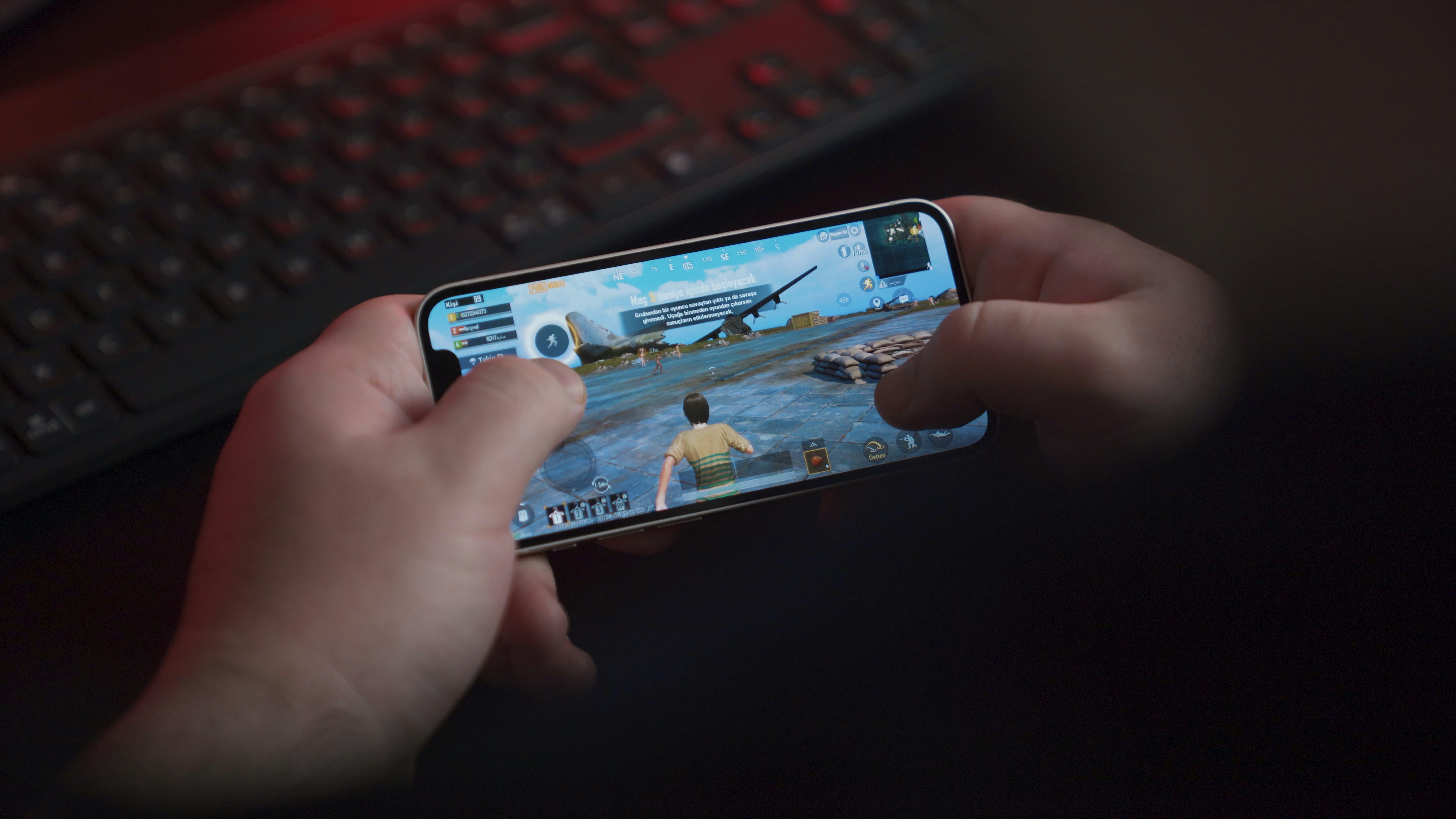
Mobile game development is rarely “just coding.” A reliable delivery partner will cover strategy, production, and the operational foundations needed after launch. Here’s what we typically include (and what you should expect to see in a clear scope of work).
Discovery, Game Design, And Prototyping
This is where we reduce risk fast, before a team spends months building the wrong thing.
In discovery, we align on:
- Business goal: brand lift, leads, subscriptions, training completion, direct revenue, or retention.
- Target audience and device reality: who’s playing, on what phones, in what contexts (commute, couch, classroom).
- Core loop: what the player does repeatedly that stays fun and supports your KPI.
- Success metrics: installs, D1/D7 retention, session length, completion rate, ROAS, or training pass rate.
Then we move into game design and prototyping:
- Lightweight prototypes to validate “is this fun?” and “does it feel right?”
- A practical Game Design Document (GDD), not a 200-page novel, but enough to build consistently
- Early UI flows so stakeholders can react to something real
A small but important detail: prototyping should answer uncomfortable questions early, like whether your idea requires multiplayer complexity, whether it needs daily content, or whether it’s better as a simpler MVP.
Engineering, Backend, And Live Ops Foundations
Even a simple mobile game usually needs more than a client app. Depending on the use case, we may build or integrate:
- Backend services (player profiles, progression, inventory, entitlement)
- Content delivery (remote config so you can tune difficulty and offers without an app update)
- Authentication (guest, Apple, Google, SSO for enterprise training)
- Admin tools (basic dashboards for content, events, and moderation)
- Live ops foundations (event scheduling, messaging, push notifications where appropriate)
If your game has any competitive element, we also plan for:
- Server authority vs client authority tradeoffs
- Anti-cheat basics and exploit prevention
- Rate limiting and abuse controls
At AGR Technology, we’re a broader digital partner (software, automation, marketing), so we also look at how the game connects to your existing stack, CRM, marketing automation, data warehouse, or LMS, without turning it into a fragile “custom spaghetti” integration.
Art, Animation, Audio, And UI/UX Production
This is where many mobile games win or lose. A clean loop with mediocre feel won’t retain.
We typically deliver:
- Art direction (style guide, mood boards, references, do’s/don’ts)
- 2D/3D asset production (characters, environments, props, VFX)
- Animation (rigging, keyframes, state machines, polish)
- UI/UX that’s readable on small screens and fast under the thumb
- Audio (SFX, music loops, mixing) that supports feedback and pacing
A practical reality: UI/UX in games isn’t just “pretty screens.” It’s also economy visibility, clarity of goals, friction removal, and accessibility (contrast, font sizing, left-handed comfort). That’s retention work, not decoration.
If you want help scoping what your game needs (and what it doesn’t), talk to us at AGR Technology and we’ll map a build plan you can actually take to finance.
Common Mobile Game Types And Business Use Cases
“Mobile game” can mean wildly different products. The best scope depends on your audience, your timeline, and what you need the game to do for the business.
Consumer Games (Casual, Mid-Core, Hardcore)
These are traditional consumer games built for scale.
- Casual (puzzle, endless runner, simple arcade): lower learning curve, broad reach, easier UA testing.
- Mid-core (strategy, RPG-lite, deeper meta): stronger long-term retention potential, more content needs.
- Hardcore (high skill, complex systems): niche reach, high expectations on balance and performance.
Business use cases we often see:
- New revenue stream through ads/IAP
- A brand extension that stands alone as a product
- Portfolio expansion (studios, publishers, media brands)
If you’re entering consumer gaming without existing expertise, we usually recommend starting with a tight MVP and validating retention before you over-invest in content.
Branded, Promotional, And Event-Based Games
These are built to support marketing goals.
Common scenarios:
- Limited-time event activations (product launches, seasonal campaigns)
- Loyalty and engagement (earn rewards, unlock offers, QR codes in-store)
- Lead generation (opt-in competitions, gated prizes, handled carefully for compliance)
The trick is making it feel like a real game, not a banner ad with a jump button. Players can tell in five seconds.
We’ll often design these around:
- Quick sessions (15–90 seconds)
- Shareable outcomes (scores, streaks, collectibles)
- Lightweight content updates without app resubmission (where feasible)
Serious Games For Training, Education, And Compliance
Serious games are built for outcomes, training completion, knowledge retention, safer behavior, fewer incidents.
Examples:
- Onboarding modules that feel less like a slideshow
- Scenario-based compliance training (decision points, consequences)
- Skills practice with feedback loops (sales, safety, customer service)
For businesses, the measurable value is usually:
- Higher completion rates
- Better recall over time (spaced repetition, quizzes, practice loops)
- Clear reporting for managers and auditors
If you’re in a regulated space, we design with auditability in mind, who completed what, when, on what version of content. And if the game needs to connect to an LMS or SSO, we plan that upfront to avoid expensive rework.
Key Technology Choices That Affect Timeline And Budget
Most budget blowouts aren’t caused by “bad luck.” They’re caused by early technology decisions that didn’t match the actual requirements.
Native Vs Cross-Platform Engines (Unity, Unreal, Others)
For most mobile games, the engine choice impacts performance, development speed, hiring, tooling, and long-term maintainability.
Common options:
- Unity: widely used for mobile, strong ecosystem, large talent pool, good for 2D/3D.
- Unreal Engine: great visual fidelity, heavier footprint, often better suited to high-end 3D experiences.
- Other frameworks (Godot, Cocos, custom game development): can be great fits depending on style, licensing, and team expertise.
We don’t push a single engine by default. We choose based on:
- Your art style and performance targets
- Device coverage requirements
- Multiplayer needs
- Your internal team’s ability to maintain the game after handover
If you need deeper integration with device features, we also plan for native plugins and platform-specific edge cases (Android fragmentation is real).
Multiplayer, Cloud Services, And Third-Party SDKs
Multiplayer is one of the biggest “multiplier effects” on scope.
Key decisions include:
- Real-time vs asynchronous multiplayer
- Matchmaking and latency tolerance
- Server hosting model and regional coverage
- Anti-cheat approach and authoritative simulation needs
Cloud and SDK choices also matter:
- Push notifications, messaging, remote config
- Payments/IAP handling and server-side receipt validation
- Ads mediation and network mix
We aim for a stack that’s proven, supportable, and measurable, without over-engineering. The right approach is the one that you can run month after month.
Analytics, Attribution, And Privacy Requirements
If you can’t measure it, you can’t improve it.
A modern mobile game typically needs:
- Product analytics (funnels, retention cohorts, economy health)
- Crash reporting and performance monitoring
- Attribution (if you’re running paid acquisition)
And privacy can’t be an afterthought. Depending on your audience and region, you may need to account for:
- Apple AppTrackingTransparency (ATT) consent flows
- Data minimization and clear disclosure in store listings
- Age-gating and child-directed design constraints (if relevant)
We keep this practical: collect what you need, document it clearly, and ensure players understand what’s happening. That’s not just compliance, it’s trust.
Monetization And Growth Strategy Built Into Development
Monetization isn’t something you bolt on during the last sprint. The game economy, pacing, and UX must support it from day one, or you’ll end up rebuilding core systems late.
Ads, In-App Purchases, Subscriptions, And Hybrid Models
The right model depends on your genre, audience, and brand tolerance.
Common approaches:
- Ads: rewarded video (often best-received), interstitials (higher risk to retention), offerwalls (use carefully).
- In-app purchases (IAP): consumables, cosmetics, bundles, battle passes.
- Subscriptions: predictable revenue, but must offer ongoing value.
- Hybrid models: common in mobile, ads for non-payers, IAP for engaged players.
We also plan store compliance and operational details:
- Clear pricing and entitlement behavior
- Server-side validation (where needed)
- Refund and restore-purchase flows
If your game is branded or training-focused, monetization may be secondary. In those cases, “monetization” might look like lead capture, loyalty redemption, or reducing training costs. Different KPI, same principle: design it intentionally.
Retention Loops, Progression Design, And Content Updates
Most mobile games don’t fail because the first session is bad. They fail because the second week is empty.
We build retention into the design:
- A clear progression system (levels, collections, unlocks)
- Daily/weekly goals that feel optional, not punishing
- Events and limited-time challenges (live ops)
- Content update paths that don’t require constant heavy art production
And we pay attention to “feel” work:
- Load times, input latency, animation timing
- Tutorial pacing (teach, then get out of the way)
- Difficulty curves that avoid early frustration spikes
This is where experience matters, small tuning changes can move retention more than a flashy new feature.
App Store Optimization And Soft Launch Planning
Shipping the app is not the finish line.
A growth-ready release plan includes:
- ASO basics: keywords, screenshots, preview video, localization where it matters
- Ratings/review prompts that respect user experience
- Soft launch (when applicable): limited region release to validate retention, monetization, and stability before scaling marketing
Because AGR Technology also supports SEO and marketing, we can align your game’s store presence with your broader acquisition plan, landing pages, campaign tracking, and reporting, so you’re not juggling vendors who don’t talk to each other.
If you want a build that’s designed to grow (not just compile), reach out through AGR Technology and we’ll talk through models and launch strategy that match your business.
Development Process And Delivery Milestones
A good process keeps stakeholders confident and prevents the “90% done for three months” situation. Here’s a delivery structure we use because it’s predictable and easy to govern.
Pre-Production, Vertical Slice, And MVP Scope
We start with pre-production to lock the essentials:
- MVP feature list and what’s explicitly out of scope
- Target devices and performance benchmarks
- Art style guide and UI system foundations
- Technical architecture and key integrations
Then we build a vertical slice, a small, playable piece that represents the final quality level (not just a prototype). It typically includes:
- One core level or mode
- Representative UI
- A slice of progression
- Early performance validation on real devices
This milestone is where you find out if your ambition matches the timeline. Better here than after full production starts.
Production Sprints, QA, And Performance Optimization
Production is usually delivered in sprints with clear demos.
What we focus on:
- Feature implementation with acceptance criteria
- Regular playable builds for stakeholder review
- Automated and manual QA (device coverage matters)
- Performance optimization (frame rate stability, memory, battery use)
We also keep an eye on operational readiness:
- Analytics events implemented consistently
- Admin tools usable by non-developers
- Build pipelines and release processes documented
Launch Readiness, Store Submission, And Release Management
Launch is a checklist, not a vibe.
We prepare:
- Store submission requirements (assets, privacy disclosures, content rating)
- Final regression testing and crash-free targets
- Rollout plan (staged release when appropriate)
- Monitoring plan for the first days (crashes, server load, reviews)
After release, we can support:
- Hotfixes and balance updates
- Content drops and event schedules
- Ongoing optimization based on real player behavior
If you need a partner who can own the full delivery, from build to launch to iteration, AGR Technology can support you end-to-end.
Conclusion
A successful game is the result of hundreds of small, correct decisions, scope discipline, engine choice, production quality, analytics, and a plan for updates after launch. When those pieces are aligned, mobile game development services become a predictable investment instead of a gamble.
If you’re considering a consumer game, a branded activation, or a serious game for training, we’re ready to help you shape the idea, validate it quickly, and build something you can support long term.
Talk to AGR Technology to scope your game and get a delivery plan with clear milestones and request a consult.
Mobile Game Development Services FAQs
What do mobile game development services include beyond coding?
Mobile game development services typically cover discovery, game design and prototyping, engineering, art/UI/UX, and launch planning. They also include backend and live ops foundations like player profiles, remote config, analytics, and admin tools—so the game can ship reliably and improve after release, not just compile.
How does the mobile game development process work from discovery to launch?
A healthy process usually starts with discovery to align goals, audience, core loop, and success metrics. Then comes pre-production, a vertical slice to prove quality on real devices, and MVP build in sprints with QA. Launch includes store submission, staged rollout, monitoring, and post-launch updates.
Which engine is best for mobile game development services: Unity or Unreal?
For mobile game development services, Unity is often favored for 2D/3D mobile, a strong ecosystem, and easier hiring. Unreal can be better for high-end visual fidelity but may be heavier for typical mobile needs. The best choice depends on art style, device coverage, multiplayer complexity, and maintainability after handover.
Why do mobile game budgets blow out, and how can you prevent an “almost launch”?
Budget blowouts usually come from early decisions that don’t match requirements—especially multiplayer scope, backend needs, content update demands, and fragile integrations. Prevent this by validating “fun” with prototypes, defining a tight MVP, building a vertical slice early, and planning live ops, analytics, and performance targets upfront.
What’s the difference between a branded mobile game and a serious game for training?
Branded games are marketing-driven—often short sessions, shareable outcomes, and lightweight updates to support events, loyalty, or lead generation. Serious games are outcome-driven—focused on training completion, retention, and reporting. They often require auditability, content versioning, and integrations like SSO or an LMS in regulated environments.
Do mobile game development services include app store optimization (ASO) and soft launch support?
They can, and it’s often worth including early. ASO covers store keywords, screenshots, preview video, localization priorities, and review prompts that don’t hurt UX. Soft launches validate retention, stability, and monetization in limited regions before scaling acquisition—reducing risk and guiding iteration with real player data.
Other solutions:
Frontend Development Solutions