![logo-new-23[1]](https://agrtech.com.au/wp-content/uploads/elementor/thumbs/logo-new-231-qad2sqbr9f0wlvza81xod18hkirbk9apc0elfhpco4.png "logo-new-23[1]")
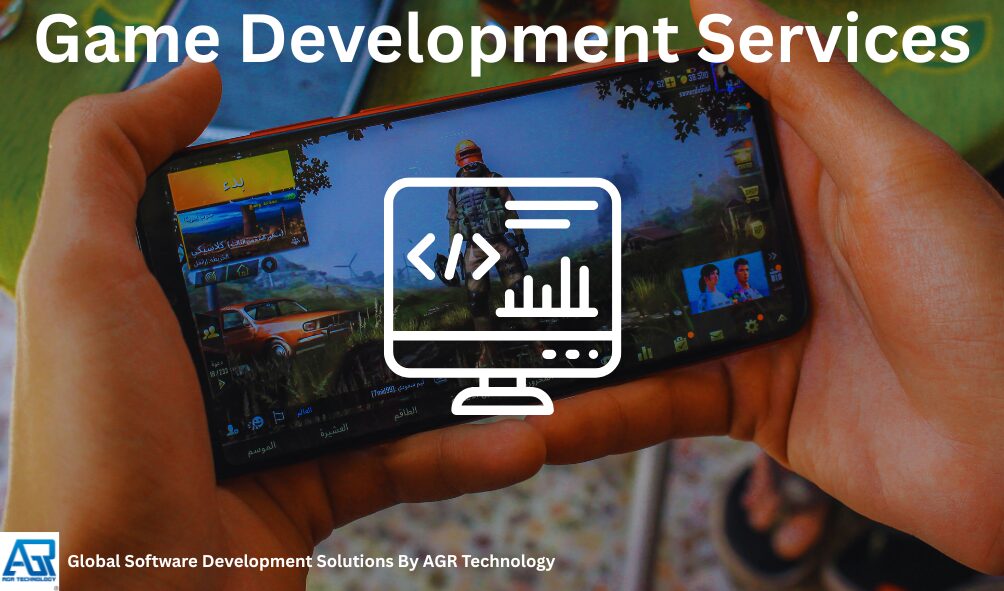
If you’re considering game development, you’re probably balancing two things that don’t always play nicely together: creative ambition and commercial reality. You want a game (or gamified experience) that looks sharp, runs smoothly, and keeps people coming back, without blowing timelines, budgets, or your team’s sanity.
At AGR Technology, we can deliver game development services and game software development services for businesses that need more than a “cool demo”. We build production-ready experiences with clear scope, measurable outcomes, and the kind of technical decisions that hold up once real users start tapping, clicking, and stress-testing your servers.
Below, we’ll walk you through the platforms we build for and the immersive services (AR/VR) we deliver, plus how we approach iGaming builds where reliability and compliance matter just as much as fun.
Get in contact with us to discuss your project
Reviews from our happy clients:

Justine Brummans
Alessio is both incredibly knowledgeable and personable! He gave me great advice that was catered to me and my situation. Thank you Alessio! Super helpful!

Springfield Equestrian Park
Alessio is amazing! I can not speak highly enough of how helpful and knowledgeable he is, my website he created far exceeded my expectations, he is so accomodating and I can only wish him every success with his business. I rate AGR technology 10 out of 10.
Legacy Energy
We used AGR Technology and dealt with Alessio to design and build our website as well as host our emails. Alessio was a pleasure to deal with and had plenty of ideas that we could implement into our site. He has a great attention to detail, he is also very polite in understanding our goals and what we wanted to achieve with our website.
Thanks mate,
Alex & Rob
Excellent Service
Alessio developed our website for our business and has done a wonderful job. He is very personable and knowledgeable. We have enjoyed working with him. We will be referring others to him and highly recommend him to those who need Tech advice.
MRC Performance
I have been in business for over 10 Years and recently moved to AGR Technology for all our IT needs. They are able to fix nearly anything remotely and always very helpful in recommending appropriate hardware upgrades that do the job as required but not costing more than needed.

Alessio provided an excellent service. He was very dedicated in his method of finding solutions to problems. He continued to try different avenues until he found the reason as to why a particular application was not working. He was very knowledgeable in his understanding of the internet and of applications and how they work, and he was able to apply this knowledge in understanding how to resolve the obstacles that continued to appear. He is understanding towards his client's needs and goals and he is willing to work with his client in achieving those goals. He is a very polite and well mannered person and very calm and gentle in his approach. I would highly recommend Alessio's services to anyone.

Palmira Rigoli
Great work ethics Alessio! We at Totally Gluten Free Products are very happy to have you on board as our IT and SEO master. Very reliable, trustworthy and knowledgeable in the field.
YouTube Comment

Nat's Custom Designs
Alessio from AGR Technology has recently helped me create a website for my business.
Throughout the whole process from start to finish Alessio made the process easy for me, by calling me and explaining each step of the way. I'm not very computer savvy, but with Alessio taking the time to explain in detail everything I needed to know from putting inventory in to having it shipped. He even remotely joined my computer to help guide me through everything.
He's very knowledgeable and is experienced in everything I needed and if there was anything else I needed to know that wasn't something he was familiar with, he researched it.
I would HIGHLY recommend Alessio to anyone. He has not only helped me for now but I know that if I ever needed help with anything else he would definitely go above and beyond to help. Thank you so much for everything you have done. It's been a long process but well worth it 🙂
Byron Macumber
AGR Technology is amazing. not only do they stick with you through out the process, they also accommodate to your wants and needs. They are efficient in their work and they have high integrity. Their capabilities are shown through their website design, and appropriate knowledge of utilities regarding software. over the many years of working with them they have been fantastic. I would recommend to everyone
Very helpful
Alessio was thorough, diligent and kept me updated at all time points. I was very impressed with his performance, passion and dedication. I will continue to use his services.
Wantrup & Associates
Alessio of AGR Technology is an IT guy we rely on whenever we need IT help. His professionalism impressed us right at the first time. He solved many of our IT problems in no time. Excellent communication and speedy response.
We highly recommend this company
From a happy customer
Valeria Bianco
I received AGR contact information from a previous client, who had found their service excellent. So I contacted AGR with some expectations, and I can say they exceeded them. Professional, honest, punctual, reliable, their service is faultless. We can't recommend them highly enough.
Very fast, value for money and a comprehensive service
AGR is professional, organised and very skilled at what they do. They take the initiative, looking after all the details that you would not have thought of to enhance your website presence, marketing funnel and automated appointment bookings. Big bonus - pricings are at a fraction of the cost of competitors.
Customer testimonial
Alessio from AGR Technology is wonderful at gently guiding the less technically savvy users to solve problems. Back up service excellent. Highly recommended
SEO for website
The team is very cooperative and delivers clean and very efficient work.

Raimond Volpe
Nothing but good things to say about Alessio. He has been great service and great at communicating with me by both phone and email. Very good knowledge and problem-solving ability with our web development. I would thoroughly recommend Alessio and AGR Technology to anyone wanting online marketing or web development
Website design
Big thank you to Alessio at AGR Technology for a smooth and easy website development process. Nothing was to difficult to accomplish, I can highly recommend his first class service.
Proudly supporting clients of all sizes to succeed through digital solutions











Why work with us?








Platforms We Develop Games For
Choosing a platform isn’t just a technical decision, it shapes your budget, timeline, art direction, and even your monetization options. We help you pick the right path based on your audience, performance needs, and launch goals.
Here are the main platforms we develop games for.
Mobile (iOS & Android)
Mobile is still the quickest way to reach a large audience, and it’s ideal for:
- Casual games and hyper-casual prototypes
- Brand activations and promotional mini-games
- Training and learning experiences for internal teams
- Location-based or camera-driven gameplay (especially when paired with AR)
What we focus on:
- Performance across a range of devices (not just the newest flagship phones)
- App store readiness (build signing, store assets, versioning)
- Analytics and event tracking so you can measure retention and conversion
If you’re aiming for App Store / Google Play launch, we’ll also help you avoid common submission blockers (permissions, privacy requirements, and stability issues).
Web Games (Browser-Based)
Web games are perfect when you want instant access, no install, no app store friction. They work well for:
- Marketing campaigns and lead gen experiences
- Event activations and product launches
- Lightweight multiplayer experiences
- Educational games delivered through a browser
We build web experiences that prioritize:
- Fast load times (critical for retention)
- Cross-browser compatibility
- Hosting and scalability planning (especially if you’re expecting traffic spikes)
And yes, web doesn’t have to mean “simple”. Plenty of modern web games are polished, responsive, and surprisingly deep.
PC (Windows/macOS)
PC is a strong choice for premium experiences, deeper gameplay loops, and communities that expect high performance. It’s also common for:
- Simulation and training products
- Internal tools that look and feel like games (serious games)
- Enterprise demos with higher visual fidelity
On PC builds, we think early about:
- Hardware variability and graphics settings
- Distribution strategy (Steam, direct download, private enterprise distribution)
- Patching and updates, because launch day is rarely the final day
Console (Project-Based)
Console development is more specialised, and access requirements vary by platform. If you’re heading toward console, we’ll help you:
- Validate feasibility and scope early
- Prepare a build pipeline that won’t collapse at certification time
- Design for controller-first UX and performance constraints
If console is on your roadmap but not your immediate priority, a common approach is to launch on PC first, learn from real player data, then expand.
Cross-Platform Builds
Many businesses come to us wanting “one game everywhere”. Sometimes that’s the right call, sometimes it’s a trap.
We’ll give you an honest recommendation based on:
- Input differences (touch vs controller vs keyboard/mouse)
- UI/UX complexity across screen sizes
- Performance targets and art style
- Ongoing maintenance costs (one platform is one QA matrix: five platforms is… five)
Multiplayer & Back-End Services (Where the Real Complexity Lives)
A lot of game projects feel straightforward until you add accounts, matchmaking, or real-time play. Our game software development services often include the systems around the game itself:
- Player accounts and authentication
- Game state syncing (real-time or turn-based)
- Leaderboards, achievements, rewards, and progression
- Admin dashboards for live operations
- Anti-cheat considerations (where relevant)
We’re also a broader digital partner (SEO, marketing, custom software, AI automation), so if your launch requires tracking, attribution, landing pages, or growth support, you’re not stuck coordinating five vendors.
Want to talk platform strategy? Tell us what you’re building and who it’s for, and we’ll recommend a practical platform plan. You can reach us via AGR Technology.
AR & VR Development Game Services
AR and VR are often pitched as “the future”, but the real question is simpler: does immersive tech solve a problem you actually have? When it does, it’s powerful.
We build AR & VR development game services for organizations using immersive experiences to:
- Train staff safely (without shutting down operations)
- Demonstrate products in 3D (especially for complex or high-value items)
- Create interactive brand experiences that people remember
- Prototype environments, workflows, or customer journeys
AR Game Development (Augmented Reality)
AR overlays digital elements onto the real world, usually via a phone, tablet, or headset. AR is a strong fit when you want the real environment to be part of the experience.
Common AR use cases we build:
- Product visualisation (place a life-size object in a room)
- Interactive retail or venue experiences
- Scavenger hunts and location-based campaigns
- On-site training overlays (step-by-step guidance)
What matters in AR builds:
- Tracking stability (objects should stay where they’re “anchored”)
- Lighting and environment variability (AR behaves differently in different spaces)
- Clear UX (AR can be confusing if you don’t guide users well)
VR Game Development (Virtual Reality)
VR is about full immersion, which makes it brilliant for training, simulation, and high-impact storytelling.
Where VR works particularly well:
- Safety training (repeat scenarios without real risk)
- High-cost equipment simulation
- Soft-skills practice (role-play scenarios)
- Interactive walkthroughs for property, tourism, or education
VR also demands discipline:
- Comfort-first movement design (to reduce motion sickness)
- Performance targets (frame rate is not negotiable in VR)
- Physical space and user safety considerations
Our AR/VR Delivery Approach (So You’re Not Guessing)
Immersive projects go sideways when teams skip validation. Our process keeps things grounded:
- Discovery & feasibility: we confirm the platform, environment, interaction model, and success metrics.
- Prototype: we test the “hard parts” early (tracking, interactions, performance).
- Production build: environments, gameplay loops, UI, analytics, and back-end (if needed).
- Testing & deployment: device testing, onboarding flows, and release planning.
If you’ve ever watched an AR demo look great in one room and fall apart in another… that’s exactly why we prototype first.
iGaming Application Development
iGaming isn’t just “make a game and ship it”. It’s a category where security, fairness, uptime, payments, and compliance expectations are high, and mistakes are expensive.
We support iGaming application development for businesses that need robust builds such as:
- Skill-based real-money style experiences (where legally appropriate)
- Casino-style game interfaces (integrated with approved platforms/providers)
- Tournament systems, ladders, and competitive events
- Loyalty mechanics, wallets, and player account systems
What we prioritize in iGaming projects:
- Secure architecture: strong authentication, secure storage, and sensible access controls
- Reliability: stable sessions, graceful handling of disconnections, and predictable behaviour under load
- Audit-friendly systems: clean logging and traceability (helpful for operations and compliance work)
- Fraud-aware design: protecting accounts, bonuses, and promotions from basic exploitation patterns
We’ll also be upfront about scope boundaries: licensing and jurisdictional compliance are specialist areas. We can build the technology and collaborate with your legal/compliance partners so the product is aligned with regulatory requirements.
Why Businesses Choose AGR Technology
You’re not just hiring developers, you’re hiring a team that understands digital delivery end-to-end.
When you work with us, you get:
- A clear build plan (milestones, risks, and dependencies)
- Practical platform advice (not “yes” to everything)
- Strong engineering fundamentals (performance, stability, maintainability)
- A partner that can support growth, strategy, SEO, marketing, and automation, when you’re ready
If you’re comparing vendors, here’s a simple question to ask: “How will you help us measure success after launch?” We build with analytics, iteration, and real outcomes in mind.
Ready to scope your game or immersive experience? Reach out to AGR Technology and we’ll review your goals, recommend the right platform, and give you a clear next step. Start here: AGR Technology.
Frequently Asked Questions About Game Development Services
What do game development services from AGR Technology typically include?
AGR Technology’s game development services cover production-ready builds across mobile, web, PC, console, and AR/VR, plus the systems around the game—analytics, event tracking, back-end services, and live-ops tools. The focus is clear scope, measurable outcomes, and technical decisions that stay stable under real user load.
How do I choose the right platform for game development services (mobile, web, PC, or console)?
Platform choice affects budget, timeline, art direction, monetization, and QA. AGR Technology recommends based on audience, performance targets, and launch goals—e.g., mobile for reach, web for no-install access, PC for premium depth, and console as a later expansion. They also flag cross-platform complexity early.
What makes multiplayer and back-end game software development services more complex?
Multiplayer adds accounts, authentication, matchmaking, syncing game state (real-time or turn-based), and live features like leaderboards and rewards. Reliability and scalability become critical, especially during traffic spikes. AGR Technology often builds admin dashboards and considers anti-cheat needs, because the “systems around the game” drive long-term stability.
When should a business use AR/VR game development services instead of a standard game?
AR/VR is best when immersion solves a real business problem—like safe staff training, 3D product demonstrations, or high-impact brand experiences. AR works well for location-based and real-world overlays, while VR suits simulation and storytelling. AGR Technology validates feasibility first, then prototypes tracking, interactions, and performance before full production.
What should I look for in iGaming application development to avoid costly mistakes?
Prioritize secure architecture, reliable sessions, audit-friendly logging, and fraud-aware design—because uptime, fairness expectations, and payments increase risk. AGR Technology builds the technology stack and coordinates with your legal/compliance partners for jurisdictional requirements, while being clear about scope boundaries like licensing and regulatory interpretation.
How much do game development services cost and how long do they take?
Costs and timelines depend on platform count, art scope, multiplayer/back-end needs, and compliance requirements (especially for iGaming). A common way to control both is discovery plus an early prototype to test “hard parts” like performance, tracking (AR), or networking. AGR Technology provides build estimates after scoping goals and constraints.
Technologies we can support:
Roblox Game Development