![logo-new-23[1]](https://agrtech.com.au/wp-content/uploads/elementor/thumbs/logo-new-231-qad2sqbr9f0wlvza81xod18hkirbk9apc0elfhpco4.png "logo-new-23[1]")
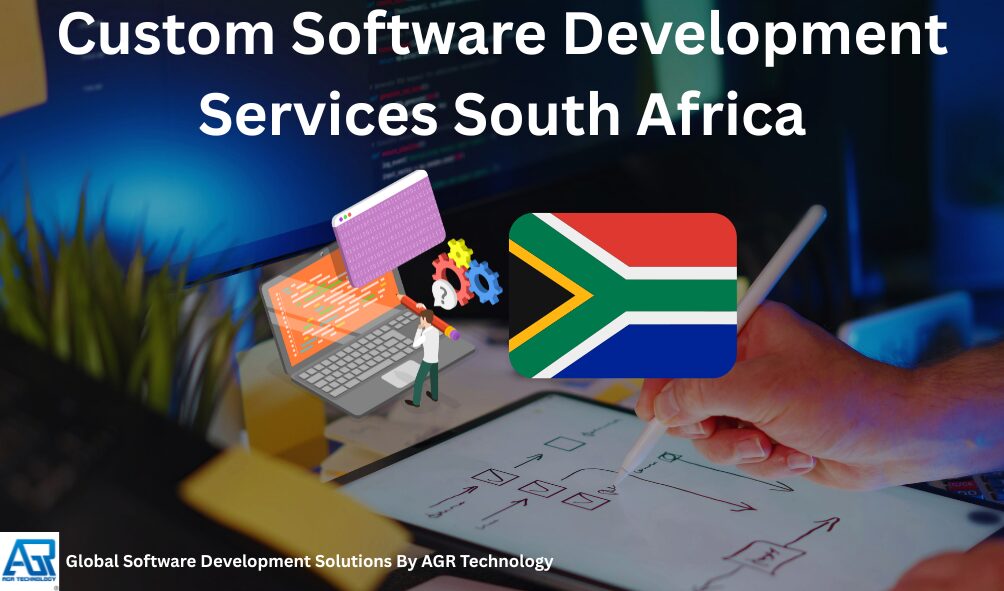
If you’re running a business in South Africa, you’ve probably realized that generic software only takes you so far. You can bend your processes to fit off‑the‑shelf tools for a while… until the workarounds, spreadsheets, and manual fixes start costing real money and time.
At AGR Technology, we can help South African organizations replace those bottlenecks with custom software that’s built around how you actually operate, in your industry, in your region, and under South African regulations.
In this guide, we’ll walk through how custom software development services for South Africa work, which solutions are available, what to look for in a development partner, and how to reduce project risk while getting clear business outcomes.
If you’re considering a new platform, rebuilding a legacy system, or just want to see what’s possible, this page is for you.
Get in contact with us to discuss your project
Reviews from our happy clients:

Justine Brummans
Alessio is both incredibly knowledgeable and personable! He gave me great advice that was catered to me and my situation. Thank you Alessio! Super helpful!

Springfield Equestrian Park
Alessio is amazing! I can not speak highly enough of how helpful and knowledgeable he is, my website he created far exceeded my expectations, he is so accomodating and I can only wish him every success with his business. I rate AGR technology 10 out of 10.
Legacy Energy
We used AGR Technology and dealt with Alessio to design and build our website as well as host our emails. Alessio was a pleasure to deal with and had plenty of ideas that we could implement into our site. He has a great attention to detail, he is also very polite in understanding our goals and what we wanted to achieve with our website.
Thanks mate,
Alex & Rob
Excellent Service
Alessio developed our website for our business and has done a wonderful job. He is very personable and knowledgeable. We have enjoyed working with him. We will be referring others to him and highly recommend him to those who need Tech advice.
MRC Performance
I have been in business for over 10 Years and recently moved to AGR Technology for all our IT needs. They are able to fix nearly anything remotely and always very helpful in recommending appropriate hardware upgrades that do the job as required but not costing more than needed.

Alessio provided an excellent service. He was very dedicated in his method of finding solutions to problems. He continued to try different avenues until he found the reason as to why a particular application was not working. He was very knowledgeable in his understanding of the internet and of applications and how they work, and he was able to apply this knowledge in understanding how to resolve the obstacles that continued to appear. He is understanding towards his client's needs and goals and he is willing to work with his client in achieving those goals. He is a very polite and well mannered person and very calm and gentle in his approach. I would highly recommend Alessio's services to anyone.

Palmira Rigoli
Great work ethics Alessio! We at Totally Gluten Free Products are very happy to have you on board as our IT and SEO master. Very reliable, trustworthy and knowledgeable in the field.
YouTube Comment
Nat's Custom Designs
Alessio from AGR Technology has recently helped me create a website for my business.
Throughout the whole process from start to finish Alessio made the process easy for me, by calling me and explaining each step of the way. I'm not very computer savvy, but with Alessio taking the time to explain in detail everything I needed to know from putting inventory in to having it shipped. He even remotely joined my computer to help guide me through everything.
He's very knowledgeable and is experienced in everything I needed and if there was anything else I needed to know that wasn't something he was familiar with, he researched it.
I would HIGHLY recommend Alessio to anyone. He has not only helped me for now but I know that if I ever needed help with anything else he would definitely go above and beyond to help. Thank you so much for everything you have done. It's been a long process but well worth it 🙂
Byron Macumber
AGR Technology is amazing. not only do they stick with you through out the process, they also accommodate to your wants and needs. They are efficient in their work and they have high integrity. Their capabilities are shown through their website design, and appropriate knowledge of utilities regarding software. over the many years of working with them they have been fantastic. I would recommend to everyone
Very helpful
Alessio was thorough, diligent and kept me updated at all time points. I was very impressed with his performance, passion and dedication. I will continue to use his services.
Wantrup & Associates
Alessio of AGR Technology is an IT guy we rely on whenever we need IT help. His professionalism impressed us right at the first time. He solved many of our IT problems in no time. Excellent communication and speedy response.
We highly recommend this company
From a happy customer
Valeria Bianco
I received AGR contact information from a previous client, who had found their service excellent. So I contacted AGR with some expectations, and I can say they exceeded them. Professional, honest, punctual, reliable, their service is faultless. We can't recommend them highly enough.
Very fast, value for money and a comprehensive service
AGR is professional, organised and very skilled at what they do. They take the initiative, looking after all the details that you would not have thought of to enhance your website presence, marketing funnel and automated appointment bookings. Big bonus - pricings are at a fraction of the cost of competitors.
Customer testimonial
Alessio from AGR Technology is wonderful at gently guiding the less technically savvy users to solve problems. Back up service excellent. Highly recommended
SEO for website
The team is very cooperative and delivers clean and very efficient work.

Raimond Volpe
Nothing but good things to say about Alessio. He has been great service and great at communicating with me by both phone and email. Very good knowledge and problem-solving ability with our web development. I would thoroughly recommend Alessio and AGR Technology to anyone wanting online marketing or web development
Website design
Big thank you to Alessio at AGR Technology for a smooth and easy website development process. Nothing was to difficult to accomplish, I can highly recommend his first class service.
Proudly supporting clients of all sizes to succeed through digital solutions






Why work with us?




Why South African Businesses Are Turning To Custom Software

Limitations Of Off-The-Shelf Solutions
Most South African teams start with off‑the‑shelf tools: accounting systems, CRMs, ticketing platforms, ERPs. Those can be useful, but we see the same issues come up again and again:
- Poor fit for local processes – Global products often don’t match South African tax, payroll, or compliance needs out of the box.
- Limited localisation – VAT, BEE reporting, multi‑currency requirements, local payment gateways, and POPIA considerations are often bolted on, not built in.
- Rigid workflows – You end up changing your operations to fit the system instead of the other way around.
- Integration gaps – Systems don’t talk to each other, which means manual re‑capturing of data and a high error rate.
- Licensing lock‑in – As you grow, subscription and seat licenses become expensive without delivering extra value.
When these pain points start slowing down growth, custom software development becomes a practical business decision, not a “nice to have”.
Key Benefits Of Custom Software For Local Businesses
When we design and build custom applications for South African clients, the goals are almost always similar:
- Fit-for-purpose workflows – The system reflects how your teams actually work, including your approvals, roles, and edge cases.
- Local compliance by design – POPIA, SARS rules, sector regulations, and internal governance built into the logic and data structures.
- Better integration – APIs linking your accounting, ERP, CRM, warehouse, and customer‑facing systems to cut out double‑handling.
- Competitive differentiation – You’re no longer using the exact same tools as your competitors: your platform becomes a strategic asset.
- Ownership and control – No dependency on a single vendor’s roadmap: you control features, priorities, and data.
- Scalability – Architecture that can support more users, branches, and data volumes as you grow across provinces or internationally.
Custom development isn’t about more features. It’s about the right features implemented in a way that matches your strategy.
If you’d like to discuss whether a bespoke solution makes sense for your organization, we’re happy to give you an honest view.
How The South African Context Shapes Software Requirements
South Africa isn’t a copy‑and‑paste of the US or Europe, and your software shouldn’t be either. We routinely account for:
- Multi‑language environments – Interfaces, notifications, and documents that can cater for English plus other local languages where needed.
- Local payments and banking – Integration with South African banks, EFT, Ozow, PayFast, and other common payment rails.
- Regulation and data residency – POPIA compliance, data localization, audit trails, and role‑based access for sensitive data.
- Hybrid workforces – Enabling both office and on‑site teams (mines, farms, warehouses, clinics) to use the same core systems.
Core Custom Software Development Services Offered For South Africa

End-To-End Product Development
We work with organizations that need more than a few screens built. They want a complete product that solves a well‑defined business problem.
Our end‑to‑end custom software development services typically include:
- Discovery and requirements workshops with your stakeholders
- UX/UI design and prototyping
- Architecture and technical design
- Backend and frontend development
- Integration with existing systems and third‑party APIs
- Testing (functional, performance, security)
- Deployment, documentation, and knowledge transfer
We stay involved from initial concept through to launch and post‑go‑live support, so you’re not left managing a fragmented vendor landscape.
Web And Mobile Application Development
Modern South African businesses need to meet users wherever they are, on desktop, tablet, or mobile.
We design and build:
- Responsive web applications for internal portals, partner platforms, and customer self‑service
- Native or cross‑platform mobile apps for Android and iOS
- Progressive Web Apps (PWAs) for lightweight, offline‑friendly use cases
Where it makes sense, we use a mobile‑first design approach, especially for field operations, logistics, and customer‑facing portals.
Enterprise Systems, ERP, And CRM Solutions
Many of our clients have outgrown spreadsheets or legacy systems. They need better control over operations, inventory, and customer relationships.
We help by:
- Building custom ERP modules tailored to your supply chain, production, or service delivery
- Implementing or extending CRM platforms to match your sales and support processes
- Re‑platforming legacy desktop systems to modern web‑based or cloud‑based solutions
- Consolidating multiple tools into a single unified platform where it’s justified
We’re careful about when to build from scratch versus when to extend or integrate existing enterprise platforms, we’ll walk you through the options and trade‑offs.
Systems Integration And API Development
Disjointed systems are one of the biggest sources of wasted time and reporting errors.
Our integration services include:
- Designing and building RESTful APIs and web services
- Connecting ERPs, CRMs, accounting systems, and custom line‑of‑business apps
- Implementing secure single sign‑on (SSO) and identity management
- Data migration and synchronization between old and new platforms
If you’re stuck exporting CSV files between tools or manually re‑capturing information, we can usually automate that away.
Cloud, Data, And Analytics Solutions
Data is only useful if you can trust it and act on it.
We can help you with:
- Cloud‑based architectures on AWS, Azure, or other major providers
- Data warehouses and reporting layers
- Dashboards and operational analytics for managers and executives
- Event logging and monitoring for critical systems
Our focus is on giving you reliable, near real‑time visibility into your operations, not just pretty charts.
Maintenance, Support, And Ongoing Optimization
Long‑term support is critical. Too many organizations are left with custom systems that no one can maintain.
With AGR Technology, you can expect:
- Structured support SLAs and response times
- Preventative maintenance and patching
- Performance tuning as user numbers and data grow
- Regular enhancement cycles based on real usage feedback
We aim to become a long‑term technology partner, not a one‑off project vendor.
If you’d like a quote or a second opinion on a current project, reach out to our team and we’ll walk through your situation together.
Industries In South Africa That Benefit Most From Custom Software

Financial Services, Fintech, And Insurance
South Africa’s financial and insurance sectors have strong regulatory requirements and high customer expectations.
We can work with these organizations on:
- Customer onboarding and KYC platforms
- Loan, policy, and claim management systems
- Secure portals for brokers, partners, and customers
- Integration with core banking or policy administration systems
Security, auditing, and POPIA compliance are baked into the architecture from day one.
Retail, E‑Commerce, And Logistics
Retailers and logistics providers operate on thin margins. Efficiency and customer experience make a big difference.
Typical solutions include:
- Custom e‑commerce platforms or extensions to existing stores
- Order management and inventory tracking across warehouses and branches
- Fleet management and route optimization tools
- Real‑time tracking portals for customers and operations teams
We focus on reducing manual handling, cutting delivery lead times, and improving visibility from supplier to end customer.
Manufacturing, Mining, And Industrial Operations
In manufacturing and mining, software has to work in the real world, on site, in harsh environments, with real safety and downtime implications.
We help by building:
- Production planning and scheduling systems
- Asset, maintenance, and inspection management tools
- Health and safety reporting platforms
- Mobile apps for field inspections and incident logging
Offline capability, rugged device support, and clear user interfaces for non‑technical staff are priorities here.
Healthcare, Education, And Public Sector
For healthcare providers, educational institutions, and government or municipal bodies, data protection and accessibility are key.
Our work often covers:
- Patient or learner information systems
- Booking, scheduling, and referral platforms
- Case management tools
- Reporting and analytics for compliance and performance monitoring
We pay close attention to privacy, role‑based access, and auditability to meet internal and statutory requirements.
If you’re in one of these sectors and considering a new system, we can share relevant case examples and patterns that have worked for similar organizations.
Key Technologies And Approaches Used By South African Development Teams
Modern Tech Stacks And Frameworks
We use modern, widely adopted technologies so your systems remain maintainable and future‑proof, for example:
- Backend: .NET, Node.js, Java, or similar enterprise‑grade platforms
- Frontend: React, Angular, or Vue
- Mobile: Native Android/iOS or cross‑platform frameworks like React Native or Flutter
- Databases: SQL Server, PostgreSQL, MySQL, and appropriate NoSQL stores
The exact stack is chosen based on your existing environment, support skills, and performance needs.
Agile And Lean Delivery Methodologies
We favor Agile and lean delivery so you see progress early and can give feedback while we build.
Typically this means:
- Short, focused development sprints
- Regular demos and check‑ins with your team
- Early prototypes or MVPs to validate assumptions
- Measurable milestones and transparent reporting
This approach reduces the risk of surprises at the end and keeps the solution aligned with business goals.
Security, Compliance, And Data Protection (POPIA)
Security and compliance are non‑negotiable, particularly under POPIA.
Our practices include:
- Data minimization and clear retention policies
- Encryption in transit and at rest where appropriate
- Access control and detailed audit trails
- Secure coding standards and regular reviews
- Infrastructure hardening and monitoring in the cloud
We’ll work with your internal compliance and IT security teams to align with your policies and sector regulations.
Cloud-First And Mobile-First Strategies
Most new builds we deliver are cloud‑hosted, with mobile or responsive experiences from the start.
A cloud‑first, mobile‑first approach gives you:
- Easier scaling as user numbers grow
- Faster deployment of new features and fixes
- Lower upfront infrastructure costs
- Access for distributed teams and field workers
We’ll recommend the right hosting model and architecture for your risk profile, budget, and internal capabilities.
Choosing The Right Custom Software Development Partner In South Africa
Defining Your Business Goals And Requirements
Before you choose a partner, you should be clear on what success looks like. We often help clients clarify:
- The core business problems to solve
- The specific outcomes and KPIs they care about
- Which processes should be standardized and which are strategic differentiators
- Constraints: timelines, budget, internal capacity, compliance
If you’re unsure where to start, we offer structured discovery sessions to unpack this with your stakeholders.
Evaluating Technical Expertise And Industry Experience
When you compare providers, look at:
- Their track record with similar projects and industries
- The technologies they specialize in (and why)
- How they handle integration with existing systems
- Their approach to testing, security, and documentation
We’re always transparent about where we’re a strong fit and where we’re not. If we don’t think we can deliver what you need, we’ll say so.
Onshore, Nearshore, Or Hybrid Teams
Some organizations prefer fully local teams: others are open to hybrid onshore/nearshore models for cost and capacity reasons.
With AGR Technology, you can:
- Work with a core team that understands the South African context
- Leverage additional specialist skills as needed
- Maintain clear points of contact and project ownership
The aim is to give you the right combination of accessibility, cost‑effectiveness, and depth of expertise.
Budgeting, Timelines, And Project Governance
Custom software is an investment, so clarity around cost and governance is essential.
We help by:
- Providing phased budgets (e.g. discovery, MVP, scale‑up)
- Calling out cost drivers and optional components
- Offering fixed‑scope pieces where appropriate
- Setting up steering committees, status reporting, and risk logs
You should always know where the project stands, what’s been delivered, and what’s coming next. That’s how we run our engagements.
If you’d like a structured estimate for your project, contact us with a brief outline and we’ll respond with practical next steps.
Common Challenges And How To De-Risk Your Project
Scoping, Change Management, And Scope Creep
One of the biggest risks in custom development is a moving target.
To manage this, we:
- Start with a clear problem statement and measurable objectives
- Capture must‑haves vs nice‑to‑haves
- Use change control processes for new ideas that emerge mid‑project
- Break delivery into phases, so value is released early
This doesn’t stop change, it makes change visible and intentional.
User Adoption, Training, And Change Management
Even the best system fails if people don’t use it.
Our approach includes:
- Involving key users early in workshops and testing
- Designing interfaces that are intuitive for your teams
- Providing training materials and train‑the‑trainer sessions
- Supporting a pilot or phased rollout rather than a big‑bang switch
This reduces resistance and helps your people feel ownership rather than being “forced” into a new tool.
Ensuring Long-Term Support And Scalability
You don’t want a system that works well for six months and then hits a wall.
We de‑risk long‑term support by:
- Using widely known technologies and patterns
- Documenting architecture, APIs, and key business rules
- Providing clear support arrangements post‑go‑live
- Designing for scalability from the start, not as an afterthought
If you already have a custom system that’s become hard to maintain, we can assess it and recommend a stabilization or modernization plan.
Conclusion
Custom software development services for South Africa can give your business a system that actually matches how you operate, with local compliance, reliable integrations, and room to grow.
At AGR Technology, we focus on building practical, well‑engineered solutions that deliver clear business outcomes, not just code.
If you’re:
- Frustrated with generic tools that don’t fit your processes
- Planning a new digital product or platform
- Looking to modernize or integrate existing systems
…we’d be glad to talk through options and share what’s worked for organizations like yours.
Ready to explore what custom software could look like for your business?
Contact AGR Technology today to book a no‑obligation discovery call, or send us a short brief and we’ll respond with concrete next steps, realistic timelines, and an honest view of what’s possible for your organization in the South African market.
Frequently Asked Questions About Custom Software Development Services in South Africa
What are custom software development services for South Africa?
Custom software development services for South Africa involve designing, building, and maintaining applications tailored to a specific organization’s processes, regulations, and environment. This typically includes discovery workshops, UX/UI design, backend and frontend development, integrations, testing, deployment, and ongoing support aligned with local compliance such as POPIA and SARS requirements.
Why should South African businesses choose custom software over off-the-shelf tools?
South African businesses often outgrow generic tools because they struggle with local tax rules, VAT, BEE reporting, POPIA compliance, and integration gaps. Custom software is built around your workflows, regulations, and infrastructure, reducing manual work, improving accuracy, and giving you a competitive edge with a platform your competitors don’t share.
How much do custom software development services in South Africa typically cost?
Costs vary widely based on scope, complexity, integrations, and timelines. Most projects are budgeted in phases—discovery, MVP, and scale-up—rather than a single lump sum. Integrations, advanced security, and mobile apps are common cost drivers. A structured discovery session is usually needed to provide a realistic estimate and phased budget.
What industries in South Africa benefit most from custom software solutions?
Custom software is especially valuable in regulated or operationally complex sectors, including financial services and insurance, retail and e‑commerce, logistics, manufacturing, mining, industrial operations, healthcare, education, and the public sector. These industries often need tailored workflows, strong compliance controls, offline capability, and deep integrations with existing ERP, CRM, or core systems.
How do South African development teams ensure POPIA and local compliance?
Mature South African teams design compliance in from day one: data minimization and retention policies, encryption in transit and at rest, role-based access controls, audit trails, and secure coding standards. They also align with internal governance, sector regulations, and data residency requirements, often collaborating closely with your compliance and IT security teams.
Country information & links:

Daniel Case, CC BY-SA 3.0, via Wikimedia Commons