![logo-new-23[1]](https://agrtech.com.au/wp-content/uploads/elementor/thumbs/logo-new-231-qad2sqbr9f0wlvza81xod18hkirbk9apc0elfhpco4.png "logo-new-23[1]")
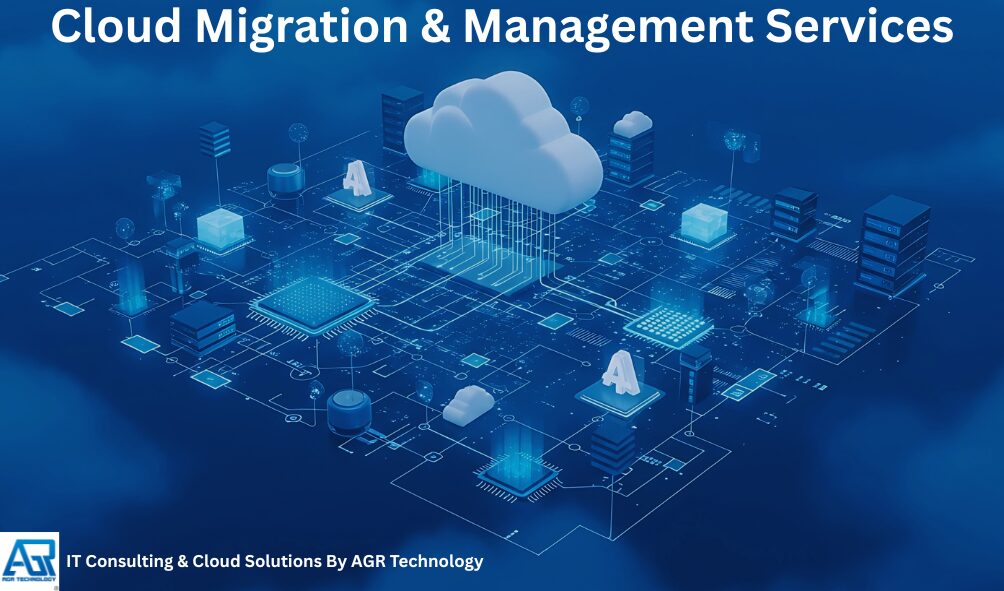
If your systems are starting to feel like they’re held together with duct tape, slow deployments, surprise outages, rising infrastructure costs, you’re not alone. Most growing businesses reach a point where on‑prem servers (or a messy mix of legacy hosting and SaaS tools) stop being “good enough”.
At AGR Technology, we can help Australian & international businesses plan and deliver cloud migration and management services that are practical, secure, and built for day‑to‑day operations, not just a one-off project. On this page, we’ll walk you through how we execute cloud migrations, how we manage change without disrupting the business, and how we design hybrid and multi-cloud setups that actually make sense for your team.
Get in touch to discuss your business needs
Reviews from our happy clients

Justine Brummans
Alessio is both incredibly knowledgeable and personable! He gave me great advice that was catered to me and my situation. Thank you Alessio! Super helpful!

Springfield Equestrian Park
Alessio is amazing! I can not speak highly enough of how helpful and knowledgeable he is, my website he created far exceeded my expectations, he is so accomodating and I can only wish him every success with his business. I rate AGR technology 10 out of 10.
Legacy Energy
We used AGR Technology and dealt with Alessio to design and build our website as well as host our emails. Alessio was a pleasure to deal with and had plenty of ideas that we could implement into our site. He has a great attention to detail, he is also very polite in understanding our goals and what we wanted to achieve with our website.
Thanks mate,
Alex & Rob
Excellent Service
Alessio developed our website for our business and has done a wonderful job. He is very personable and knowledgeable. We have enjoyed working with him. We will be referring others to him and highly recommend him to those who need Tech advice.
MRC Performance
I have been in business for over 10 Years and recently moved to AGR Technology for all our IT needs. They are able to fix nearly anything remotely and always very helpful in recommending appropriate hardware upgrades that do the job as required but not costing more than needed.

Alessio provided an excellent service. He was very dedicated in his method of finding solutions to problems. He continued to try different avenues until he found the reason as to why a particular application was not working. He was very knowledgeable in his understanding of the internet and of applications and how they work, and he was able to apply this knowledge in understanding how to resolve the obstacles that continued to appear. He is understanding towards his client's needs and goals and he is willing to work with his client in achieving those goals. He is a very polite and well mannered person and very calm and gentle in his approach. I would highly recommend Alessio's services to anyone.

Palmira Rigoli
Great work ethics Alessio! We at Totally Gluten Free Products are very happy to have you on board as our IT and SEO master. Very reliable, trustworthy and knowledgeable in the field.
YouTube Comment
Nat's Custom Designs
Alessio from AGR Technology has recently helped me create a website for my business.
Throughout the whole process from start to finish Alessio made the process easy for me, by calling me and explaining each step of the way. I'm not very computer savvy, but with Alessio taking the time to explain in detail everything I needed to know from putting inventory in to having it shipped. He even remotely joined my computer to help guide me through everything.
He's very knowledgeable and is experienced in everything I needed and if there was anything else I needed to know that wasn't something he was familiar with, he researched it.
I would HIGHLY recommend Alessio to anyone. He has not only helped me for now but I know that if I ever needed help with anything else he would definitely go above and beyond to help. Thank you so much for everything you have done. It's been a long process but well worth it 🙂
Byron Macumber
AGR Technology is amazing. not only do they stick with you through out the process, they also accommodate to your wants and needs. They are efficient in their work and they have high integrity. Their capabilities are shown through their website design, and appropriate knowledge of utilities regarding software. over the many years of working with them they have been fantastic. I would recommend to everyone
Very helpful
Alessio was thorough, diligent and kept me updated at all time points. I was very impressed with his performance, passion and dedication. I will continue to use his services.
Wantrup & Associates
Alessio of AGR Technology is an IT guy we rely on whenever we need IT help. His professionalism impressed us right at the first time. He solved many of our IT problems in no time. Excellent communication and speedy response.
We highly recommend this company
From a happy customer
Valeria Bianco
I received AGR contact information from a previous client, who had found their service excellent. So I contacted AGR with some expectations, and I can say they exceeded them. Professional, honest, punctual, reliable, their service is faultless. We can't recommend them highly enough.
Very fast, value for money and a comprehensive service
AGR is professional, organised and very skilled at what they do. They take the initiative, looking after all the details that you would not have thought of to enhance your website presence, marketing funnel and automated appointment bookings. Big bonus - pricings are at a fraction of the cost of competitors.
Customer testimonial
Alessio from AGR Technology is wonderful at gently guiding the less technically savvy users to solve problems. Back up service excellent. Highly recommended
SEO for website
The team is very cooperative and delivers clean and very efficient work.

Raimond Volpe
Nothing but good things to say about Alessio. He has been great service and great at communicating with me by both phone and email. Very good knowledge and problem-solving ability with our web development. I would thoroughly recommend Alessio and AGR Technology to anyone wanting online marketing or web development
Website design
Big thank you to Alessio at AGR Technology for a smooth and easy website development process. Nothing was to difficult to accomplish, I can highly recommend his first class service.
Some of the businesses we have helped









Cloud Migration Execution
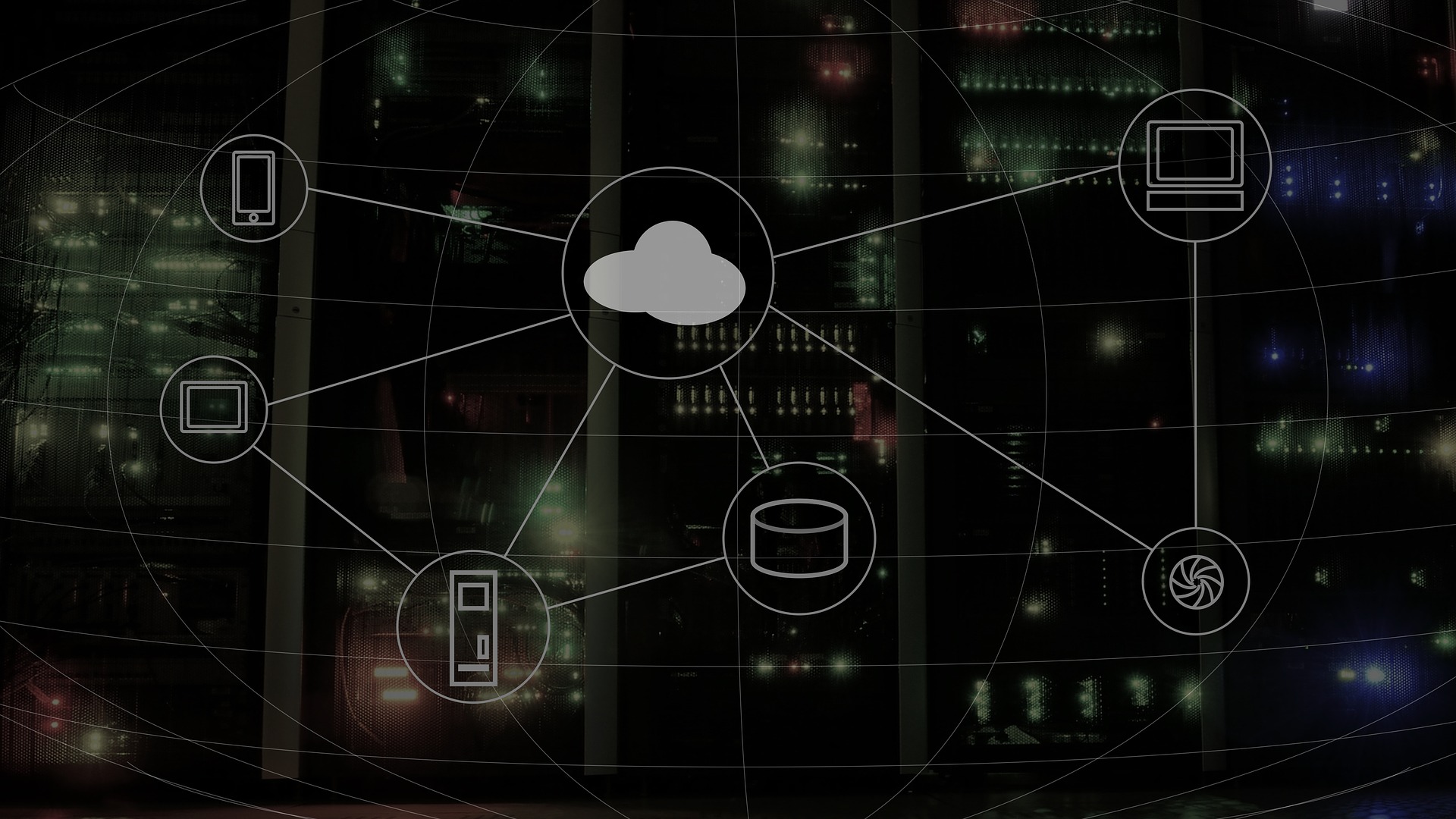
Cloud migration isn’t just “move the servers to AWS/Azure/GCP”. The real work is making sure your applications, data, security, and people are ready, then executing the move with minimal downtime and a clear plan for what happens after go-live.
When we run a cloud migration, we focus on three outcomes:
- Continuity: Keep your business running while systems transition.
- Security and compliance: Protect data, access, and auditability from day one.
- Measurable improvement: Faster performance, cleaner operations, and cost control you can actually see.
Here’s what our cloud migration execution typically includes:
- Discovery and assessment: We map your current environment (apps, databases, integrations, identity, networking) and identify dependencies that commonly derail migrations.
- Migration approach selection: Rehost, replatform, refactor, replace, or retain, based on business value, risk, and timelines.
- Architecture and landing zone: Secure cloud foundations (accounts/subscriptions, network segmentation, IAM, logging, backup policies).
- Data migration and validation: Staged transfers, integrity checks, and cutover planning.
- Application migration: Prioritized waves so the most critical workloads get the attention they deserve.
- Testing and go-live: Performance testing, rollback planning, and user acceptance.
- Operational handover: Documentation, monitoring, alerting, and runbooks so your team isn’t left guessing.
We also take a firm stance on cost governance. Cloud spend can drift quickly if nobody’s watching. That’s why we put guardrails in place early, tagging, budgets, rightsizing, and visibility, so finance and IT can make decisions with the same set of numbers.
If you’re weighing up a cloud move right now, we can help you pressure-test the business case and reduce migration risk before you commit. Talk to AGR Technology via agrtech.com.au to scope your migration and get a clear execution plan.
Cloud strategy and change management
A migration can be technically perfect and still fail if the people side is ignored. Teams need clarity on what’s changing, why it’s changing, and what “done” looks like.
We treat cloud strategy and change management as part of delivery, not a separate slide deck that nobody reads.
What we do in practice:
- Align stakeholders early: IT, security, finance, and business owners. Cloud touches everyone.
- Define success metrics: Uptime targets, recovery objectives (RTO/RPO), performance baselines, deployment frequency, and cost thresholds.
- Create a change plan your team will follow: Communications, training, and phased adoption.
- Reduce operational shock: New monitoring tools, new access methods (SSO/IAM), new backup and incident processes, introduced in a controlled way.
We’ll also help you decide what to keep in-house and what to outsource. Some teams want us to run ongoing cloud management: others want capability transfer so they can operate independently. Either way, we document the environment and build repeatable processes so you’re not relying on tribal knowledge.
Hybrid and Multi-Cloud Solutions
Not every workload belongs in a single public cloud. Sometimes you need to keep certain systems on-prem (latency, compliance, equipment integration), while moving everything else to the cloud. And sometimes multi-cloud isn’t a buzzword, it’s a real requirement due to vendor constraints, client policies, or resilience goals.
We design hybrid and multi-cloud solutions that are intentional, not complicated for the sake of it.
Common real-world scenarios we support:
- Hybrid for legacy or regulated systems: Keep sensitive workloads on-prem while using cloud for analytics, web apps, DR, or burst capacity.
- Multi-cloud for resilience or vendor fit: For example, one platform for data/AI workloads and another for app hosting or identity needs.
- Edge + cloud for operational sites: Useful in manufacturing, logistics, and field services where connectivity can be inconsistent.
What we focus on so these setups stay manageable:
- Identity and access consistency: Centralised identity (SSO/MFA), least-privilege access, and clean join/leave processes.
- Network design that won’t bite later: Segmentation, private connectivity where needed, and clear traffic paths.
- Unified monitoring and logging: One view of health and security signals, not five dashboards nobody checks.
- Backup and disaster recovery design: Practical recovery plans that match your tolerance for downtime, not theoretical perfection.
If you’re hearing conflicting advice like “go all-in on one cloud” vs “spread risk across two”, we can give you a grounded recommendation based on your environment, risk profile, and budget.
Cloud Strategy and Roadmap Development
Cloud works best when it’s treated like a product with a roadmap, not a single project. That’s where strategy and sequencing matter.
Our cloud strategy and roadmap development typically covers:
- Workload prioritisation: We score systems by business value, complexity, and risk so you migrate in the right order.
- Target architecture: What your future environment should look like (networking, identity, security, data, app platforms).
- Operating model: Who owns what, security, patching, incidents, deployments, cost management.
- Governance and standards: Naming/tagging conventions, policy-as-code where relevant, and clear approval pathways.
- Timeline and migration waves: A realistic plan with milestones, dependencies, and decision points.
And we don’t pretend cloud is always cheaper by default. Cost outcomes depend on architecture, usage patterns, and discipline. That’s why our roadmap includes FinOps-style controls (budgets, tagging, rightsizing reviews) so savings, when they’re available, are actually captured.
If you’re ready to move from “we should migrate” to a plan your leadership team can sign off on, we can help. Contact AGR Technology and we’ll map out a migration roadmap that fits your systems, your risk appetite, and your growth targets.’
Cloud Migration and Management Services FAQs
What do cloud migration and management services include for a growing business?
Cloud migration and management services cover more than moving servers. They typically include discovery and dependency mapping, selecting an approach (rehost/replatform/refactor/replace/retain), building a secure landing zone, migrating data and apps in waves, testing and go-live planning, and operational handover with monitoring, alerting, and runbooks.
How does AGR Technology execute cloud migration and management services with minimal downtime?
AGR Technology plans migrations around continuity: staged data transfers, integrity checks, and cutover planning; prioritized application waves; and thorough testing with rollback options. They also build cloud foundations early (IAM, network segmentation, logging, backups) so security and operations are stable from day one through go-live and beyond.
What’s the difference between rehost, replatform, refactor, replace, and retain in a cloud migration?
These are common migration paths: rehost lifts workloads as-is; replatform makes small platform changes; refactor redesigns for cloud-native benefits; replace swaps for SaaS or a new product; and retain keeps systems where they are (often temporarily). The right choice depends on value, risk, and timelines.
Why do cloud migrations fail without change management, even if the tech work is solid?
Migrations fail when teams aren’t prepared for new processes, tools, and responsibilities. Effective change management aligns IT, security, finance, and business owners; defines success metrics like RTO/RPO and cost thresholds; provides training and communication; and introduces monitoring, access (SSO/IAM), and incident processes in controlled phases.
When should a business choose a hybrid or multi-cloud approach instead of a single cloud?
Hybrid makes sense when some workloads must stay on-prem due to latency, compliance, or equipment integration, while others move to cloud for analytics, web apps, DR, or burst capacity. Multi-cloud can fit vendor constraints or resilience goals, but should be intentional with consistent identity, networking, monitoring, and DR.
How do you control cloud costs after migration, and what is FinOps in practice?
Cost control starts with governance guardrails: tagging standards, budgets, spend visibility, and rightsizing reviews so IT and finance use the same numbers. FinOps in practice means ongoing discipline—tracking usage, optimizing resources, and setting cost thresholds—because cloud savings depend on architecture and operational habits, not default pricing.