![logo-new-23[1]](https://agrtech.com.au/wp-content/uploads/elementor/thumbs/logo-new-231-qad2sqbr9f0wlvza81xod18hkirbk9apc0elfhpco4.png "logo-new-23[1]")
If your systems feel slow, fragile, or hard to scale, you’re paying for it in ways that don’t show up neatly on a line item, lost time, security risk, and missed opportunities. In this page, we explain why upgrading your IT infrastructure is a business decision (not just an IT project), what to prioritise, and how we at AGR Technology plan and deliver upgrades with minimal risk and clear ROI. If you’re ready to reduce downtime and move faster, let’s map your next steps.
Need help taking care of your business IT? Contact AGR Technology to see how we can help
Reviews from some of our happy customers:

Justine Brummans
Alessio is both incredibly knowledgeable and personable! He gave me great advice that was catered to me and my situation. Thank you Alessio! Super helpful!

Springfield Equestrian Park
Alessio is amazing! I can not speak highly enough of how helpful and knowledgeable he is, my website he created far exceeded my expectations, he is so accomodating and I can only wish him every success with his business. I rate AGR technology 10 out of 10.
Legacy Energy
We used AGR Technology and dealt with Alessio to design and build our website as well as host our emails. Alessio was a pleasure to deal with and had plenty of ideas that we could implement into our site. He has a great attention to detail, he is also very polite in understanding our goals and what we wanted to achieve with our website.
Thanks mate,
Alex & Rob
Excellent Service
Alessio developed our website for our business and has done a wonderful job. He is very personable and knowledgeable. We have enjoyed working with him. We will be referring others to him and highly recommend him to those who need Tech advice.
MRC Performance
I have been in business for over 10 Years and recently moved to AGR Technology for all our IT needs. They are able to fix nearly anything remotely and always very helpful in recommending appropriate hardware upgrades that do the job as required but not costing more than needed.

Alessio provided an excellent service. He was very dedicated in his method of finding solutions to problems. He continued to try different avenues until he found the reason as to why a particular application was not working. He was very knowledgeable in his understanding of the internet and of applications and how they work, and he was able to apply this knowledge in understanding how to resolve the obstacles that continued to appear. He is understanding towards his client's needs and goals and he is willing to work with his client in achieving those goals. He is a very polite and well mannered person and very calm and gentle in his approach. I would highly recommend Alessio's services to anyone.

Palmira Rigoli
Great work ethics Alessio! We at Totally Gluten Free Products are very happy to have you on board as our IT and SEO master. Very reliable, trustworthy and knowledgeable in the field.
YouTube Comment
Nat's Custom Designs
Alessio from AGR Technology has recently helped me create a website for my business.
Throughout the whole process from start to finish Alessio made the process easy for me, by calling me and explaining each step of the way. I'm not very computer savvy, but with Alessio taking the time to explain in detail everything I needed to know from putting inventory in to having it shipped. He even remotely joined my computer to help guide me through everything.
He's very knowledgeable and is experienced in everything I needed and if there was anything else I needed to know that wasn't something he was familiar with, he researched it.
I would HIGHLY recommend Alessio to anyone. He has not only helped me for now but I know that if I ever needed help with anything else he would definitely go above and beyond to help. Thank you so much for everything you have done. It's been a long process but well worth it 🙂
Byron Macumber
AGR Technology is amazing. not only do they stick with you through out the process, they also accommodate to your wants and needs. They are efficient in their work and they have high integrity. Their capabilities are shown through their website design, and appropriate knowledge of utilities regarding software. over the many years of working with them they have been fantastic. I would recommend to everyone
Very helpful
Alessio was thorough, diligent and kept me updated at all time points. I was very impressed with his performance, passion and dedication. I will continue to use his services.
Wantrup & Associates
Alessio of AGR Technology is an IT guy we rely on whenever we need IT help. His professionalism impressed us right at the first time. He solved many of our IT problems in no time. Excellent communication and speedy response.
We highly recommend this company
From a happy customer
Valeria Bianco
I received AGR contact information from a previous client, who had found their service excellent. So I contacted AGR with some expectations, and I can say they exceeded them. Professional, honest, punctual, reliable, their service is faultless. We can't recommend them highly enough.
Very fast, value for money and a comprehensive service
AGR is professional, organised and very skilled at what they do. They take the initiative, looking after all the details that you would not have thought of to enhance your website presence, marketing funnel and automated appointment bookings. Big bonus - pricings are at a fraction of the cost of competitors.
Customer testimonial
Alessio from AGR Technology is wonderful at gently guiding the less technically savvy users to solve problems. Back up service excellent. Highly recommended
SEO for website
The team is very cooperative and delivers clean and very efficient work.

Raimond Volpe
Nothing but good things to say about Alessio. He has been great service and great at communicating with me by both phone and email. Very good knowledge and problem-solving ability with our web development. I would thoroughly recommend Alessio and AGR Technology to anyone wanting online marketing or web development
Website design
Big thank you to Alessio at AGR Technology for a smooth and easy website development process. Nothing was to difficult to accomplish, I can highly recommend his first class service.
Supporting businesses of all sizes to get ahead with digital solutions








The Business Case: From Cost Center To Growth Enabler
Performance And Productivity Gains
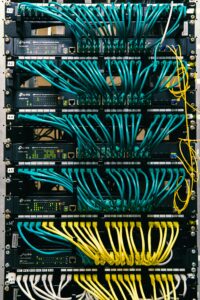
Modern infrastructure shortens wait times and removes friction. Faster networks, virtualised compute, and modern storage cut job runtimes and make apps feel instant. The result: fewer help desk tickets, happier teams, and more work done.
What we see on the ground:
- Faster application response after network and storage refresh (typical in mid-market environments).
- Automated patching and policy management that saves hours per week for IT staff.
- Fewer “mystery” slowdowns thanks to better observability.
Book a quick performance review with AGR Technology. We’ll surface the top bottlenecks and quantify time savings.
Security And Compliance Imperatives
Attackers target legacy systems and flat networks. Upgrades enable zero trust principles, strong identity, and continuous monitoring. This isn’t just about avoiding a breach, it’s about maintaining customer trust and meeting frameworks like ISO 27001, Essential Eight maturity, and SOC 2.
Key moves we carry out:
- Multi-factor authentication (MFA) and conditional access for all users.
- Endpoint detection and response (EDR) with 24/7 monitoring.
- Network segmentation and least-privilege access.
- Encrypted backups with immutable storage and tested recovery.
Scalability And Agility For Future Needs
Mergers, new locations, AI workloads, hybrid work, growth demands flexibility. With cloud-ready networking (SD-WAN), virtualisation/HCI, and automated provisioning, we scale capacity without long lead times or surprise costs. Teams get what they need sooner, and the business stays nimble.
Signs Your Infrastructure Is Holding You Back
Frequent Outages And Slowdowns
Recurring downtime, flaky Wi‑Fi, or random app freezes are red flags. If SLAs slip or staff create “workarounds,” the foundation is failing. We correlate event logs, user reports, and metrics to find root causes and set a stabilisation plan.
End-Of-Life Hardware And Software
When vendors stop releasing patches, risk climbs. End-of-life servers, unsupported firewalls, and legacy operating systems attract exploits and limit feature adoption. If you’re deferring upgrades because they feel complex, we can stage replacements without disruption.
Mounting Security Incidents And Audit Findings
Phishing escalations, unmanaged devices, failing patch windows, and repeated audit exceptions point to gaps in identity, visibility, and process. A modern security stack, MFA, EDR, SIEM/SOAR, shrinks incident volume and time-to-contain.
Rising Support Costs And Shadow IT
If tickets keep rising and teams spin up their own tools to “get work done,” it’s a signal the official stack isn’t meeting needs. We standardise and integrate approved SaaS, apply data governance, and simplify support to bring costs back under control.
Risks Of Standing Still
Cyber Exposure And Data Loss
Legacy VPNs, flat networks, and weak identity controls widen the blast radius of any compromise. Without tested backups and disaster recovery, a single incident can halt operations. We design for resilience: immutable backups, MFA everywhere, and rehearsed recovery.
Competitive Disadvantage
Slow release cycles and unreliable tools frustrate teams and customers. Competitors with modern stacks ship features faster and deliver smoother experiences. Upgrading restores speed, shorter lead times, better uptime, and consistent service.
Talent And Vendor Constraints
New apps often won’t run on old platforms. Skilled engineers prefer current tech, and vendors deprecate older integrations. Staying current keeps your ecosystem supported and attractive to talent.
What To Upgrade: Priority Areas That Deliver ROI
Network And Connectivity (Wi‑Fi 6/6E, SD-WAN)
- Upgrade campus Wi‑Fi to 6/6E for higher density, fewer dead zones, and better voice/video.
- Move from MPLS to SD‑WAN where suitable to reduce cost per site and improve performance with dynamic path selection.
- Carry out network access control (NAC) and segmentation to contain threats.
- Add visibility with modern NPM/observability tools to troubleshoot in minutes, not days.
How we help: AGR Technology can design and deploy Wi‑Fi 6/6E and SD‑WAN with site surveys, heatmaps, and QoS tuned for Teams/Zoom and critical apps.
Compute And Storage (Virtualization, HCI, Cloud)
- Refresh hosts with modern virtualisation or hyperconverged infrastructure (HCI) for efficiency and resilience.
- Right-size workloads across on‑prem and cloud (IaaS/PaaS) to balance performance and cost.
- Introduce container platforms where it makes sense for portability and CI/CD.
- Modernise backup and DR with immutable storage and cloud tiering.
How we help: We assess workloads, model TCO across CapEx and OpEx, and build a pragmatic hybrid cloud, no forced migrations through detailed tech stack audits.
Security Stack (Zero Trust, MFA, EDR)
- Enforce identity-first security: MFA, SSO, conditional access, and least privilege.
- Deploy EDR/XDR with 24/7 monitoring and rapid response.
- Carry out email security, DNS filtering, and secure web gateways.
- Adopt zero trust network access (ZTNA) to replace legacy VPNs where appropriate.
How we help: AGR Technology standardises your security baseline and aligns controls with frameworks such as ISO 27001 and Essential Eight.
Collaboration And Endpoint Modernization
- Standardise devices with modern management (Intune/Autopilot or similar) for faster provisioning and consistent policy.
- Enable secure remote work with always-on VPN/ZTNA and compliant device posture.
- Upgrade collaboration suites, storage, and eSign to streamline workflows and approval cycles.
How we help: We reduce image sprawl, simplify patching, and improve user experience, fewer tickets, faster onboarding.
Ready for a clear plan? Ask AGR Technology for a priority upgrade blueprint tailored to your stack.
Calculating ROI And Total Cost Of Ownership
Direct Savings Vs. Productivity Gains
- Direct savings: Retire legacy circuits, reduce data centre footprint, consolidate licenses, and cut break/fix callouts.
- Productivity gains: Faster logins, fewer crashes, and reduced context switching. We quantify time saved per role and translate it into dollars using your real salaries and utilisation rates.
We include risk-adjusted savings from fewer security incidents and shorter outages.
CapEx, OpEx, And Financing Models
We model scenarios across: upfront CapEx, managed services, and as-a-service options. Many clients prefer a hybrid approach, own the core, consume the elastic. AGR Technology offers flexible financing and managed service bundles to smooth cash flow.
Measuring Outcomes With KPIs
We set baselines and track:
- Uptime, MTTR, and ticket volume by category.
- Endpoint compliance, patch cadence, and MFA coverage.
- Cost per user/site and cloud unit costs.
- User satisfaction (CSAT) and adoption metrics.
Call to action: Ask us for an ROI/TCO model you can take to your board, clear, defensible, and aligned to your budget cycle.
A Pragmatic Upgrade Roadmap
Assess And Benchmark The Current State
We start with discovery: asset inventory, config review, security posture, and performance baselines. We map dependencies to avoid surprises and compare against best practices and your compliance needs.
Prioritize By Risk And Business Value
Not every issue is equal. We rank quick wins, risk hotspots, and strategic enablers. The goal: cut the highest risk first while unlocking visible improvements for users.
Pilot, Migrate, And De-Risk Implementation
We run pilots to validate performance, compatibility, and user impact. Then we sequence migrations with change windows, rollback plans, and data protection. No “big bang” unless it’s safer.
Change Management And User Adoption
Good tech falls flat without adoption. We prep comms, training, and champions. We also tune policies to balance security with usability so changes stick.
Governance, Sustainability, And Lifecycle Planning
We embed governance, access reviews, patch cadence, license hygiene, and plan lifecycle replacements. Sustainability matters too: right‑sizing workloads, power-efficient kit, and responsible e‑waste processes.
Call to action: Schedule an assessment with AGR Technology. We’ll deliver a clear roadmap, budget ranges, and timeline options.
Conclusion
Upgrading your IT infrastructure isn’t about shiny gear. It’s about reliable performance, stronger security, and a platform your business can trust as it grows. With a measured plan, sound financial modelling, and staged delivery, you see benefits quickly, without disruption.
If you want fewer outages, faster workflows, and lower risk, we can help. Contact AGR Technology to review your current state and get an upgrade plan you can execute with confidence.
Frequently Asked Questions
What are the top business reasons to upgrade your IT infrastructure?
Upgrading improves performance, security, and scalability. Expect faster application response, fewer help desk tickets, stronger identity controls (MFA, EDR), and resilient backups. Modern networks and virtualization reduce outages and support growth, while clear KPIs and ROI modeling translate time savings and risk reduction into measurable business value.
What are the signs your infrastructure is holding you back?
Recurring outages, slow apps, flaky Wi‑Fi, and rising ticket volumes are red flags. End‑of‑life hardware, unmanaged devices, failed patches, and audit findings signal risk. Shadow IT and escalating support costs indicate tools aren’t meeting needs. These symptoms point to performance, security, and governance gaps that a targeted upgrade can fix.
How do you calculate ROI and TCO for an IT infrastructure upgrade?
Combine direct savings (retiring circuits, consolidating licenses, reducing data center footprint) with productivity gains from faster logins and fewer crashes. Include risk‑adjusted savings from fewer incidents and shorter outages. Model CapEx vs. OpEx and managed services, track KPIs like uptime, MTTR, and ticket volume, and align to budget cycles.
How often should you upgrade your IT infrastructure?
Most organizations refresh core infrastructure on a 3–5 year cadence, with security controls and endpoint management updated continuously. Upgrade your IT infrastructure sooner if vendors end support, audit risks rise, or performance degrades. Networking standards and storage needs may justify phased updates between major refresh cycles.
How long does an IT infrastructure upgrade take, and how do you reduce downtime?
Timelines range from a few weeks for targeted upgrades to several months for multi‑site programs. To minimize downtime, run pilots, schedule change windows, use rollback plans, and migrate in phases. Automate provisioning, test backups and recovery, and apply zero trust controls early to de‑risk the transition and maintain continuity.
Related resources:
Managed IT Services Shepparton
Cyber Security Services For Small Businesses
Our Google Business Profiles:

Alessio Rigoli is the founder of AGR Technology and got his start working in the IT space originally in Education and then in the private sector helping businesses in various industries. Alessio maintains the blog and is interested in a number of different topics emerging and current such as Digital marketing, Software development, Cryptocurrency/Blockchain, Cyber security, Linux and more.
Alessio Rigoli, AGR Technology