![logo-new-23[1]](https://agrtech.com.au/wp-content/uploads/elementor/thumbs/logo-new-231-qad2sqbr9f0wlvza81xod18hkirbk9apc0elfhpco4.png "logo-new-23[1]")

Running a business on disconnected systems is like trying to drive with the handbrake on. You’re moving, but everything takes more effort than it should.
That’s where Odoo software integration comes in. Instead of juggling separate tools for accounting, inventory, CRM, and eCommerce, Odoo brings everything under one roof, connected, automated, and working together.
At AGR Technology, we help businesses across Australia and internationally integrate Odoo into their existing operations. Whether you’re a growing retailer or a mid-sized manufacturer, we tailor every integration to fit how your business actually works, not how a generic template thinks it should.
This page covers what Odoo integration involves, the real benefits it delivers, common integration types, and what to look for in a partner who can get it right.
Get in touch to discuss your project needs:
Reviews from our happy clients:

Justine Brummans
Alessio is both incredibly knowledgeable and personable! He gave me great advice that was catered to me and my situation. Thank you Alessio! Super helpful!

Springfield Equestrian Park
Alessio is amazing! I can not speak highly enough of how helpful and knowledgeable he is, my website he created far exceeded my expectations, he is so accomodating and I can only wish him every success with his business. I rate AGR technology 10 out of 10.
Legacy Energy
We used AGR Technology and dealt with Alessio to design and build our website as well as host our emails. Alessio was a pleasure to deal with and had plenty of ideas that we could implement into our site. He has a great attention to detail, he is also very polite in understanding our goals and what we wanted to achieve with our website.
Thanks mate,
Alex & Rob
Excellent Service
Alessio developed our website for our business and has done a wonderful job. He is very personable and knowledgeable. We have enjoyed working with him. We will be referring others to him and highly recommend him to those who need Tech advice.
MRC Performance
I have been in business for over 10 Years and recently moved to AGR Technology for all our IT needs. They are able to fix nearly anything remotely and always very helpful in recommending appropriate hardware upgrades that do the job as required but not costing more than needed.

Alessio provided an excellent service. He was very dedicated in his method of finding solutions to problems. He continued to try different avenues until he found the reason as to why a particular application was not working. He was very knowledgeable in his understanding of the internet and of applications and how they work, and he was able to apply this knowledge in understanding how to resolve the obstacles that continued to appear. He is understanding towards his client's needs and goals and he is willing to work with his client in achieving those goals. He is a very polite and well mannered person and very calm and gentle in his approach. I would highly recommend Alessio's services to anyone.

Palmira Rigoli
Great work ethics Alessio! We at Totally Gluten Free Products are very happy to have you on board as our IT and SEO master. Very reliable, trustworthy and knowledgeable in the field.
YouTube Comment

Nat's Custom Designs
Alessio from AGR Technology has recently helped me create a website for my business.
Throughout the whole process from start to finish Alessio made the process easy for me, by calling me and explaining each step of the way. I'm not very computer savvy, but with Alessio taking the time to explain in detail everything I needed to know from putting inventory in to having it shipped. He even remotely joined my computer to help guide me through everything.
He's very knowledgeable and is experienced in everything I needed and if there was anything else I needed to know that wasn't something he was familiar with, he researched it.
I would HIGHLY recommend Alessio to anyone. He has not only helped me for now but I know that if I ever needed help with anything else he would definitely go above and beyond to help. Thank you so much for everything you have done. It's been a long process but well worth it 🙂
Byron Macumber
AGR Technology is amazing. not only do they stick with you through out the process, they also accommodate to your wants and needs. They are efficient in their work and they have high integrity. Their capabilities are shown through their website design, and appropriate knowledge of utilities regarding software. over the many years of working with them they have been fantastic. I would recommend to everyone
Very helpful
Alessio was thorough, diligent and kept me updated at all time points. I was very impressed with his performance, passion and dedication. I will continue to use his services.
Wantrup & Associates
Alessio of AGR Technology is an IT guy we rely on whenever we need IT help. His professionalism impressed us right at the first time. He solved many of our IT problems in no time. Excellent communication and speedy response.
We highly recommend this company
From a happy customer
Valeria Bianco
I received AGR contact information from a previous client, who had found their service excellent. So I contacted AGR with some expectations, and I can say they exceeded them. Professional, honest, punctual, reliable, their service is faultless. We can't recommend them highly enough.
Very fast, value for money and a comprehensive service
AGR is professional, organised and very skilled at what they do. They take the initiative, looking after all the details that you would not have thought of to enhance your website presence, marketing funnel and automated appointment bookings. Big bonus - pricings are at a fraction of the cost of competitors.
Customer testimonial
Alessio from AGR Technology is wonderful at gently guiding the less technically savvy users to solve problems. Back up service excellent. Highly recommended
SEO for website
The team is very cooperative and delivers clean and very efficient work.

Raimond Volpe
Nothing but good things to say about Alessio. He has been great service and great at communicating with me by both phone and email. Very good knowledge and problem-solving ability with our web development. I would thoroughly recommend Alessio and AGR Technology to anyone wanting online marketing or web development
Website design
Big thank you to Alessio at AGR Technology for a smooth and easy website development process. Nothing was to difficult to accomplish, I can highly recommend his first class service.
Proudly supporting clients of all sizes to succeed through digital solutions










Why work with us?






What Is Odoo Software Integration?
Odoo is an open-source enterprise resource planning (ERP) platform with over 80 official modules, covering everything from sales, inventory, and HR to project management, marketing automation, and point of sale.
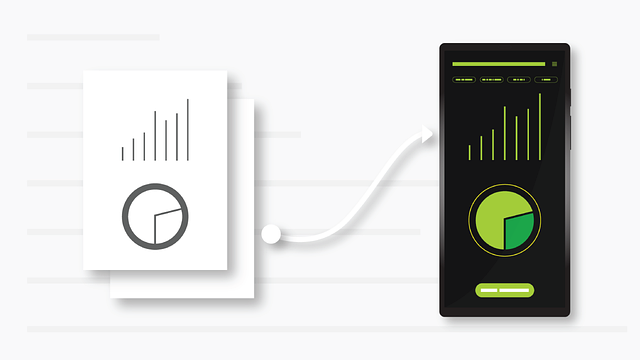
Odoo software integration is the process of connecting these modules with each other and with your existing third-party tools. Think of it as wiring your business systems together so data flows automatically between them, without manual entry or clunky workarounds.
For example, when a customer places an order on your website, an integrated Odoo setup can automatically:
- Create the sales order in your CRM
- Update inventory levels in real time
- Generate an invoice in your accounting module
- Trigger a shipping label through your logistics provider
No double handling. No spreadsheet reconciliation at the end of the month.
Odoo integration can be as simple as syncing two modules or as complex as connecting an entire tech stack, including external platforms like Shopify, Xero, Australia Post, or custom-built APIs. The scope depends entirely on your business needs.
At AGR Technology, we assess your current systems, identify the gaps, and build integrations that actually solve problems rather than create new ones.
Key Benefits of Odoo Integration for Your Business
Unified Data and Workflows
The biggest pain point we see with businesses running siloed systems? Inconsistent data. Sales says one thing, accounting says another, and warehouse has a completely different number.
Odoo integration eliminates this by creating a single source of truth. When your systems are connected, every department pulls from the same data set. That means:
- Fewer errors from manual data entry and duplicate records
- Faster decision-making because reports reflect real-time information
- Reduced admin time, your team spends less time chasing data and more time on work that matters
Workflows become automated too. Instead of someone manually updating stock levels after each sale, the system handles it. Approvals, notifications, and follow-ups can all run on triggers you define.
Scalability Across Departments
One of Odoo’s strongest advantages is its modular architecture. You don’t need to carry out everything at once. Start with what you need, say, CRM and invoicing, and add modules as your business grows.
This makes Odoo integration particularly well-suited for Australian businesses in growth phases. You’re not locked into a rigid system that requires a complete overhaul every time you expand into a new market or add a department.
We’ve worked with clients who started with a basic Odoo setup and scaled to 15+ integrated modules over time, without rebuilding from scratch. That kind of flexibility is hard to find in competing ERP platforms, and it saves serious money long term.
Common Odoo Integration Types
eCommerce and Payment Gateway Integrations
If you sell online, connecting your storefront to Odoo is one of the highest-impact integrations you can make. We commonly integrate Odoo with platforms like:
- Shopify and WooCommerce, for syncing products, orders, and customer data
- Magento, for larger catalogues with complex pricing rules
- Stripe, PayPal, and eWAY, for automated payment reconciliation
The result? Orders flow directly into your ERP without anyone copying and pasting between systems. Payments reconcile automatically. And your inventory stays accurate across every sales channel.
For businesses selling through multiple channels, say, a website plus Amazon plus a physical store, Odoo integration ensures stock levels update everywhere simultaneously. That alone can prevent overselling and the customer service headaches that come with it.
CRM, Accounting, and Shipping Integrations
Beyond eCommerce, some of the most common (and most valuable) Odoo integrations we deliver include:
- CRM integrations, connecting lead capture forms, email marketing tools, and sales pipelines so your team has full visibility over every customer interaction
- Accounting integrations, syncing Odoo with Xero, MYOB, or using Odoo’s native accounting module to automate invoicing, bank reconciliation, and tax reporting
- Shipping and logistics, integrating with carriers like Australia Post, Sendle, or StarTrack to auto-generate shipping labels, track consignments, and update customers on delivery status
Each integration is configured to match your specific processes. We don’t believe in a one-size-fits-all approach because, frankly, it doesn’t work.
How the Odoo Integration Process Works
We keep the process straightforward. Here’s what a typical Odoo integration project looks like when you work with AGR Technology:
- Discovery and audit, We review your current systems, data flows, and pain points. This is where we figure out what’s broken, what’s missing, and what’s costing you time or money.
- Solution design, Based on the audit, we map out the integration architecture. This includes which Odoo modules to deploy, which third-party connections are needed, and how data will move between systems.
- Development and configuration, Our developers build and configure the integrations, including any custom API connections or module customization required.
- Testing, We run thorough testing in a staging environment to catch issues before they hit your live systems. This includes data migration checks, workflow testing, and load testing where relevant.
- Deployment and training, Once everything checks out, we deploy to production and train your team on the new workflows.
- Ongoing support, Systems evolve. We provide post-launch support to handle updates, troubleshoot issues, and extend integrations as your business grows.
The timeline varies depending on complexity. A basic two-system integration might take a few weeks. A full ERP rollout with multiple integrations could take a few months. Either way, we give you a clear scope and timeline upfront, no surprises.
Industries That Benefit Most from Odoo Integration
Odoo’s flexibility makes it relevant across a wide range of sectors. That said, we see particularly strong results in:
- Retail and eCommerce, Multi-channel order management, inventory sync, and automated fulfillment
- Manufacturing, Production planning, bill of materials management, and supply chain coordination
- Professional services, Project tracking, timesheets, invoicing, and resource allocation in one system
- Wholesale and distribution, Warehouse management, batch picking, and shipping automation
- Healthcare and allied health, Appointment scheduling, patient records, and billing integration
- Not-for-profits, Donor management, grant tracking, and financial reporting
The common thread? Any business dealing with multiple operational processes that currently live in separate tools stands to gain from bringing them together in Odoo.
If your team is spending hours each week on manual data transfers, reconciliation, or chasing information across platforms, Odoo integration is worth a serious look.
What to Look for in an Odoo Integration Partner
Not all Odoo implementation partners are equal. Here’s what we’d recommend looking for:
- Proven experience with Odoo, Ask for case studies or examples of past integrations. Generic ERP experience isn’t enough: Odoo has its own architecture and quirks.
- Custom development capability, Off-the-shelf connectors only go so far. Your partner should be able to build custom modules, APIs, and workflows when needed.
- Full-stack expertise, Odoo integration often touches web development, database management, cloud infrastructure, and security. A partner with broad technical depth can handle the unexpected.
- Post-launch support, The go-live date isn’t the finish line. Make sure your partner offers ongoing maintenance and support.
- Clear communication, You should understand what’s being built, why, and how long it’ll take. If a partner can’t explain their approach in plain language, that’s a red flag.
At AGR Technology, we tick every one of these boxes. We’re an Australian-based digital technology partner with deep experience in Odoo integration, custom software development, and business automation. Our team works closely with yours to deliver solutions that are built around your operations, not the other way around.
Conclusion
Odoo software integration isn’t just a technical upgrade, it’s an operational one. When your systems talk to each other, your team works faster, your data stays accurate, and your business becomes easier to scale.
Whether you need a simple two-platform sync or a full ERP implementation across multiple departments, the right integration strategy can remove bottlenecks you’ve been living with for years.
We’ve helped businesses across Australia plan, build, and maintain Odoo integrations that deliver real, measurable results. If you’re ready to stop working around your systems and start working with them, we’d like to hear from you.
Ready to streamline your operations? Talk to AGR Technology about Odoo integration services today.
Frequently Asked Questions About Odoo Software Integration
What is Odoo software integration and how does it work?
Odoo software integration connects Odoo’s 80+ ERP modules with each other and your existing third-party tools so data flows automatically between systems. For example, a single customer order can trigger updates across your CRM, inventory, accounting, and shipping — eliminating manual data entry and reducing errors.
What are the key benefits of Odoo integration for businesses?
Odoo integration creates a single source of truth across departments, reducing data inconsistencies and manual admin work. Key benefits include real-time reporting, automated workflows, fewer duplicate records, and scalable modular architecture — allowing you to start small and add modules as your business grows without rebuilding from scratch.
Which platforms can be integrated with Odoo?
Odoo integrates with a wide range of platforms including Shopify, WooCommerce, and Magento for eCommerce; Xero and MYOB for accounting; Stripe, PayPal, and eWay for payments; and carriers like Australia Post and Sendle for shipping. Custom API connections can also link Odoo to virtually any third-party system.
How long does an Odoo integration project typically take?
Timelines vary based on complexity. A basic two-system integration may take a few weeks, while a full ERP rollout with multiple integrations can take several months. A qualified Odoo integration partner will provide a clear scope and timeline upfront after auditing your current systems and requirements.
How much does Odoo software integration cost?
Costs depend on the number of modules, third-party connections, custom development needs, and project complexity. Simple integrations are more affordable, while enterprise-wide implementations require a larger investment. Requesting a tailored quote from an experienced Odoo integration services provider ensures accurate pricing based on your specific business needs.
What should I look for when choosing an Odoo integration partner?
Look for proven Odoo-specific experience, custom development capability, full-stack technical expertise, and strong post-launch support. Your partner should communicate clearly, provide case studies, and build solutions tailored to your operations — not rely on generic templates. These qualities ensure a smoother integration and long-term system reliability.
Related resources:
Odoo Software Development Services
NetSuite Software Development Services
Oracle Business Software Development

Alessio Rigoli is the founder of AGR Technology and got his start working in the IT space originally in Education and then in the private sector helping businesses in various industries. Alessio maintains the blog and is interested in a number of different topics emerging and current such as Digital marketing, Software development, Cryptocurrency/Blockchain, Cyber security, Linux and more.
Alessio Rigoli, AGR Technology