![logo-new-23[1]](https://agrtech.com.au/wp-content/uploads/elementor/thumbs/logo-new-231-qad2sqbr9f0wlvza81xod18hkirbk9apc0elfhpco4.png "logo-new-23[1]")
Building a music streaming product looks simple from the outside: play a song, show a playlist, take a payment. In practice, music streaming app development is a mix of real-time performance, licensing and rights management, scalable cloud architecture, and a UX that feels instant, even on patchy mobile networks.
On this page, we’ll walk through what a streaming app must deliver in 2026 and beyond, the monetization paths that actually work, and the technical decisions that keep playback reliable at scale. If you’re planning an MVP, replacing a legacy platform, or launching a new vertical (fitness audio, kids content, worship, podcasts + music, label-owned catalogues), we’ll also outline scope, timelines, and cost drivers, so you can move forward with fewer surprises.
If you want AGR Technology to help you plan, build, and launch, we can jump in at strategy, architecture, or full end-to-end delivery, software development plus the SEO/marketing pieces that drive adoption post-launch.
Get in contact with us to discuss your project
Reviews from our happy clients:

Justine Brummans
Alessio is both incredibly knowledgeable and personable! He gave me great advice that was catered to me and my situation. Thank you Alessio! Super helpful!

Springfield Equestrian Park
Alessio is amazing! I can not speak highly enough of how helpful and knowledgeable he is, my website he created far exceeded my expectations, he is so accomodating and I can only wish him every success with his business. I rate AGR technology 10 out of 10.
Legacy Energy
We used AGR Technology and dealt with Alessio to design and build our website as well as host our emails. Alessio was a pleasure to deal with and had plenty of ideas that we could implement into our site. He has a great attention to detail, he is also very polite in understanding our goals and what we wanted to achieve with our website.
Thanks mate,
Alex & Rob
Excellent Service
Alessio developed our website for our business and has done a wonderful job. He is very personable and knowledgeable. We have enjoyed working with him. We will be referring others to him and highly recommend him to those who need Tech advice.
MRC Performance
I have been in business for over 10 Years and recently moved to AGR Technology for all our IT needs. They are able to fix nearly anything remotely and always very helpful in recommending appropriate hardware upgrades that do the job as required but not costing more than needed.

Alessio provided an excellent service. He was very dedicated in his method of finding solutions to problems. He continued to try different avenues until he found the reason as to why a particular application was not working. He was very knowledgeable in his understanding of the internet and of applications and how they work, and he was able to apply this knowledge in understanding how to resolve the obstacles that continued to appear. He is understanding towards his client's needs and goals and he is willing to work with his client in achieving those goals. He is a very polite and well mannered person and very calm and gentle in his approach. I would highly recommend Alessio's services to anyone.

Palmira Rigoli
Great work ethics Alessio! We at Totally Gluten Free Products are very happy to have you on board as our IT and SEO master. Very reliable, trustworthy and knowledgeable in the field.
YouTube Comment

Nat's Custom Designs
Alessio from AGR Technology has recently helped me create a website for my business.
Throughout the whole process from start to finish Alessio made the process easy for me, by calling me and explaining each step of the way. I'm not very computer savvy, but with Alessio taking the time to explain in detail everything I needed to know from putting inventory in to having it shipped. He even remotely joined my computer to help guide me through everything.
He's very knowledgeable and is experienced in everything I needed and if there was anything else I needed to know that wasn't something he was familiar with, he researched it.
I would HIGHLY recommend Alessio to anyone. He has not only helped me for now but I know that if I ever needed help with anything else he would definitely go above and beyond to help. Thank you so much for everything you have done. It's been a long process but well worth it 🙂
Byron Macumber
AGR Technology is amazing. not only do they stick with you through out the process, they also accommodate to your wants and needs. They are efficient in their work and they have high integrity. Their capabilities are shown through their website design, and appropriate knowledge of utilities regarding software. over the many years of working with them they have been fantastic. I would recommend to everyone
Very helpful
Alessio was thorough, diligent and kept me updated at all time points. I was very impressed with his performance, passion and dedication. I will continue to use his services.
Wantrup & Associates
Alessio of AGR Technology is an IT guy we rely on whenever we need IT help. His professionalism impressed us right at the first time. He solved many of our IT problems in no time. Excellent communication and speedy response.
We highly recommend this company
From a happy customer
Valeria Bianco
I received AGR contact information from a previous client, who had found their service excellent. So I contacted AGR with some expectations, and I can say they exceeded them. Professional, honest, punctual, reliable, their service is faultless. We can't recommend them highly enough.
Very fast, value for money and a comprehensive service
AGR is professional, organised and very skilled at what they do. They take the initiative, looking after all the details that you would not have thought of to enhance your website presence, marketing funnel and automated appointment bookings. Big bonus - pricings are at a fraction of the cost of competitors.
Customer testimonial
Alessio from AGR Technology is wonderful at gently guiding the less technically savvy users to solve problems. Back up service excellent. Highly recommended
SEO for website
The team is very cooperative and delivers clean and very efficient work.

Raimond Volpe
Nothing but good things to say about Alessio. He has been great service and great at communicating with me by both phone and email. Very good knowledge and problem-solving ability with our web development. I would thoroughly recommend Alessio and AGR Technology to anyone wanting online marketing or web development
Website design
Big thank you to Alessio at AGR Technology for a smooth and easy website development process. Nothing was to difficult to accomplish, I can highly recommend his first class service.
Proudly supporting clients of all sizes to succeed through digital solutions











Why work with us?






What A Music Streaming App Must Do
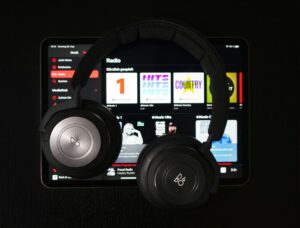
A modern streaming app isn’t judged against “other apps in your niche”, it’s judged against the best experiences people already use daily. That means fast search, seamless playback, smart recommendations, and offline-first reliability when users travel or commute.
At the same time, platforms are under more scrutiny around rights, creator payouts, and privacy. So we treat “must do” as two tracks: listener experience and creator/admin control.
Core Listener Features: Search, Playback, Downloads, And Recommendations
For listeners, the basics aren’t optional anymore, they’re table stakes. In our delivery planning, we usually define these as MVP-critical versus “V1+”, but the core set typically includes:
- Account + onboarding: email/social sign-in, device management, basic preferences (genres, artists, moods).
- Search that feels instant: typo tolerance, artist/track/album indexing, and results that prioritize intent (e.g., “live”, “remix”, “clean”).
- Playback that doesn’t stutter:
- background play (mobile)
- lock screen controls
- queue management
- consistent behavior across Wi‑Fi/4G/5G
- Library and playlists: likes, saves, collaborative playlists (optional), and “continue listening”.
- Offline downloads (often a paid feature): smart download rules, storage limits, and expiry windows.
- Personalized recommendations: not just “because you liked X”, but mixes by mood/time/activity and editorial-style collections with the use of AI technologies.
Practical note: recommendation quality is rarely “one big model.” We often start with a hybrid approach, editorial rules + simple collaborative filtering, then iterate once usage data is real.
Creator And Admin Features: Uploads, Rights, Moderation, And Analytics
If your platform includes creator uploads (independent artists, labels, internal content teams), the operational side becomes as important as the player.
Common requirements we design for:
- Creator onboarding + verification: identity checks where relevant, tax/payout profiles if you pay creators.
- Uploads and processing: automated transcoding, loudness normalization, artwork validation, metadata checks.
- Rights and territories: control availability by region, schedule releases, manage takedowns.
- Content moderation: explicit content flags, report workflows, and human-in-the-loop review.
- Analytics dashboards:
- plays, unique listeners, completion rate
- skip rate by intro length
- playlist adds and saves
- churn signals (e.g., drops after trial)
If you’re building for enterprise (media groups, telcos, education, franchised brands), admin controls usually expand to roles/permissions, audit logs, and multi-tenant reporting.
If you’d like, we can map your exact feature set into a realistic MVP backlog, then validate it against your monetization model before a single sprint starts. Reach out via AGR Technology and we’ll scope it with you.
Business Models And Monetization Options
The fastest way to burn budget in streaming is to build features that don’t match how you’ll earn. Music apps are also cost-structured differently to many SaaS products: streaming bandwidth, storage, and licensing can grow with usage.
So we align product decisions to monetization early, especially around offline downloads, high-quality audio, and family plans.
Subscriptions, Free Tiers, And Trials
Subscriptions remain the cleanest model when you have strong retention and a clear value proposition (exclusive catalogue, better discovery, ad-free, offline, hi‑fi audio).
Typical structures:
- Freemium: free with ads + limited skips: premium removes limits.
- Free trial: 7–30 days, often tied to payment method collection.
- Tiered plans:
- Individual
- Family
- Student/discount
- Hi‑fi / lossless add-on (only if your audience will pay)
We also design for the operational reality of subscriptions: proration, refunds, grace periods, and “win-back” flows when a card fails.
Ads, Sponsorships, And Revenue Shares
Advertising can work, but the tech and ops requirements are real:
- Ad insertion strategy: client-side vs server-side (and how it impacts measurement).
- Frequency capping: avoiding ad overload that drives churn.
- Sponsorship inventory: sponsored playlists, branded stations, promoted releases.
- Revenue shares: payouts to rights holders or creators, which requires accurate play accounting.
For some business cases, fitness chains, events, retail radio, or brand-owned apps, sponsorship + subscription hybrid models can outperform pure ads.
If you tell us your target users and catalogue type, we’ll recommend a monetization mix that fits your unit economics instead of copying what the biggest platforms do.
Architecture And Tech Stack For Reliable Streaming
A streaming app’s reputation is built (or destroyed) in the first 10 seconds of playback. The architecture has to keep latency low, scale smoothly, and recover gracefully when networks drop.
We typically design systems around three pillars: media pipeline, delivery, and product services.
Streaming Protocols, Transcoding Pipelines, And CDN Strategy
Most modern builds rely on segmented streaming formats and multiple bitrates to adapt to real-world conditions.
Key technical choices:
- Protocols: HLS is widely supported: DASH is also common depending on device targets.
- Adaptive bitrate (ABR): multiple renditions so playback can adjust without stopping.
Transcoding pipeline:
- ingest original files
- transcode to target bitrates/codecs
- loudness normalization
- artwork resizing
- checksum validation
CDN strategy:
- cache popular content close to users
- origin protection to reduce egress surprises
- GEO rules for territory restrictions
We’ll also plan for edge cases that bite later: track replacement, catalogue takedowns, and cache invalidation when metadata changes.
Backend Services: Catalog, Playback, Billing, And Notifications
A reliable backend usually decomposes into services that can scale independently:
- Catalogue service: artists, albums, tracks, metadata, availability rules.
- Playback service: session tokens, stream URL signing, concurrency limits.
- User service: profiles, libraries, playlists, history.
- Billing service: subscriptions, entitlements, invoices, dunning.
- Notifications: release alerts, playlist updates, account events.
- Search + discovery: indexing, ranking, and experimentation hooks.
Our approach at AGR Technology is to keep the stack pragmatic: proven cloud primitives, clear boundaries, and observability from day one, because “it works on staging” doesn’t help when 50,000 users hit play at 8am.
Data, Security, And Compliance Considerations
Music platforms handle personal data, payment data, and valuable content. Security isn’t a checkbox at the end, it’s part of architecture.
We design security controls to match your risk profile (startup MVP vs enterprise rollout), without shipping a slow, over-engineered product.
DRM, Encryption, Fraud Prevention, And Secure Payments
To protect premium content and reduce abuse, we typically consider:
- DRM options: especially for offline downloads and premium tiers.
- Encryption in transit and at rest: TLS everywhere: encrypted storage for sensitive assets.
- Signed URLs and tokenised playback: reducing hotlinking and unauthorized redistribution.
- Fraud prevention:
- account sharing controls and device limits
- bot detection for play inflation
- rate limiting and anomaly monitoring
- Secure payments: use reputable payment providers and follow their implementation guidelines for tokenisation and SCA/3DS where applicable.
If you’re paying creators, we also design auditability into play accounting, because disputes without logs become expensive quickly.
Privacy, Retention Policies, And Regional Requirements
Privacy expectations are rising, and regulators are paying attention.
Practical compliance areas we plan for:
- Consent and tracking controls: clear settings for personalization and marketing comms.
- Data minimization: collect what you need: avoid “nice to have” fields.
- Retention policies: how long you keep listening history, logs, and support records.
- Regional requirements: depending on where you operate, you may need specific disclosures, data access workflows, or hosting considerations.
We’re careful here: the right answer depends on your jurisdictions, catalogue licensing terms, and business model. If compliance is a concern, we’ll help you document a practical plan and align it with your legal advice.
MVP Scope, Timeline, And Cost Drivers
Most streaming products fail for boring reasons: unclear scope, underestimated licensing complexity, and “just one more feature” every sprint.
We keep momentum by defining the MVP around a single measurable outcome: activate users, get them to first play fast, and prove retention or conversion.
Defining MVP vs V1: What To Build First
A sensible MVP for music streaming app development usually includes:
MVP (prove demand and retention)
- sign-up/login
- catalogue browsing + search
- playback with ABR
- basic playlists/likes
- basic admin to manage catalogue
- subscription or access control (if monetized)
- analytics events (plays, skips, session length)
V1 (improve growth and revenue)
- offline downloads
- recommendation engine iterations
- advanced creator tools + payouts
- social features
- editorial CMS
- deeper A/B testing and personalization
The difference is discipline: MVP is what you need to learn: V1 is what you build after you’ve learned it.
What Impacts Cost: Licensing, Streaming, Storage, And Personalization
Costs vary widely, but the biggest drivers are usually:
- Licensing and rights management: catalogue type, territories, reporting requirements.
- Streaming delivery: bandwidth/egress, CDN caching efficiency, peak usage patterns.
- Storage: originals + multiple renditions + artwork.
- Personalization: data pipelines, experimentation, and the effort to make recommendations genuinely useful.
- Cross-platform support: iOS, Android, web, smart TVs, in-car, each adds complexity.
- Admin tooling: moderation workflows and reporting.
If you want a number you can trust, we recommend a short discovery phase where we lock MVP scope, define success metrics, and produce a build plan. Talk to us at AGR Technology and we’ll give you a clear pathway (and tradeoffs) rather than a vague range.
UX, Performance, And Cross-Platform Build Choices
Your UX is the product. People don’t forgive a clunky queue, confusing downloads, or an app that kills their battery on the train home.
We focus on three user moments: time-to-first-play, time-to-next-good-song, and “I can trust this offline.”
Native vs Cross-Platform: Tradeoffs For Audio, Offline, And Background Play
There’s no single right answer, but there are predictable tradeoffs:
- Native (iOS/Android)
- best control over audio sessions, background play, Bluetooth, and OS integrations
- typically smoother performance for complex playback states
- higher build cost across two codebases
- Cross-platform
- faster iteration for shared UI and features
- still needs careful native modules for audio, downloads, and DRM
- performance depends heavily on architecture discipline
For many commercial teams, a hybrid approach works: cross-platform UI where it’s safe, native audio layer where it matters.
Latency, Buffering, And Battery Optimization
These are the quiet killers of retention. We engineer for:
- Fast startup: prefetch the first segments, optimize cold start, avoid blocking calls.
- Smart buffering: tune buffer sizes to network conditions, not guesswork.
- Download efficiency: resumable downloads, Wi‑Fi-only options, storage visibility.
- Battery discipline: reduce wake locks, avoid runaway background tasks, and batch network calls.
- Perceived speed: skeleton states, immediate UI feedback, and predictable controls.
If you’ve ever watched a spinner while music should be playing, you know how quickly trust disappears. Our goal is simple: make playback feel boringly reliable.
Testing, Launch, And Post-Launch Growth
Launching is the midpoint, not the finish line. The teams that win are the ones who treat launch day as the start of measurement and iteration.
QA Strategy: Device Coverage, Network Conditions, And Load Testing
For streaming apps, QA has to reflect reality:
- Device coverage: a representative set of iOS/Android versions and common hardware tiers.
- Network simulation: Wi‑Fi to 4G handoff, low bandwidth, packet loss, captive portals.
- Offline behavior: airplane mode, partial downloads, expiry rules.
- Concurrency and load: peak-hour playback, search spikes, sign-up bursts.
- Edge cases: interrupted calls, Bluetooth disconnects, background restrictions.
We also verify analytics integrity, because if play events are wrong, everything downstream (royalties, recommendations, growth experiments) becomes noise.
Observability, A/B Experiments, And Iterating Recommendations
Post-launch growth relies on visibility:
- Observability: logs, metrics, and traces tied to user sessions (so we can see why playback failed).
- Funnel instrumentation: from install to first play to subscription.
- A/B testing: onboarding flows, pricing pages, recommendation layouts.
- Recommendation iteration: improve ranking with real behavior signals (skips, saves, completion).
This is where AGR Technology’s “one-stop digital partner” approach helps: we can support the engineering plus the acquisition side, SEO, landing pages, and measurement, so product and growth aren’t working in silos.
If you’re close to launch (or already live and feeling the pain), we can run a practical audit and give you a prioritized plan to stabilize playback and lift conversion.
Conclusion
Great streaming products feel effortless, but they’re built on deliberate choices: a tight MVP, a scalable media pipeline, secure playback, and a UX that respects people’s time (and battery).
If you’re planning music streaming app development our recommendation is to start with a clear monetization path, lock your licensing and rights assumptions early, and build for observability from day one. That’s what keeps the roadmap driven by evidence, not guesswork.
When you’re ready, AGR Technology can help you scope an MVP, design the architecture, and deliver a production-ready app with the growth foundations in place. Visit agrtech.com.au to get started, or reach out for a discovery session and we’ll map a practical plan from MVP to launch.
Frequently Asked Questions (FAQs)
What does music streaming app development need to deliver in April 2026 and beyond?
Music streaming app development in April 2026 must match best-in-class expectations: instant search, seamless playback across Wi‑Fi/4G/5G/6G, reliable offline downloads, and genuinely useful recommendations. It also needs strong admin controls for rights, moderation, analytics, privacy, and accurate play accounting as scrutiny on payouts and compliance increases.
What are the core MVP features for music streaming app development?
An MVP typically includes sign-up/login, catalogue browsing plus fast search, adaptive bitrate playback, likes and basic playlists, and simple admin tools to manage the catalogue. If monetized, add subscription/access control. Instrument analytics early (plays, skips, session length) so you can prove retention and conversion before expanding into V1 features.
Which streaming protocol is best for a music app—HLS or DASH?
HLS is widely supported and often the default choice, while DASH is also common depending on device targets and ecosystem needs. Most teams focus on adaptive bitrate streaming, a solid transcoding pipeline (multiple renditions, loudness normalization), and a CDN strategy that keeps latency low and handles cache invalidation cleanly.
What monetization model works best for a music streaming app?
Subscriptions are usually the cleanest path when retention is strong—often with freemium, trials (7–30 days), and tiered plans like individual, family, student, or hi‑fi add-ons. Ads can work too, but require ad insertion, frequency capping, and reliable measurement. The best model aligns with licensing and unit economics.
How do you prevent buffering and improve playback reliability on mobile networks?
Teams reduce buffering by prefetching initial segments, tuning buffer sizes to real network conditions, and using adaptive bitrate so playback can adjust without stopping. Battery-friendly background behavior, resumable downloads, and clear offline rules also help. Observability tied to user sessions is essential to diagnose failures at scale quickly.
How do DRM and secure playback work in a music streaming app?
DRM is often used for premium tiers and offline downloads to protect content. Security typically includes TLS in transit, encryption at rest, signed stream URLs, and tokenized playback to reduce hotlinking and redistribution. Fraud controls may add device limits, bot detection for play inflation, and rate limiting to protect revenue and payouts.
Other resources:
AdTech Software Development Services
Odoo Software Development Services
Custom iGaming & Casino Software Development Services
eWallet Mobile App Development
Custom GHL Software Development Services
Mobile Application Development Services

Alessio Rigoli is the founder of AGR Technology and got his start working in the IT space originally in Education and then in the private sector helping businesses in various industries. Alessio maintains the blog and is interested in a number of different topics emerging and current such as Digital marketing, Software development, Cryptocurrency/Blockchain, Cyber security, Linux and more.
Alessio Rigoli, AGR Technology