

A proxy is an intermediary server that sits between a device and the internet. Instead of connecting directly to a website or online service, a device sends its request through the proxy server. The proxy then forwards the request to the destination and returns the response to the original user.
One of the most important characteristics of a proxy is that it can act as an alternative internet address for the connection. Websites and online services generally see the proxy server’s IP address rather than the user’s original IP address.
This simple concept has a wide range of applications. Proxies are used for privacy, security, web scraping, market research, price monitoring, automated data collection, accessing geographically relevant content, testing websites and applications, and managing large-scale internet requests.
The type of proxy used can make a significant difference to its performance and suitability for a particular task. Factors such as IP location, connection type, rotation behaviour, speed, reliability and authentication all need to be considered when selecting a proxy.
What Is a Proxy Server?

H2g2bob, CC0, via Wikimedia Commons
A computer or network service that handles internet requests on behalf of another device is known as a proxy server.
A device communicates directly with a destination server in a typical internet connection. When a user visits a website, for instance, their browser makes a request to the website’s server. The IP address of the device and other connection information are typically included in the request.
The connection takes a different route when using a proxy:
User device → Proxy server → Destination website
The proxy receives the request, sends it onwards to the destination and then passes the response back to the user.
From the perspective of the destination website, the connection can therefore appear to originate from the proxy server rather than the original device.
This makes proxy servers useful whenever controlling or changing the characteristics of an internet connection is important.
How Does a Proxy Work?
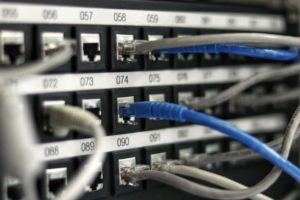
The basic operation of a proxy is relatively straightforward.
When a user or application makes an internet request, the proxy server receives that request first. Depending on the configuration, the proxy can then forward the request using its own IP address and network connection.
The destination server responds to the proxy, and the proxy passes the response back to the requesting application.
For example, if a computer with an Australian IP address connects through a proxy located in the United States, the destination website may see the connection as originating from the United States proxy.
The process can be simplified into four stages:
- A device or application sends a request.
- The proxy server receives the request.
- The proxy forwards the request to the destination.
- The destination’s response is returned through the proxy.
This intermediary position allows proxies to provide a degree of control over how internet requests are made.
What Is an IP Address?
Understanding IP addresses is helpful in understanding proxies.
An identification linked to a device or internet connection is called an IP address. It enables network systems to determine the source of traffic and the appropriate destination for answers.
Additionally, public IP addresses might reveal an internet connection’s approximate geographic location. Because of this, websites are frequently able to identify whether a visitor looks to be in Australia, the US, the UK, or another country.
A proxy effectively introduces another IP address into the connection.
Instead of:
Device → Website
the connection becomes:
Device → Proxy IP address → Website
The website therefore sees the proxy’s IP address as the source of the request.
Why Do People Use Proxies?
There is no single reason to use a proxy. Different proxy types and configurations are designed for different purposes.
Common proxy use cases include:
- Web scraping and data collection
- Price monitoring
- Competitor research
- Market research
- Search engine data collection
- Website testing
- Geographic testing
- Ad verification
- SEO research
- Automation
- API-based data collection
- Managing requests from multiple IP addresses
- Accessing geographically specific versions of websites
- Network security and traffic filtering
For businesses, proxies are particularly useful when applications need to make large numbers of requests to public websites or when information needs to be collected from multiple geographic locations.
What Are the Different Types of Proxies?
Not all proxies operate in the same way. One of the most important distinctions is where the proxy IP address comes from.
Residential Proxies
Residential proxies use IP addresses associated with residential internet connections.
Because these addresses are associated with ordinary internet service providers and residential networks, they can appear more like typical consumer traffic than IP addresses originating from data centres.
Residential proxies are commonly used for:
- Web scraping
- Market research
- Price monitoring
- Search engine research
- Geographic testing
- Ad verification
- Public web data collection
For businesses collecting geographically specific information, residential proxies can be particularly useful because they can provide IP addresses associated with specific countries or locations.
Datacentre Proxies
Datacentre proxies use IP addresses hosted within commercial data centers rather than residential internet connections.
They are generally known for providing high speeds and can be suitable for applications requiring large volumes of requests.
Datacentre proxies are often used for:
- Automated tasks
- Web crawling
- High-volume data collection
- SEO tools
- Testing
- General-purpose automation
The main distinction is that a datacentre IP is associated with a hosting or cloud infrastructure provider rather than a traditional residential ISP.
ISP Proxies
ISP proxies combine characteristics of residential and datacentre infrastructure.
The IP address is associated with an internet service provider but may be hosted through infrastructure designed for proxy services. This can provide a different balance between stability, speed and the appearance of the IP address.
ISP proxies can be useful for applications where a persistent IP address is desirable while still requiring an IP associated with an ISP.
Mobile Proxies
Mobile proxies use IP addresses associated with mobile networks.
These IP addresses can originate from mobile carriers and are often shared across many users. This can make mobile IP addresses useful for certain applications involving mobile-specific testing, advertising verification and geographic research.
Mobile proxies can be more expensive than some other proxy types because mobile network infrastructure is more complex and the available IP resources can be more limited.
What Is a Rotating Proxy?
A rotating proxy automatically changes the IP address used for requests.
For example, an application might make one request through one IP address and another request through a different IP address.
The rotation can occur:
- After every request
- At fixed time intervals
- When a session ends
- According to application-defined rules
Rotating proxies are particularly useful for large-scale web data collection where using one IP address for every request may not be appropriate.
The exact rotation behavior depends on the provider and proxy configuration.
What Is a Sticky Proxy?
A sticky proxy maintains the same IP address for a defined period or session.
This can be useful when an application needs to maintain a consistent IP address across multiple requests.
For example, an automated browsing session may need to maintain the same apparent location while navigating several pages. A rotating proxy that changes IP addresses after every request could interfere with that type of workflow.
Sticky sessions therefore provide a useful alternative to continuously rotating IP addresses.
What Is a Proxy Pool?
A proxy pool is a collection of IP addresses that can be used by an application.
Rather than relying on one proxy, an application can select different IP addresses from the available pool according to its requirements.
A proxy pool may contain IP addresses from:
- Different countries
- Different cities
- Different network providers
- Different connection types
- Different IP ranges
The size and geographic diversity of a proxy pool can be important when collecting data at scale.
For example, an organization conducting international market research may require IP addresses from Australia, the United States, Canada, the United Kingdom, India and other markets.
What Are Proxies Used For in Web Scraping?
Web scraping involves automatically collecting publicly available information from websites.
A scraper might collect information such as:
- Product prices
- Product availability
- Search results
- Business information
- Property listings
- News articles
- Sports information
- Market data
- Public directories
- Competitor information
A proxy can act as the network connection used by the scraper.
For large-scale scraping projects, proxies can help distribute requests across different IP addresses and geographic locations. This can also allow a business to collect region-specific information.
For example, an international retailer may want to monitor how its products appear on websites in Australia compared with the United States or United Kingdom.
The proxy infrastructure can be configured to make requests from the relevant geographic market.
What Are Proxies for Price Monitoring?
Price monitoring is one of the more common commercial applications of proxy infrastructure.
Businesses may need to monitor product prices across their own websites, marketplaces, retailers or competitors. This can involve collecting large volumes of publicly available pricing information.
For example, an automated price monitoring system could periodically check:
- Product prices
- Discounts
- Promotions
- Stock availability
- Shipping costs
- Product variations
- Competitor listings
A proxy can provide the network connection used for these requests.
Geographic proxy selection can become particularly important when websites display different prices, products or availability depending on the visitor’s location.
Internal link: [Proxies for Price Monitoring]
What Are Proxy APIs?
A proxy API provides programmatic access to proxy infrastructure.
Instead of manually configuring individual proxy servers, software can interact with an API to request or manage proxy connections.
Depending on the service, a proxy API may provide functionality such as:
- Selecting a country
- Selecting a city
- Choosing a proxy type
- Rotating IP addresses
- Creating sessions
- Managing authentication
- Retrieving proxy information
- Automating proxy allocation
Proxy APIs are particularly useful for developers building applications that require proxy connectivity as part of an automated workflow.
What Are Country-Specific Proxies?
A country-specific proxy provides an IP address associated with a particular country.
This is useful because websites can serve different content depending on the visitor’s location.
For example, an Australian user and a US user may see different:
- Search results
- Product prices
- Advertisements
- Product availability
- Currency
- Content
- Local businesses
- Website versions
A proxy located in the relevant country allows businesses to test and research these differences.
Common geographic proxy requirements include:
USA Proxies
Canada Proxies
China Proxies
Indonesia Proxies
India Proxies
UK Proxies
New Zealand Proxies
Europe Proxies
Czech Republic Proxies
Country targeting can be particularly valuable for international SEO, market research, competitive intelligence and website testing.
What Are Proxies Used For in SEO?
Proxies can be useful in a number of SEO workflows.
SEO platforms and agencies may use proxy infrastructure when collecting large amounts of search engine data, checking rankings or conducting geographic search research.
For example, a business targeting customers in different regions may want to understand what search results appear for users in different locations.
A geographically targeted proxy can help simulate a connection from the relevant market.
Potential SEO applications include:
- Search result collection
- Local rank tracking
- Competitor research
- SERP analysis
- Keyword research
- Website testing
- Search advertising verification
- Local search research
The value of proxies in SEO is primarily related to the ability to make requests from different IP addresses and locations.
Proxies and Geographic Testing
Websites are increasingly customized according to the user’s location.
An eCommerce website may display prices in Australian dollars to Australian visitors, pounds to UK visitors and US dollars to American visitors.
A website may also change:
- Language
- Currency
- Shipping information
- Product availability
- Promotions
- Localized content
- Search results
- Advertising
Geographic proxies allow developers, marketers and researchers to test these experiences from different locations.
For example, a website owner could use an Australian proxy to test the Australian version of a website and a Canadian proxy to examine the Canadian version.
Proxy Authentication
Proxy servers commonly require authentication so that only authorized users can access the service.
Two common authentication methods are:
Username and Password
The application connects to the proxy using credentials supplied by the proxy provider.
This is straightforward and widely supported by browsers, scripts and software.
IP Authentication
The proxy service allows requests from approved IP addresses.
The user’s server or application IP address is added to an allowlist, allowing it to connect without sending a username and password with every request.
The appropriate authentication method depends on the application and infrastructure being used.
HTTP and SOCKS Proxies
Proxy protocols also differ.
HTTP Proxies
HTTP proxies are designed primarily for web traffic and commonly support HTTP and HTTPS connections.
They are widely used for web browsing, scraping and other applications involving HTTP requests.
SOCKS Proxies
SOCKS proxies operate at a lower network level and can handle a wider range of traffic.
SOCKS5 is a commonly supported version and can be useful for applications that require more flexible network-level proxying.
The correct protocol depends on the software being used and the type of traffic that needs to pass through the proxy.
What Is the Difference Between a Proxy and a VPN?
A proxy generally handles traffic for a particular application or connection, depending on how it is configured.
A VPN typically establishes an encrypted tunnel between a device and a VPN server, allowing network traffic to be routed through that connection.
The key differences can include:
| Feature | Proxy | VPN |
|---|---|---|
| Changes apparent IP address | Yes | Yes |
| Can route application-specific traffic | Yes | Usually system-wide |
| Common use in web scraping | Yes | Less common |
| Large proxy pools | Common | Less common |
| Geographic IP selection | Common | Common |
| Encrypted tunnel | Depends on configuration | Typically yes |
| Designed for automated requests | Often | Not usually |
Neither technology is universally better. They are designed for different use cases.
Are Proxies Legal?
Using a proxy server is not inherently illegal. Proxies are legitimate networking technologies used by businesses, developers, researchers and individuals for many different purposes.
However, the legality of a particular activity depends on what the proxy is being used to do and the laws, regulations and contractual terms applicable to that activity.
For example, collecting publicly available information may be permissible in some circumstances, while accessing private information, bypassing authentication or violating applicable laws can create legal problems.
Businesses using proxies for automated data collection should therefore consider:
- Applicable laws
- Website terms and conditions
- Privacy requirements
- Data protection obligations
- Copyright
- Access controls
- The nature of the information being collected
Proxy infrastructure itself does not make an otherwise unlawful activity lawful.
Are Proxies Secure?
Security depends on the type of proxy, provider, configuration and application.
A proxy is primarily a networking intermediary. It should not automatically be treated as a complete security solution.
Important considerations include:
- Whether traffic is encrypted
- Who operates the proxy
- How credentials are protected
- Whether connection logs are retained
- Where the proxy infrastructure is located
- How IP addresses are sourced
- Whether the provider has appropriate security controls
- Whether HTTPS is being used for sensitive communications
Free public proxies can present additional risks because their operators may be unknown and their infrastructure may be unreliable.
For business applications, using reputable infrastructure with appropriate authentication and security controls is generally preferable.
Free Proxies vs Paid Proxies
Free proxies are widely available online, but they often come with significant limitations.
Potential problems include:
- Slow speeds
- Unreliable connections
- High failure rates
- Limited geographic selection
- Shared or overloaded IP addresses
- Security concerns
- Poor availability
- Lack of support
Paid proxy services generally provide more control over factors such as location, connection type, rotation, authentication and bandwidth.
For occasional testing, a free proxy may appear attractive. For business applications involving automated data collection or production systems, reliability is usually much more important than simply finding the cheapest available IP address.
What Makes a Good Proxy?
There is no single characteristic that makes a proxy suitable for every application.
The right proxy depends on the requirements of the project.
Important factors include:
Geographic Coverage
A business requiring Australian IP addresses has different requirements from a business conducting research across dozens of countries.
The size and diversity of the available proxy pool can therefore be important.
Speed
Latency and connection speed affect how quickly requests can be processed.
High-speed proxies can be particularly important for applications making large numbers of requests.
Reliability
A proxy that frequently fails or becomes unavailable can significantly reduce the efficiency of an automated system.
IP Quality
The history and reputation of an IP address can affect how websites respond to requests.
Rotation
Some applications require a different IP address for every request, while others require a stable IP for the duration of a session.
Authentication
Reliable authentication allows access to proxy infrastructure to be controlled and monitored.
Scalability
Large-scale applications may need thousands or millions of requests. Proxy infrastructure must be able to support the required volume without becoming a bottleneck.
What Is a Proxy Pool’s IP Rotation Rate?
IP rotation rate describes how frequently the IP address assigned to a connection changes.
A high rotation rate can be useful for certain large-scale data collection applications, while a stable session can be more appropriate for applications requiring continuity.
For example:
Request 1 → IP A
Request 2 → IP B
Request 3 → IP C
is an example of frequent rotation.
By comparison:
Session → IP A
means the same IP remains associated with the session for its configured duration.
The correct approach depends on the website, application and data collection requirements.
Proxies for Businesses
Businesses increasingly use proxy infrastructure as part of larger data and automation systems.
Common applications include:
- Competitor price monitoring
- Ecommerce research
- Market intelligence
- SEO platforms
- Advertising verification
- Product availability monitoring
- Travel research
- Property research
- Brand monitoring
- Public data collection
- Automated testing
In these situations, the proxy is usually only one component of a larger technical system.
A price monitoring platform, for example, may combine a scraper, proxy infrastructure, scheduling system, database and reporting interface.
Proxies and Web Scraping APIs
Modern data collection systems can also use proxy infrastructure through APIs.
Rather than manually configuring proxies inside individual applications, developers can integrate a proxy API into their software.
This allows the application to dynamically determine how requests should be routed.
For example, a system could request:
Country: Australia
Connection: Residential
Session: Sticky
Rotation: Automatic
The API or proxy platform can then provide the appropriate connection.
This approach can simplify proxy management when applications need to operate across multiple countries or large numbers of IP addresses.
How to Choose the Right Proxy
Selecting a proxy should begin with the intended use case rather than simply looking at the number of available IP addresses.
A business should consider:
- What information or service needs to be accessed?
- Which countries or locations are required?
- Does the application need residential, datacentre, ISP or mobile IPs?
- Should IP addresses rotate or remain consistent?
- How many requests need to be processed?
- What level of speed and reliability is required?
- Does the application require an API?
- What authentication method is appropriate?
- What legal and privacy requirements apply?
These questions can usually narrow down the appropriate proxy configuration considerably.
Frequently Asked Questions About Proxies
What is a proxy in simple terms?
A proxy is an intermediary between a device and the internet. It forwards requests to websites and services on behalf of the user or application, meaning the destination can see the proxy’s IP address instead of the original connection’s IP address.
Does a proxy hide your IP address?
A proxy can hide the original IP address from the destination website by sending the request through another IP address. However, the level of privacy provided depends on the proxy configuration and how the connection is being used.
Are proxies and VPNs the same?
No. Although both can change the apparent IP address of an internet connection, VPNs are generally designed to create an encrypted network tunnel, while proxies are often used to route traffic for specific applications or automated systems.
What is a residential proxy?
A residential proxy uses an IP address associated with a residential internet connection. Residential proxies are commonly used for geographic research, web scraping, price monitoring and other applications requiring residential IP addresses.
What is a rotating proxy?
A rotating proxy automatically changes the IP address used for requests according to a defined rotation system.
What is a proxy pool?
A proxy pool is a collection of proxy IP addresses available to an application or service. The application can select different IP addresses from the pool according to its requirements.
What are proxies used for?
Proxies are used for many legitimate purposes, including web scraping, market research, price monitoring, SEO research, geographic testing, automation, advertising verification and public data collection.
Are proxies legal?
Using a proxy is generally a legitimate networking activity. However, what a person or organization does through a proxy may be subject to laws, regulations, website terms and other restrictions.
Are free proxies safe?
Free proxies can be unreliable and may present security or privacy risks because the operator and infrastructure may be unknown. Business applications generally require more reliable and controlled infrastructure.
What is a proxy API?
A proxy API provides programmatic access to proxy infrastructure, allowing software to automatically select, manage or rotate proxy connections.
What is the best proxy?
There is no universally best proxy. The appropriate option depends on the required country, IP type, speed, rotation, reliability, scale and application.
Final Thoughts
A proxy is fundamentally an intermediary between an internet-connected device and the destination it is communicating with. By routing requests through another server and IP address, proxies provide businesses and applications with greater control over how internet traffic is generated.
The technology ranges from simple HTTP proxies to large residential proxy networks with geographic targeting, automated rotation and API access.
The most appropriate solution depends on the intended application. A developer testing a website from another country has different requirements from an eCommerce company monitoring competitor prices or an SEO platform collecting search data.
Understanding the differences between residential, datacentre, ISP and mobile proxies, as well as concepts such as IP rotation, sticky sessions, proxy pools and geographic targeting, makes it easier to select infrastructure suited to the task.
As internet-based data collection and automation continue to become more sophisticated, proxy infrastructure remains an important component of many systems that need reliable, geographically diverse and scalable internet connectivity.

Alessio Rigoli is the founder of AGR Technology and got his start working in the IT space originally in Education and then in the private sector helping businesses in various industries. Alessio maintains the blog and is interested in a number of different topics emerging and current such as Digital marketing, Software development, Cryptocurrency/Blockchain, Cyber security, Linux and more.
Alessio Rigoli, AGR Technology