

Building a ship isn’t what it used to be. Gone are the days of hand-drawn blueprints and guesswork calculations. Today’s marine shipbuilding industry runs on sophisticated software systems that touch every phase of vessel construction, from initial design through to launch and beyond.
But here’s the challenge: off-the-shelf software rarely fits the unique demands of shipbuilders. Whether you’re constructing offshore platforms, cargo vessels, or naval ships, you need solutions built around your specific workflows, compliance requirements, and operational realities.
At AGR Technology, we can support marine and shipbuilding organizations to develop custom software that actually solves problems. This page covers what modern shipbuilding software looks like, the technologies reshaping the industry, and how we can help you get started on your next project.
Get in contact with us to discuss your project
Reviews from our happy clients:
Proudly supporting clients of all sizes to succeed through digital solutions










Why work with us?




The Role of Software in Modern Shipbuilding
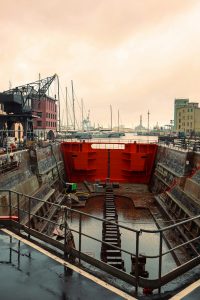
Marine shipbuilding has always been complex. A single vessel can contain millions of individual components, require coordination between dozens of specialist teams, and take years to complete. Managing all of this manually? Not realistic.
Software now underpins virtually every aspect of the shipbuilding process:
- Design and engineering, Creating hull forms, structural layouts, and system integrations
- Production planning, Scheduling fabrication, assembly sequences, and resource allocation
- Quality control, Tracking welds, inspections, and compliance documentation
- Supply chain management, Coordinating material procurement across global suppliers
- Project management, Monitoring budgets, timelines, and milestone delivery
The shift towards digitization isn’t optional anymore. Shipyards that rely on outdated systems or disconnected spreadsheets struggle to compete on cost, quality, and delivery timelines.
What makes shipbuilding software particularly demanding is the integration requirement. Design data needs to flow into production systems. Production data needs to feed back into engineering. And all of it needs to connect with enterprise resource planning, procurement, and compliance platforms. Getting this right requires purpose-built solutions, not generic tools forced into a maritime context.
Key Software Applications in Marine Shipbuilding

Let’s look at the core software categories that modern shipyards depend on.
Computer-Aided Design and Engineering Tools
CAD and CAE software forms the foundation of any shipbuilding operation. These tools handle:
- 3D hull modelling and structural design
- Pipe routing and HVAC system layouts
- Electrical system design and cable tray planning
- Finite element analysis for structural integrity
- Weight and stability calculations
Popular platforms like AVEVA Marine, NAPA, and Siemens NX serve as starting points. But most shipyards need custom integrations, extensions, or entirely bespoke tools to handle their specific vessel types or regulatory requirements.
We can build custom CAD extensions that automate repetitive design tasks, connect engineering data to production systems, and generate compliance documentation automatically. These kinds of enhancements can shave weeks off design cycles.
Simulation and Performance Analysis Software
Before steel gets cut, shipbuilders need to know how a vessel will perform. Simulation software covers:
- Hydrodynamic analysis and sea-keeping predictions
- Structural load testing under various conditions
- Propulsion system optimization
- Fire and evacuation modelling
- Environmental impact assessments
Custom simulation tools can be tailored to specific vessel classes or operating conditions. For example, an offshore support vessel operating in the North Sea faces different challenges than a passenger ferry in tropical waters. Generic simulation packages don’t always account for these nuances.
Fleet and Vessel Management Platforms
Once vessels are in operation, owners and operators need systems to manage:
- Maintenance scheduling and work orders
- Fuel consumption and emissions tracking
- Crew management and certification compliance
- Voyage planning and optimization
- Regulatory reporting and classification society requirements
Many shipbuilders now offer integrated fleet management platforms as part of their delivery package. This creates ongoing value for customers and opens up new revenue streams through software licensing and support services.
If you’re looking to develop or enhance vessel management software, get in touch with AGR Technology to discuss your requirements.
Emerging Technologies Transforming Shipbuilding Software
The marine industry isn’t known for rapid technology adoption. But that’s changing. Several emerging technologies are gaining real traction in shipbuilding operations.
Digital Twins and IoT Integration
A digital twin is a virtual replica of a physical vessel that updates in real-time based on sensor data. For shipbuilders and operators, this means:
- Predictive maintenance, Identifying equipment failures before they happen
- Performance optimization, Fine-tuning operations based on actual conditions
- Design validation, Comparing real-world performance against design predictions
- Lifecycle management, Tracking component wear and planning replacements
Building effective digital twins requires robust IoT infrastructure, secure data pipelines, and analytics platforms that can process large volumes of sensor data. We help organizations design and carry out these systems from the ground up.
The key challenge? Integration. Shipboard sensors, communication systems, and shore-based analytics platforms all need to work together seamlessly. This rarely happens with off-the-shelf products alone.
AI and Machine Learning Applications
AI is moving beyond the hype phase in marine applications. Practical use cases include:
- Automated quality inspection, Using computer vision to detect weld defects or coating issues
- Design optimization, Machine learning algorithms that suggest hull form improvements
- Demand forecasting, Predicting material requirements and supply chain needs
- Document processing, Extracting information from technical drawings and specifications
- Route optimization, Calculating fuel-efficient voyage plans based on weather and current data
These applications require clean data, appropriate training datasets, and careful validation. We work with clients to identify high-value AI opportunities and build solutions that deliver measurable results, not just impressive demos.
Benefits of Custom Software Solutions for Shipbuilders
Why invest in custom software when commercial products exist? Here’s what we see with our clients:
Competitive differentiation, Custom tools can give you capabilities competitors don’t have. A proprietary design automation system or advanced simulation tool becomes a genuine competitive advantage.
Process fit, Your workflows are unique. Custom software moulds around how you actually work, rather than forcing you to adapt to someone else’s assumptions.
Integration, Purpose-built solutions connect cleanly with your existing systems. No more manual data entry between disconnected platforms.
Scalability, As your business grows or changes, custom software can evolve with you. You’re not locked into another vendor’s roadmap.
Compliance, Maritime regulations vary by flag state, classification society, and vessel type. Custom software can be built to handle your specific compliance requirements automatically.
The upfront investment is higher than buying off-the-shelf. But the long-term returns, in efficiency, capability, and competitive positioning, often make custom development the smarter choice.
How to Approach a Marine Shipbuilding Software Development Project
If you’re considering a software development project, here’s a practical framework:
1. Define the problem clearly
Start with the business problem, not the technology. What’s costing you time, money, or quality? Where do your teams struggle with existing tools? What would success look like?
2. Assess your current systems
Understand what you already have. Map out existing software, data flows, and integration points. Identify what works, what doesn’t, and what’s missing.
3. Prioritize ruthlessly
You can’t build everything at once. Focus on the highest-impact opportunities first. Quick wins build momentum and demonstrate value.
4. Choose the right development partner
Look for a team that understands both software development and the maritime domain. Generic developers will struggle with the complexity of shipbuilding workflows and regulatory requirements.
At AGR Technology, we bring deep technical expertise combined with practical experience in industrial and maritime applications. We work closely with clients through discovery, design, development, and deployment.
5. Plan for the long term
Software isn’t a one-time project. Plan for ongoing maintenance, updates, and enhancements. Build systems that can evolve as your needs change.
6. Get started
The best time to begin is now. Even a small pilot project can validate concepts and build internal support for larger initiatives.
Conclusion
Software development in the marine shipbuilding industry isn’t just about technology, it’s about building vessels better, faster, and more efficiently. From CAD tools and simulation platforms to digital twins and AI applications, the right software can transform how shipyards operate.
Off-the-shelf solutions have their place. But for organizations serious about competitive advantage, custom software development delivers capabilities that generic products simply can’t match.
We’ve worked with clients across industrial and maritime sectors to build software that solves real problems. If you’re ready to explore what custom development could do for your shipbuilding operations, we’d like to hear from you.
Ready to get started? Book a free consultation with AGR Technology and let’s talk about your project.
Frequently Asked Questions
What types of software are used in modern marine shipbuilding?
Modern marine shipbuilding relies on CAD/CAE tools for 3D hull modeling and structural design, simulation software for hydrodynamic analysis, production planning systems for scheduling fabrication, quality control platforms for tracking inspections, and fleet management software for vessel operations and maintenance.
Why do shipyards need custom software development instead of off-the-shelf solutions?
Custom software development for shipbuilding provides competitive differentiation, seamless integration with existing systems, and solutions tailored to unique workflows and compliance requirements. Unlike generic tools, purpose-built software handles specific vessel types, regulatory demands, and data flows between design and production systems.
How are digital twins used in the shipbuilding industry?
Digital twins create virtual replicas of physical vessels that update in real-time using sensor data. In shipbuilding, they enable predictive maintenance, performance optimization, design validation by comparing real-world data against predictions, and lifecycle management for tracking component wear and planning replacements.
What is the role of AI and machine learning in marine shipbuilding software?
AI in shipbuilding powers automated quality inspection using computer vision to detect weld defects, design optimization through machine learning algorithms, demand forecasting for materials, document processing from technical drawings, and route optimization for fuel-efficient voyage planning based on weather data.
How long does it take to develop custom shipbuilding software?
Development timelines vary based on project scope and complexity. Simple integrations or extensions may take weeks, while comprehensive platforms can require months. Starting with a small pilot project helps validate concepts quickly, with phased development allowing for continuous improvements as requirements evolve.
What challenges do shipyards face when integrating shipbuilding software systems?
The main challenge is ensuring seamless data flow between design, production, quality control, and enterprise systems. Shipboard sensors, communication networks, and shore-based analytics must work together. Off-the-shelf products rarely achieve this integration alone, requiring custom solutions built for specific maritime contexts.
Related content:
Construction Management Software Development
Construction App Development Services
Custom Software Development for Engineering Companies
Inventory Management Software Development Services
Enterprise Custom Software Development Services
Customer Portal Development Services

Alessio Rigoli is the founder of AGR Technology and got his start working in the IT space originally in Education and then in the private sector helping businesses in various industries. Alessio maintains the blog and is interested in a number of different topics emerging and current such as Digital marketing, Software development, Cryptocurrency/Blockchain, Cyber security, Linux and more.
Alessio Rigoli, AGR Technology