

The super app model isn’t just a trend, it’s reshaping how businesses engage users across messaging, payments, social media, and commerce within a single platform. WeChat proved the concept with over 1.3 billion monthly active users, and now businesses worldwide want that same ecosystem under their own brand. Whether you’re a startup looking to disrupt a niche market or an enterprise consolidating your digital services, a WeChat clone app gives you a proven blueprint to build on.
At AGR Technology, we deliver end-to-end WeChat clone app development services that help businesses launch scalable, feature-rich super apps, without starting from scratch.
Get in contact with us to discuss your project
Reviews from our happy clients:

Justine Brummans
Alessio is both incredibly knowledgeable and personable! He gave me great advice that was catered to me and my situation. Thank you Alessio! Super helpful!

Springfield Equestrian Park
Alessio is amazing! I can not speak highly enough of how helpful and knowledgeable he is, my website he created far exceeded my expectations, he is so accomodating and I can only wish him every success with his business. I rate AGR technology 10 out of 10.
Legacy Energy
We used AGR Technology and dealt with Alessio to design and build our website as well as host our emails. Alessio was a pleasure to deal with and had plenty of ideas that we could implement into our site. He has a great attention to detail, he is also very polite in understanding our goals and what we wanted to achieve with our website.
Thanks mate,
Alex & Rob
Excellent Service
Alessio developed our website for our business and has done a wonderful job. He is very personable and knowledgeable. We have enjoyed working with him. We will be referring others to him and highly recommend him to those who need Tech advice.
MRC Performance
I have been in business for over 10 Years and recently moved to AGR Technology for all our IT needs. They are able to fix nearly anything remotely and always very helpful in recommending appropriate hardware upgrades that do the job as required but not costing more than needed.

Alessio provided an excellent service. He was very dedicated in his method of finding solutions to problems. He continued to try different avenues until he found the reason as to why a particular application was not working. He was very knowledgeable in his understanding of the internet and of applications and how they work, and he was able to apply this knowledge in understanding how to resolve the obstacles that continued to appear. He is understanding towards his client's needs and goals and he is willing to work with his client in achieving those goals. He is a very polite and well mannered person and very calm and gentle in his approach. I would highly recommend Alessio's services to anyone.

Palmira Rigoli
Great work ethics Alessio! We at Totally Gluten Free Products are very happy to have you on board as our IT and SEO master. Very reliable, trustworthy and knowledgeable in the field.
YouTube Comment

Nat's Custom Designs
Alessio from AGR Technology has recently helped me create a website for my business.
Throughout the whole process from start to finish Alessio made the process easy for me, by calling me and explaining each step of the way. I'm not very computer savvy, but with Alessio taking the time to explain in detail everything I needed to know from putting inventory in to having it shipped. He even remotely joined my computer to help guide me through everything.
He's very knowledgeable and is experienced in everything I needed and if there was anything else I needed to know that wasn't something he was familiar with, he researched it.
I would HIGHLY recommend Alessio to anyone. He has not only helped me for now but I know that if I ever needed help with anything else he would definitely go above and beyond to help. Thank you so much for everything you have done. It's been a long process but well worth it 🙂
Byron Macumber
AGR Technology is amazing. not only do they stick with you through out the process, they also accommodate to your wants and needs. They are efficient in their work and they have high integrity. Their capabilities are shown through their website design, and appropriate knowledge of utilities regarding software. over the many years of working with them they have been fantastic. I would recommend to everyone
Very helpful
Alessio was thorough, diligent and kept me updated at all time points. I was very impressed with his performance, passion and dedication. I will continue to use his services.
Wantrup & Associates
Alessio of AGR Technology is an IT guy we rely on whenever we need IT help. His professionalism impressed us right at the first time. He solved many of our IT problems in no time. Excellent communication and speedy response.
We highly recommend this company
From a happy customer
Valeria Bianco
I received AGR contact information from a previous client, who had found their service excellent. So I contacted AGR with some expectations, and I can say they exceeded them. Professional, honest, punctual, reliable, their service is faultless. We can't recommend them highly enough.
Very fast, value for money and a comprehensive service
AGR is professional, organised and very skilled at what they do. They take the initiative, looking after all the details that you would not have thought of to enhance your website presence, marketing funnel and automated appointment bookings. Big bonus - pricings are at a fraction of the cost of competitors.
Customer testimonial
Alessio from AGR Technology is wonderful at gently guiding the less technically savvy users to solve problems. Back up service excellent. Highly recommended
SEO for website
The team is very cooperative and delivers clean and very efficient work.

Raimond Volpe
Nothing but good things to say about Alessio. He has been great service and great at communicating with me by both phone and email. Very good knowledge and problem-solving ability with our web development. I would thoroughly recommend Alessio and AGR Technology to anyone wanting online marketing or web development
Website design
Big thank you to Alessio at AGR Technology for a smooth and easy website development process. Nothing was to difficult to accomplish, I can highly recommend his first class service.
Proudly supporting clients of all sizes to succeed through digital solutions













Why work with us?







Why Businesses Are Investing in WeChat-Like Super Apps
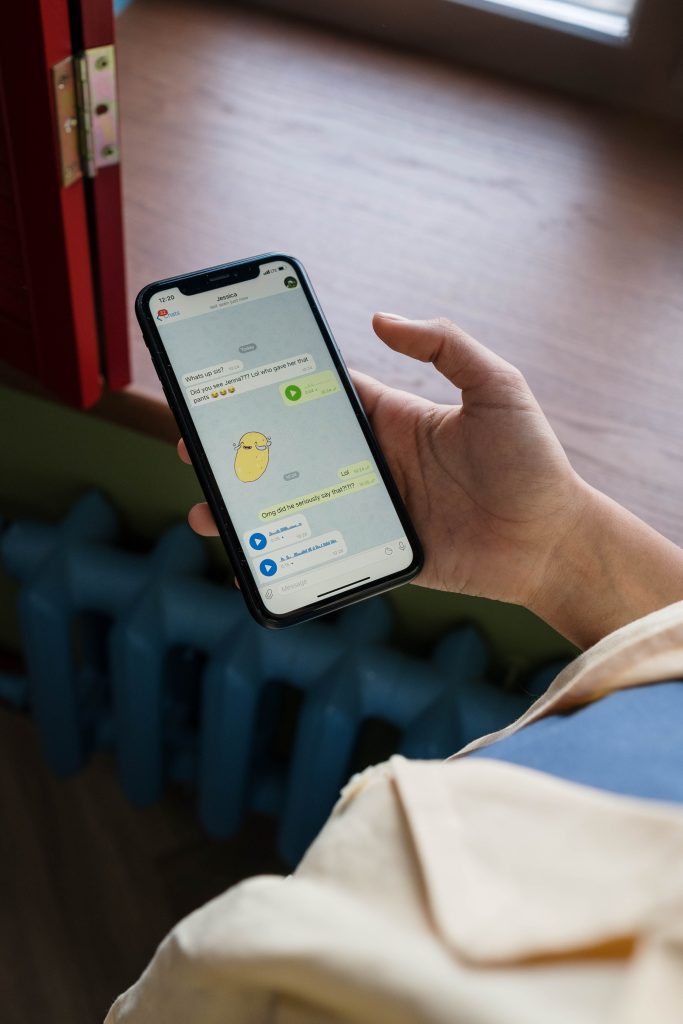
The appeal is straightforward: super apps consolidate multiple services into one platform. Instead of forcing users to jump between separate apps for messaging, payments, shopping, and social networking, a WeChat-style app keeps them in a single ecosystem.
Here’s why businesses are making this move in October 2026:
- Higher user retention. When your app handles messaging, payments, and content in one place, users have fewer reasons to leave. Average session times for super apps are significantly higher than single-purpose apps.
- Multiple revenue streams. A super app opens doors to in-app purchases, transaction fees, advertising, subscription models, and mini-program marketplace commissions, all within a unified platform.
- Data-driven insights. With users interacting across multiple features, you gain a richer picture of behavior and preferences. That data fuels better personalization and smarter business decisions.
- Competitive differentiation. In saturated markets, offering a super app experience sets you apart. It signals innovation and positions your brand as a digital-first leader.
Industries like fintech, healthcare, e-commerce, logistics, and education are particularly well-suited to the super app model. If your business serves users who need multiple digital touchpoints daily, a WeChat clone app is worth serious consideration.
We can help businesses across these sectors scope, plan, and build super apps tailored to their specific market. Get in touch with AGR Technology to discuss your project.
Core Features Every WeChat Clone App Needs
Building a super app isn’t about cramming in every feature imaginable. It’s about selecting the right combination of functionality that serves your users and scales with your business.
Messaging, Voice, and Video Communication
At its core, any WeChat clone needs robust real-time communication. This includes:
- Instant messaging with text, images, files, and emoji support
- Group chats with admin controls, muting, and pinned messages
- Voice and video calling, both one-on-one and group calls
- End-to-end encryption for privacy and security compliance
- Push notifications to keep users engaged without being intrusive
These communication features form the foundation. They’re the reason users open the app every day, everything else builds on top of that habit.
Social Feed, Mini Programs, and Mobile Payments
This is where a WeChat clone evolves from a messaging app into a true super app.
- Social feed (Moments-style). Users can post updates, share media, and interact through likes and comments. This drives organic engagement and keeps users active between conversations.
- Mini programs. These are lightweight apps-within-the-app. Think booking systems, games, e-commerce stores, or service portals, all running inside your platform without requiring separate downloads. Mini programs are central to WeChat’s success and a major revenue driver.
- Mobile payments and digital wallet. Integrated payment processing lets users send money, pay for services, and complete purchases without leaving the app. This requires secure payment gateway integration and compliance with regional financial regulations.
- QR code scanning for payments, adding contacts, and accessing mini programs.
- Location sharing and nearby services to connect users with local businesses.
We build each of these modules as part of a modular architecture, so you can launch with core features and expand over time.
How the WeChat Clone App Development Process Works

At AGR Technology, we follow a structured development process designed to move efficiently from concept to launch.
- Discovery and requirements gathering. We start by understanding your business goals, target audience, and the specific features you need. This phase defines the project scope and technical requirements.
- UI/UX design. Our design team creates wireframes and interactive prototypes. We focus on intuitive navigation, clean interfaces, and user flows that feel natural, not cluttered.
- Backend and frontend development. Development runs in parallel tracks. The backend handles real-time messaging infrastructure, database management, API integrations, and security. The frontend delivers a smooth, responsive experience across iOS and Android.
- Integration and testing. Payment gateways, third-party APIs, and mini-program frameworks get integrated and rigorously tested. We run functional testing, load testing, and security audits before anything goes live.
- Deployment and post-launch support. We handle app store submissions, server deployment, and provide ongoing maintenance. Bug fixes, feature updates, and scaling support are part of the deal.
The process is collaborative. You’re involved at every milestone, and we adjust based on feedback rather than locking you into a rigid plan.
Talk to our development team about your WeChat clone project.
Choosing the Right Tech Stack and Architecture

The tech stack behind a super app matters, a lot. Poor architecture decisions early on lead to performance bottlenecks, security vulnerabilities, and painful scaling issues down the track.
Here’s what we typically recommend for WeChat clone app development:
- Frontend: React Native or Flutter for cross-platform mobile development. Both frameworks allow a single codebase to serve iOS and Android, reducing development time and cost.
- Backend: Node.js or Python (Django/FastAPI) for handling real-time messaging, API requests, and business logic.
- Real-time communication: WebSocket protocol with libraries like Socket.IO, or dedicated services such as Twilio or Agora for voice and video.
- Database: A combination of PostgreSQL for structured data and Redis or MongoDB for caching and real-time data.
- Cloud infrastructure: AWS, Google Cloud, or Azure for scalable hosting, storage, and content delivery.
- Security: OAuth 2.0 for authentication, AES-256 encryption for data at rest, and TLS for data in transit.
We design the architecture to be modular and microservices-based. This means individual features, messaging, payments, social feed, operate independently. If one module needs an upgrade or experiences heavy load, it doesn’t bring down the rest of the app.
This approach also makes it easier to add new features post-launch without rearchitecting the entire system.
Cost Factors and Timeline for WeChat Clone Development
Let’s be upfront: building a super app is a significant investment. But the cost varies widely depending on scope, features, and complexity.
Key cost factors include:
- Feature set. A basic messaging app with social features costs considerably less than a full super app with payments, mini programs, and third-party integrations.
- Platform. Cross-platform development (React Native/Flutter) is more cost-effective than building separate native apps for iOS and Android.
- Design complexity. Custom UI/UX with animations and micro-interactions adds to design costs.
- Third-party integrations. Payment gateways, mapping services, and communication APIs each have licensing or usage fees.
- Ongoing maintenance. Budget for server costs, updates, security patches, and feature enhancements post-launch.
Typical timelines:
- MVP (core messaging + social feed): 3–4 months
- Full-featured super app: 6–10 months
- Enterprise-grade with mini-program ecosystem: 10–14 months
We recommend starting with an MVP to validate your concept with real users, then iterating based on feedback and usage data. This reduces risk and keeps initial costs manageable.
Ready to scope your WeChat clone app? Request a free consultation with AGR Technology and we’ll provide a detailed estimate based on your requirements.
Frequently Asked Questions About WeChat Clone App Development
What is a WeChat clone app and why should businesses build one?
A WeChat clone app is a super app that consolidates messaging, payments, social features, and commerce into a single platform. Businesses build them to increase user retention, create multiple revenue streams, gain data-driven insights, and differentiate themselves in competitive markets.
What are the core features required in a WeChat clone app development project?
Core features include real-time messaging, voice and video calling, social feed, mini programs, mobile payments, QR code scanning, and location sharing. These features work together to create a unified super app experience that keeps users engaged.
How long does it take to develop a WeChat clone app?
Development timelines vary: an MVP with messaging and social features takes 3–4 months, a full-featured super app takes 6–10 months, and an enterprise-grade solution with mini-programs takes 10–14 months.
What technology stack is best for building a WeChat clone app?
Recommended technologies include React Native or Flutter for frontend, Node.js or Python for backend, WebSocket for real-time communication, PostgreSQL and Redis for databases, and AWS or Google Cloud for infrastructure with OAuth 2.0 and AES-256 encryption for security.
How much does WeChat clone app development cost?
Costs vary based on feature set, platform choice, design complexity, and third-party integrations. Cross-platform development is more cost-effective than native apps. Starting with an MVP helps validate your concept while managing initial investment.
Can mini programs be integrated into a WeChat clone app after launch?
Yes, a modular microservices-based architecture allows you to add mini programs and new features post-launch without rearchitecting the entire system, making it easier to expand functionality based on user demand and market feedback.
Related content:
Custom Software Development Experts
Gojek Clone App Development Services
Image source:
[Online]. Available at: https://th.bing.com/th/id/R.a9f035af5441eac1f197bb165e8f7b80?rik=l8lCuJCR7qb8Dg&riu=http%3a%2f%2fthenextweb.com%2fwp-content%2fblogs.dir%2f1%2ffiles%2f2015%2f01%2fwechat_windows.jpg&ehk=hBnhBHItZoMQ4ECbiNWj3KidmmIimjGydwevyVi8qrY%3d&risl=&pid=ImgRaw&r=0 (Accessed: 22 August 2026).

Alessio Rigoli is the founder of AGR Technology and got his start working in the IT space originally in Education and then in the private sector helping businesses in various industries. Alessio maintains the blog and is interested in a number of different topics emerging and current such as Digital marketing, Software development, Cryptocurrency/Blockchain, Cyber security, Linux and more.
Alessio Rigoli, AGR Technology