

The online grocery delivery market is projected to rapidly grow in 2027 and beyond. That’s not a niche, it’s a massive shift in how people buy everyday essentials. If you’ve been thinking about launching your own on-demand grocery delivery platform, you’re looking at one of the fastest-growing opportunities in digital commerce right now.
At AGR Technology, we can build custom Instacart clone apps designed to get your grocery delivery business to market quickly, without cutting corners on quality, scalability, or user experience. Here’s what you need to know about the process, the features, and the investment involved.
Get in contact with us to discuss your project
Reviews from our happy clients:

Justine Brummans
Alessio is both incredibly knowledgeable and personable! He gave me great advice that was catered to me and my situation. Thank you Alessio! Super helpful!

Springfield Equestrian Park
Alessio is amazing! I can not speak highly enough of how helpful and knowledgeable he is, my website he created far exceeded my expectations, he is so accomodating and I can only wish him every success with his business. I rate AGR technology 10 out of 10.
Legacy Energy
We used AGR Technology and dealt with Alessio to design and build our website as well as host our emails. Alessio was a pleasure to deal with and had plenty of ideas that we could implement into our site. He has a great attention to detail, he is also very polite in understanding our goals and what we wanted to achieve with our website.
Thanks mate,
Alex & Rob
Excellent Service
Alessio developed our website for our business and has done a wonderful job. He is very personable and knowledgeable. We have enjoyed working with him. We will be referring others to him and highly recommend him to those who need Tech advice.
MRC Performance
I have been in business for over 10 Years and recently moved to AGR Technology for all our IT needs. They are able to fix nearly anything remotely and always very helpful in recommending appropriate hardware upgrades that do the job as required but not costing more than needed.

Alessio provided an excellent service. He was very dedicated in his method of finding solutions to problems. He continued to try different avenues until he found the reason as to why a particular application was not working. He was very knowledgeable in his understanding of the internet and of applications and how they work, and he was able to apply this knowledge in understanding how to resolve the obstacles that continued to appear. He is understanding towards his client's needs and goals and he is willing to work with his client in achieving those goals. He is a very polite and well mannered person and very calm and gentle in his approach. I would highly recommend Alessio's services to anyone.

Palmira Rigoli
Great work ethics Alessio! We at Totally Gluten Free Products are very happy to have you on board as our IT and SEO master. Very reliable, trustworthy and knowledgeable in the field.
YouTube Comment

Nat's Custom Designs
Alessio from AGR Technology has recently helped me create a website for my business.
Throughout the whole process from start to finish Alessio made the process easy for me, by calling me and explaining each step of the way. I'm not very computer savvy, but with Alessio taking the time to explain in detail everything I needed to know from putting inventory in to having it shipped. He even remotely joined my computer to help guide me through everything.
He's very knowledgeable and is experienced in everything I needed and if there was anything else I needed to know that wasn't something he was familiar with, he researched it.
I would HIGHLY recommend Alessio to anyone. He has not only helped me for now but I know that if I ever needed help with anything else he would definitely go above and beyond to help. Thank you so much for everything you have done. It's been a long process but well worth it 🙂
Byron Macumber
AGR Technology is amazing. not only do they stick with you through out the process, they also accommodate to your wants and needs. They are efficient in their work and they have high integrity. Their capabilities are shown through their website design, and appropriate knowledge of utilities regarding software. over the many years of working with them they have been fantastic. I would recommend to everyone
Very helpful
Alessio was thorough, diligent and kept me updated at all time points. I was very impressed with his performance, passion and dedication. I will continue to use his services.
Wantrup & Associates
Alessio of AGR Technology is an IT guy we rely on whenever we need IT help. His professionalism impressed us right at the first time. He solved many of our IT problems in no time. Excellent communication and speedy response.
We highly recommend this company
From a happy customer
Valeria Bianco
I received AGR contact information from a previous client, who had found their service excellent. So I contacted AGR with some expectations, and I can say they exceeded them. Professional, honest, punctual, reliable, their service is faultless. We can't recommend them highly enough.
Very fast, value for money and a comprehensive service
AGR is professional, organised and very skilled at what they do. They take the initiative, looking after all the details that you would not have thought of to enhance your website presence, marketing funnel and automated appointment bookings. Big bonus - pricings are at a fraction of the cost of competitors.
Customer testimonial
Alessio from AGR Technology is wonderful at gently guiding the less technically savvy users to solve problems. Back up service excellent. Highly recommended
SEO for website
The team is very cooperative and delivers clean and very efficient work.

Raimond Volpe
Nothing but good things to say about Alessio. He has been great service and great at communicating with me by both phone and email. Very good knowledge and problem-solving ability with our web development. I would thoroughly recommend Alessio and AGR Technology to anyone wanting online marketing or web development
Website design
Big thank you to Alessio at AGR Technology for a smooth and easy website development process. Nothing was to difficult to accomplish, I can highly recommend his first class service.
Proudly supporting clients of all sizes to succeed through digital solutions











Why work with us?






Why On-Demand Grocery Delivery Apps Are Dominating the Market
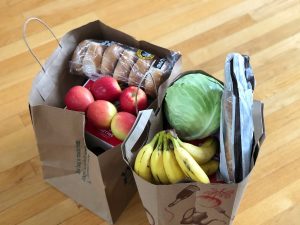
Consumer behavior has changed permanently. The convenience of ordering groceries from a phone, and having them show up at your door within an hour, isn’t a luxury anymore. It’s an expectation.
A few things are driving this:
- Post-pandemic habits, Millions of consumers who adopted online grocery shopping between 2020 and 2022 never went back to exclusively in-store shopping.
- Urbanization and time pressure, Busy professionals, young families, and elderly customers all benefit from delivery convenience.
- Smartphone penetration, With over 6.9 billion smartphone users worldwide in 2025, the infrastructure for app-based commerce is already in place.
- Hyperlocal delivery models, Consumers prefer faster, localized delivery over bulk online orders from distant warehouses.
For businesses, the opportunity is clear. Whether you’re a supermarket chain looking to digitize, a startup entering the grocery delivery space, or a logistics company expanding your service offering, an Instacart-style platform gives you a proven model to build on.
And you don’t need to build it from scratch. That’s where clone app development comes in.
What Is an Instacart Clone App and How Does It Work?

An Instacart clone app is a pre-architected, fully customizable grocery delivery application modeled on the core functionality of Instacart. It replicates the proven workflow, customers browse products, place orders, and receive deliveries, while giving you complete control over branding, features, and business logic.
Here’s how the typical model works:
- Customers browse local store catalogues, add items to their cart, and place orders through the app.
- Personal shoppers or store staff receive the order, pick items, and prepare them for dispatch.
- Delivery drivers collect the order and deliver it to the customer’s door.
- Admins manage the entire operation from a centralized dashboard, overseeing inventory, users, payments, and analytics.
The key advantage? You get a battle-tested framework without the 12–18 months of development time (and the associated cost) of building a platform entirely from zero.
At AGR Technology, we tailor every clone app to your specific market, integrating local payment gateways, regional compliance requirements, and custom features that set your platform apart from competitors.
Essential Features Your Instacart Clone App Must Have
Getting the feature set right is what separates a grocery delivery app people actually use from one they delete after the first order. Here’s what we build into every Instacart clone app.
Customer App Features
- Intuitive product search and filtering, Customers should find what they need in seconds. Category browsing, keyword search, and smart filters are non-negotiable.
- Real-time order tracking, Live GPS tracking so customers know exactly when their groceries will arrive.
- Multiple payment options, Credit/debit cards, digital wallets, buy-now-pay-later, and cash on delivery where applicable.
- Scheduled delivery slots, Not everyone wants instant delivery. Letting users pick a time window increases conversion rates.
- Push notifications, Order confirmations, delivery updates, and promotional alerts keep users engaged.
- Ratings and reviews, Social proof builds trust and helps you maintain quality control across stores and drivers.
- In-app chat/support, Direct communication between customers, shoppers, and support staff reduces friction.
Admin and Delivery Driver Panels
Admin Dashboard:
- Centralized order and inventory management
- Store and driver onboarding tools
- Revenue tracking, analytics, and reporting
- Promotional campaign and coupon management
- Customer dispute resolution workflows
Delivery Driver App:
- Order acceptance and route optimization
- Earnings tracking and payout management
- Availability toggle (online/offline status)
- In-app navigation with integrated maps
- Delivery proof (photo confirmation, e-signatures)
Each panel is built to be clean, responsive, and easy to use, because if your drivers or admin staff struggle with the interface, your whole operation slows down.
The Instacart Clone App Development Process From Concept to Launch
We follow a structured, transparent process at AGR Technology. No black boxes, no surprises.
1. Discovery and Requirements Gathering
We start by understanding your business model, target market, and competitive landscape. This phase defines the project scope, feature priorities, and technical requirements.
2. UI/UX Design
Our design team creates wireframes and high-fidelity prototypes. You’ll see exactly how the app looks and feels before a single line of code is written. We focus on intuitive navigation, clean layouts, and conversion-optimized user flows.
3. Development and Integration
Front-end and back-end development runs in parallel using agile sprints. We integrate payment gateways, mapping APIs, push notification services, and any third-party tools your platform requires.
4. Quality Assurance and Testing
Rigorous testing across devices, operating systems, and network conditions. We test for functionality, performance, security, and usability before anything goes live.
5. Deployment and Launch Support
We handle App Store and Google Play submissions, server configuration, and launch-day monitoring. Post-launch, we provide ongoing support and maintenance to keep your platform running smoothly.
6. Iteration and Scaling
After launch, we analyze user data and feedback to refine the app, add features, and scale the infrastructure as your user base grows.
How Much Does It Cost to Build an Instacart Clone App?
This is the question everyone asks first, and the honest answer is that it depends on several factors:
- Feature complexity, A basic MVP with core ordering and delivery features costs significantly less than a full-featured platform with AI-powered recommendations, loyalty programmes, and multi-vendor support.
- Platform choice, iOS only, Android only, or cross-platform (React Native/Flutter) development each carry different cost implications.
- Customization level, A lightly branded clone is faster and cheaper. Deep customization with unique workflows and integrations adds to the investment.
- Third-party integrations, Payment gateways, ERP systems, analytics platforms, and mapping services all factor into scope and cost.
At AGR Technology, we provide transparent, detailed quotes after an initial consultation, no hidden fees, no scope creep surprises. We also work with businesses at every scale, from startups testing the market to enterprise operations expanding into digital delivery.
Ready to build your on-demand grocery delivery platform? Talk to AGR Technology today about your Instacart clone app project. We’ll help you move from idea to live platform, quickly, affordably, and with the technical quality your business deserves.
Frequently Asked Questions About Instacart Clone App Development
What is an Instacart clone app and how does it work?
An Instacart clone app is a pre-architected, fully customisable grocery delivery application that replicates Instacart’s proven workflow. Customers browse products and place orders, personal shoppers pick items, delivery drivers make deliveries, and admins manage operations from a centralised dashboard without building from scratch.
How long does it take to develop an Instacart clone app?
Instacart clone app development typically takes 10 to 16 weeks from kickoff to launch, depending on complexity and customisation requirements. This includes discovery, design, development, testing, deployment, and launch support phases.
How much does Instacart clone app development cost?
Instacart clone app development typically ranges from $25,000 to $80,000+, depending on feature complexity, platform choice (iOS/Android/cross-platform), customization level, and third-party integrations. MVPs can often be delivered at the lower end with phased feature roll-outs.
What are the essential features of a grocery delivery app?
Essential features include intuitive product search, real-time order tracking, multiple payment options, scheduled delivery slots, push notifications, ratings and reviews, and in-app support. Admin panels should manage orders, inventory, analytics, and driver onboarding seamlessly.
Why should I choose a clone app over building a grocery delivery platform from scratch?
Clone apps provide a battle-tested framework that reduces development time from 12–18 months to 10–16 weeks, significantly lowering costs and time-to-market. You get proven functionality while maintaining complete control over branding, features, and customization.
What is driving the growth of on-demand grocery delivery apps?
Growth drivers include post-pandemic shopping habits, urbanization with time-pressured consumers, 6.9+ billion smartphone users globally, and preference for hyper-local delivery models. Consumer expectations have shifted permanently toward convenient, fast grocery delivery.
Note: Whilst AGR Technology has experience with these technologies and is partnered with different usage of logo’s does not imply any endorsement or necessarily business association with their respective companies.
Related content:
Uber Eats App Clone Development
Doordash App Clone Development
Enterprise Software Developers
Talabat Clone App Development Services
Zomato Clone App Development Services
Hospitality & Food Digital Solutions Agency

Alessio Rigoli is the founder of AGR Technology and got his start working in the IT space originally in Education and then in the private sector helping businesses in various industries. Alessio maintains the blog and is interested in a number of different topics emerging and current such as Digital marketing, Software development, Cryptocurrency/Blockchain, Cyber security, Linux and more.
Alessio Rigoli, AGR Technology