

AI has changed the way software can be designed, developed, tested, and launched.
A business owner can now describe an application in plain English, use an AI development tool to generate code, and have a working prototype much faster than was possible a few years ago.
That raises an important question:
Can AI-built software replace traditional custom software development?
The short answer is that AI can replace or reduce some of the work traditionally associated with software development, but that does not mean it eliminates the need for software engineering.
For relatively straightforward applications, internal tools, prototypes, automations, dashboards, and smaller business systems, AI-assisted development can significantly reduce the time and resources required to get something working.
As software becomes more complex, however, the challenge shifts from generating code to designing a reliable system around real business requirements.
Security, architecture, integrations, data, user permissions, testing, scalability, maintenance, and long-term ownership still matter.
For many businesses, the more useful question is therefore not AI versus traditional development, but:
How can AI-assisted development be used to build better software more efficiently?
Get in contact with us to discuss your project
Reviews from our happy clients:
What Is AI-Built Software?
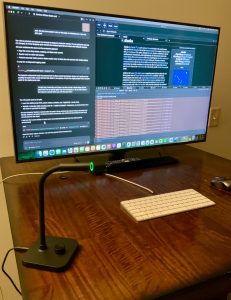
AI-built software generally refers to applications where artificial intelligence is used to generate, modify, explain, test, or troubleshoot software.
Modern AI development tools can assist with tasks such as:
- Generating application code
- Creating database structures
- Building user interfaces
- Developing APIs
- Writing functions and integrations
- Creating prototypes
- Finding and fixing bugs
- Refactoring existing code
- Generating tests
- Producing technical documentation
- Translating requirements into working code
This can make software development substantially faster.
However, there is an important distinction between generating software code and engineering a complete software system.
A functioning prototype is not necessarily a production-ready application.
That distinction becomes increasingly important as a business depends on the software for daily operations, customer interactions, revenue, sensitive information, or critical workflows.
How AI Is Changing Custom Software Development
Traditional custom development can involve significant time spent on repetitive implementation work.
Developers may need to create application components, database models, forms, API connections, validation logic, tests, documentation, and other supporting functionality.
AI can accelerate many of these activities.
Instead of starting every component from scratch, developers can use AI to generate an initial implementation and then review, modify, test, and integrate it into the broader application.
This changes the economics of custom development.
A project that previously required substantial manual coding may now be approached through a combination of:
Business requirements → architecture → AI-assisted development → human review → testing → deployment
The technology has changed, but the underlying engineering process still matters.
In fact, AI can make good technical planning more important because generating code is becoming easier while determining what should actually be built remains a business problem.
What Types of Software Can AI Build?
AI-assisted development can be particularly useful for applications with relatively well-defined requirements.
Examples can include:
Internal Business Tools
A company might need an internal application for:
- Job tracking
- Quote calculations
- Employee workflows
- Inventory management
- Reporting
- Data entry
- Approval processes
- Internal dashboards
These applications often have clearly defined users and workflows, making them suitable candidates for AI-assisted development.
Business Dashboards
AI can help create dashboards that bring information together from databases, APIs, CRM platforms, analytics tools, or other systems.
A business might use a dashboard to monitor:
- Sales
- Leads
- Customer activity
- Operational performance
- Marketing activity
- Financial metrics
- Project status
The difficult part is often not displaying the information.
It is determining which information should be collected, where it comes from, how it should be interpreted, and how the different systems should communicate.
Workflow Automation
AI-assisted development can also be useful for automating repetitive processes.
For example:
Form submission → database → CRM → notification → follow-up → reporting
Instead of employees manually transferring information between systems, custom software can automate parts of the workflow.
Customer Portals
Businesses may need customers to log in and access information, submit requests, view documents, manage services, or monitor project progress.
A custom portal can provide functionality that isn’t available within the company’s existing software.
MVPs and New Software Products
AI can also make it faster to test an idea before investing heavily in a full-scale product.
A business can develop an MVP, validate its concept, collect user feedback, and then determine which features justify further investment.
This can be particularly useful for startups and businesses developing new SaaS products.
Where AI-Built Software Can Become More Complicated
The fact that AI can generate an application does not automatically mean the resulting application is suitable for production.
As requirements become more complex, several engineering considerations become increasingly important.
1. Software Architecture
An application can work today while still being poorly structured for tomorrow.
Architecture determines how different parts of a system interact and how easily the software can be expanded or maintained.
Poor architectural decisions can create problems when a business later needs:
- Additional users
- New integrations
- More complex workflows
- New product features
- Different user permissions
- Higher traffic
- Multiple environments
- Additional data sources
AI can assist with architectural decisions, but those decisions still need to be evaluated in the context of the business and its expected growth.
2. Security
Security is not simply a matter of generating code that appears to work.
Applications may handle:
- Customer information
- Employee information
- Authentication credentials
- Financial information
- Business data
- API keys
- Internal documents
Security needs to be considered across the entire system.
This includes authentication, authorization, data handling, API security, infrastructure, dependencies, logging, access controls, and ongoing maintenance.
3. Complex Integrations
Modern businesses rarely operate with one isolated piece of software.
They may have a CRM, accounting platform, website, eCommerce system, payment provider, email platform, analytics tools, internal databases, and other applications.
Connecting these systems can require more than simply calling an API.
You need to determine:
- What information should move between systems
- When it should move
- Which system is the source of truth
- How errors should be handled
- What happens when an API changes
- How duplicate records are prevented
- How authentication is managed
- How failed requests are retried
- How the integration is monitored
This is where software engineering and business process knowledge become particularly valuable.
4. Data Integrity
Software often becomes more difficult when it starts managing important business data.
An application may need to ensure that records remain consistent when multiple users, systems, or processes interact with the same information.
A prototype can demonstrate that something works.
A production system needs to consider what happens when something goes wrong.
5. Scalability
An application designed for ten users may not behave the same way with 10,000 users.
Scalability can involve database design, application architecture, infrastructure, caching, background processing, API limitations, file storage, monitoring, and other considerations.
Not every application needs enterprise-scale infrastructure.
But businesses should understand the expected operating environment before choosing an architecture.
6. Long-Term Maintenance
Software is rarely finished forever.
Dependencies change. APIs change. browsers change. Business requirements change. Security vulnerabilities are discovered. Customers request new functionality.
A system therefore needs to be maintainable after its initial launch.
This is one of the areas that can be overlooked when the focus is entirely on getting an AI-generated application running as quickly as possible.
AI-Generated Code Is Not the Same as a Finished Software System
One of the biggest misconceptions around AI software development is that the primary challenge has always been writing code.
Code is only one part of building software.
A successful application also requires an understanding of:
What needs to be built?
Why does the business need it?
Who will use it?
What systems need to connect to it?
What happens when something goes wrong?
What information should users be allowed to access?
How will the application be maintained?
What happens when the business grows?
These questions exist regardless of whether a human developer, an AI tool, or a combination of both writes the code.
This is why an AI-generated application can be technically impressive while still failing to solve the underlying business problem.
AI-Built Software vs Traditional Custom Development
There isn’t one development approach that is appropriate for every business.
The right approach depends on the complexity of the problem, the importance of the software, the expected lifespan, the available budget, and the consequences of failure.
| Consideration | AI-Assisted Development | Traditional Custom Development |
|---|---|---|
| Prototyping | Can be very fast | Usually more structured |
| Simple internal tools | Often suitable | Also suitable |
| MVP development | Can accelerate early development | Suitable for production-focused builds |
| Complex architecture | Requires engineering oversight | Typically handled through dedicated engineering |
| Integrations | Can accelerate implementation | Requires integration planning and testing |
| Security-sensitive systems | Requires careful technical review | Requires formal engineering practices |
| Long-term applications | Needs maintainability planning | Typically designed around longer-term ownership |
| Custom business logic | Can assist with implementation | Suitable for complex requirements |
| Development workflow | AI can accelerate many tasks | Human-led throughout |
| Ongoing maintenance | Still required | Still required |
The important point is that these categories aren’t mutually exclusive.
AI-assisted development can be part of a traditional professional software development process.
The Hybrid Approach: AI + Experienced Software Development
For many businesses, AI is more useful as a development accelerator than as a complete replacement for professional development.
A modern development workflow might use AI to help with:
- Requirements exploration
- Prototyping
- Code generation
- Testing
- Debugging
- Documentation
- Refactoring
- Feature development
Experienced technical oversight can then be applied to:
- Architecture
- Business requirements
- Security
- Integration strategy
- Data structures
- Quality assurance
- Deployment
- Scalability
- Long-term maintainability
This approach can provide the benefits of AI while retaining the engineering discipline required for important business systems.
When Should a Business Consider AI-Assisted Development?
AI-assisted development may be worth considering when you have a clearly defined problem and want to develop a solution efficiently.
Examples might include:
- An internal workflow tool
- A reporting dashboard
- A custom calculator
- A lightweight customer portal
- A business automation
- An API integration
- A proof of concept
- An MVP
- A custom extension for an existing system
The starting point should still be the business problem rather than the technology.
Instead of saying:
“We want an AI-built application.”
Start with:
“This is the process that currently costs our team time, creates errors, or limits our ability to operate.”
Then determine whether software can improve it.
When Custom Software Engineering Becomes More Important
Professional software engineering becomes increasingly relevant when an application is central to the business or involves significant complexity.
For example, you may need more structured development when the application:
- Handles sensitive business or customer data
- Has complex permissions
- Connects multiple critical systems
- Supports many users
- Needs high availability
- Contains complicated business rules
- Processes important transactions
- Is expected to operate for many years
- Will become a core customer-facing product
- Needs to scale substantially
- Requires ongoing development by multiple people
The answer doesn’t necessarily have to be a large, expensive traditional development project.
Good engineering is about selecting an appropriate level of complexity for the actual business requirement.
Sometimes You Don’t Need Custom Software at All
Another important consideration is whether custom development is necessary.
Businesses sometimes assume that every software problem requires a new application.
It may not.
An existing SaaS platform might already provide most of the required functionality.
An API integration might solve the problem.
An automation platform might remove a manual process.
A small custom application might bridge two systems.
Or an existing application might simply need additional functionality.
This is why software strategy should come before development.
Build, buy, integrate, or improve are all legitimate options.
The objective is to solve the business problem rather than build software for its own sake.
How AGR Technology Approaches Modern Software Development
At AGR Technology, we work with businesses that need more than just someone to write code.
Software projects often begin with understanding how the business currently operates, identifying bottlenecks, reviewing existing systems, and determining where technology can create a practical improvement.
From there, the solution could involve:
- Custom web applications
- Internal business systems
- Customer portals
- SaaS applications
- API integrations
- Business automation
- Database-driven applications
- Dashboards and reporting
- Existing software improvements
- AI-assisted development
- Technical and business systems consulting
AI can be incorporated into the development process where it makes sense, helping accelerate implementation without treating AI-generated code as a substitute for architecture, testing, security, or business understanding.
This also means AGR Technology can help businesses determine when not to build custom software.
If an existing platform can solve the problem effectively, connecting or improving that platform may be more practical than creating an entirely new system.
Build Software Around the Business, Not the Other Way Around
The rise of AI-assisted development is making software development faster and potentially more accessible to businesses of different sizes.
But faster development doesn’t automatically produce better business outcomes.
The most important question remains:
What does the business actually need the software to do?
AI can help generate code.
It can help developers work faster.
It can help turn ideas into prototypes.
It can help reduce repetitive development work.
But reliable business software still needs clear requirements, thoughtful architecture, appropriate security, testing, integration planning, and ongoing maintenance.
For some projects, AI-assisted development may be enough to get a useful solution off the ground.
For others, a more structured custom development approach will be necessary.
And in many cases, the most practical answer will be a combination of the two.
Need Help Determining What Your Business Should Build?
If your business is dealing with spreadsheets, disconnected systems, repetitive manual processes, software limitations, or an idea for a new digital product, AGR Technology can help assess the problem before development begins.
We can help determine whether the right path is custom software, AI-assisted development, an integration, automation, an existing SaaS platform, or an improvement to the systems you already use.
The goal isn’t to build more software.
It’s to build or connect the right software for the way your business operates.
Explore software development and business systems solutions from AGR Technology, or get in touch to discuss a specific software challenge.
Get in contact with us to discuss your project
Related content:
I Vibecoded an App With AI. Now What? I Need Help to Maintain, Fix and Scale an AI-Built Application
When Should You Build Custom Software? A Practical Guide for Growing Businesses
Signs Your Business Has Outgrown It’s Software
Lovable AI App Development Services
Enterprise Custom Software Development Services
SaaS Development Agency To Build Production Grade Software Products

Alessio Rigoli is the founder of AGR Technology and got his start working in the IT space originally in Education and then in the private sector helping businesses in various industries. Alessio maintains the blog and is interested in a number of different topics emerging and current such as Digital marketing, Software development, Cryptocurrency/Blockchain, Cyber security, Linux and more.
Alessio Rigoli, AGR Technology