

Imagine a potential customer asking ChatGPT to recommend a business in your industry. Several competitors appear in the response, but your company is nowhere to be seen.
Your business might have an established website, offer excellent services and already invest in search engine optimization (SEO). Yet, when potential customers turn to AI-powered tools to research their options, you may be missing from the conversation.
For business owners, this raises an important question: Why isn’t AI recommending my business, and what can I do about it?
he answer isn’t always straightforward. AI platforms use different methods to find, interpret and present information, and appearing in conventional search results doesn’t guarantee that your business will feature in AI-generated answers.
However, there are practical steps you can take to investigate the problem, improve your digital presence and make your business easier to discover online.
In this guide, we’ll explore why businesses may be missing from AI search results, how to identify potential visibility issues and how Generative Engine Optimization (GEO) can help address them.
Why Isn’t My Business Appearing in AI Search Results?
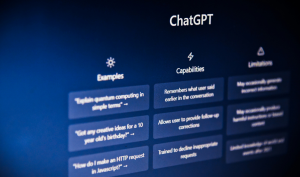
If your business isn’t appearing in ChatGPT, Google AI search experiences or other AI-powered platforms, there may be several contributing factors.
Understanding these possibilities is the first step towards improving your visibility.
1. Your Website Doesn’t Clearly Explain What You Do
Your website is an important source of information about your business. However, simply listing your services may not provide enough context to communicate your expertise or the problems you solve.
For example, a business that advertises IT services without explaining its individual offerings may leave prospective customers uncertain about whether it provides managed IT support, cybersecurity, cloud infrastructure or custom software development.
Clear, comprehensive service pages help visitors understand what you offer, who you serve and how your business can help.
They also provide more useful context for search systems interpreting your website.
What you can do:
- Create dedicated pages for your core services.
- Explain the problems your products or services solve.
- Clearly identify your target customers and relevant service areas.
- Answer common questions that prospective customers ask.
- Use descriptive headings and a logical website structure.
- Keep business information accurate and consistent.
The objective isn’t to fill your website with keywords. It’s to communicate your expertise clearly and provide genuinely useful information.
2. Search Engines and AI Systems Cannot Properly Access Your Website
Even high-quality content may struggle to gain visibility if technical problems prevent important pages from being discovered or accessed.
Issues such as incorrect indexing directives, blocked crawlers, broken links and rendering problems can interfere with the accessibility of your website.
For businesses seeking visibility in ChatGPT search, it’s also worth checking whether their website permits OpenAI’s OAI-SearchBot to access the pages they want to make discoverable.
Technical requirements can differ between platforms, so the appropriate checks depend on where you want your business to appear.
What you can do:
Review your website’s technical SEO foundations, including:
- Whether important pages can be crawled and indexed.
- Whether robots.txt rules are blocking relevant content.
- Whether pages load correctly and provide accessible content.
- Whether internal links help visitors and crawlers navigate your website.
- Whether important pages return the correct HTTP status codes.
- Whether your website contains broken links or unnecessary redirects.
Resolving these issues won’t guarantee that an AI platform mentions your business, but it can remove potential barriers to discovering your website.
3. Your Competitors Provide More Useful Information
When someone researches a service, they often have questions about pricing, implementation, suitability, risks and the differences between providers.
If your competitors publish detailed explanations, practical resources and evidence of their expertise, they may provide more useful information for answering those questions.
This doesn’t mean longer content is automatically better. A concise, informative page can be more valuable than a lengthy article that repeats generic advice.
What matters is whether your content addresses the needs of your audience.
What you can do:
Identify the questions prospective customers ask before making a purchasing decision.
Develop useful resources that address these questions with clear explanations, practical examples and original insights.
For example, a software development company could publish content explaining how to identify inefficient business processes, when custom software is worthwhile and what to consider before integrating new systems.
This helps potential customers understand their options while demonstrating your business’s knowledge of the subject.
The same principle applies across professional services, eCommerce, technology and other industries.
4. Your Business Has Limited Visibility Beyond Its Own Website
Your website is important, but it isn’t the only place where your business may be discovered or evaluated.
Depending on the platform and the question being asked, relevant information may also come from industry publications, reputable directories, business profiles and other websites discussing your company or area of expertise.
If your business has limited online recognition or inconsistent information across different sources, it may be harder for prospective customers to build a clear picture of what you offer.
What you can do:
- Keep your business information accurate across relevant platforms.
- Maintain appropriate business listings and industry profiles.
- Develop relationships with relevant publications and industry organizations.
- Publish useful material that others may have a genuine reason to reference.
- Consider legitimate digital PR and link-building opportunities.
- Ensure information about your services and expertise is consistent.
The goal is to develop a credible digital presence, not simply accumulate links or mentions.
Third-party references should be relevant to your business and audience. Their presence alone does not guarantee AI visibility, but a well-supported online presence can contribute to how people discover and evaluate your company.
5. Your Local Business Information Is Incomplete
For businesses serving specific cities, regions or suburbs, local relevance can be an important part of online discovery.
If your website doesn’t clearly explain where you operate, or your business profiles contain incomplete information, prospective customers may struggle to determine whether you’re a suitable provider.
For example, a business offering commercial electrical services across Melbourne and regional Victoria should communicate its service areas clearly rather than relying on a generic description of its capabilities.
What you can do:
Review your local digital presence.
Ensure your Google Business Profile is accurate, describe your service areas where appropriate and provide useful information about the locations you serve.
If you operate across multiple locations, develop relevant website pages where they provide genuine value to prospective customers.
Avoid creating large numbers of near-identical location pages that offer little information beyond changing a suburb or city name.
Instead, focus on helping customers understand your availability, capabilities and relevance to their particular location.
6. Your Business Information Is Inconsistent or Outdated
AI-generated responses can sometimes contain outdated, incomplete or inaccurate information about businesses.
This can be frustrating when the information concerns your services, operating locations or areas of expertise.
Inconsistencies across your website and other online sources may contribute to confusion, although the cause can vary between platforms.
What you can do:
Review how your business is represented across its digital presence.
Check your website, business profiles and important third-party references for outdated descriptions, incorrect contact details or services you no longer offer.
Make sure your main website pages communicate your current capabilities clearly.
If an AI platform provides an incorrect answer, investigate the sources it cites, where available, and determine whether there is an underlying information gap you can address.
You may not be able to directly control every response, but you can improve the accuracy and clarity of the information available about your business.
How to Check Whether AI Can Find Your Business
Before investing in new marketing activities or making significant website changes, establish what is happening.
You can begin with a simple assessment using the AI platforms your prospective customers are likely to use.
Step 1: Identify Your Most Important Services
Start by listing the services, products and locations you want your business to be associated with.
Think about the commercial queries that matter most to your organization.
For example, an Australian technology provider might prioritize custom software development, managed IT support and cybersecurity services for businesses in particular locations.
This gives you a practical starting point for testing visibility.
Step 2: Test Realistic Customer Questions
Ask relevant AI platforms questions that reflect how prospective customers might research or choose a provider.
Examples include:
- Who provides [service] in [location]?
- Which companies can help businesses solve [specific problem]?
- What should I look for when choosing a [type of provider]?
- Which providers specialize in [service or industry]?
- What are the options for businesses looking to improve [specific business process]?
Use natural questions rather than testing only exact-match keywords.
Different wording can produce different answers, so testing several relevant variations gives you a more useful picture.
Step 3: Record the Results
For each query, record whether your business appears, whether your website is cited and whether the information presented about your company is accurate.
You can use a simple table to organize your findings.
| Test question | Platform | Business mentioned? | Website cited? | Information accurate? |
|---|---|---|---|---|
| Who provides [service] in [location]? | ChatGPT | Yes/No | Yes/No | Yes/No |
| Which companies specialize in [service]? | Google AI search | Yes/No | Yes/No | Yes/No |
| What are the options for solving [customer problem]? | Another relevant AI platform | Yes/No | Yes/No | Yes/No |
Repeat the tests for your most commercially important services.
Remember that AI-generated responses can change depending on the query, context, platform and time. A business not appearing in one response does not necessarily mean it is universally invisible to AI.
Step 4: Investigate the Sources and Competitors
Where a platform provides citations or other source information, examine the pages it references.
Look for patterns that could help explain the results.
For example, are competing businesses publishing more comprehensive information about the relevant service? Does your website lack a dedicated page for an important offering? Are there technical problems affecting your content?
You may also discover that your business is mentioned but described inaccurately, indicating a need to review how your services and expertise are represented online.
These observations can help you decide which issues deserve further investigation.
Step 5: Prioritize Improvements and Monitor Progress
Once you’ve identified potential gaps, prioritize them according to their likely importance to your business.
Technical problems affecting important pages may need attention before you invest in additional content. Alternatively, your website may already have sound technical foundations but lack detailed information about key services.
Address the most relevant issues first, then repeat your tests periodically.
This approach makes it easier to evaluate changes over time without relying on isolated AI responses or assuming that every visibility problem has the same cause.
What Is Generative Engine Optimization (GEO)?
Generative Engine Optimization, commonly known as GEO, focuses on improving how a business and its content can be discovered, understood and represented in AI-powered search and answer experiences.
These experiences include AI-generated search summaries, conversational search tools and platforms that help users research businesses, products and services.
Traditional SEO remains an important part of this picture. GEO builds on many of the same foundations while considering how people discover information through AI-powered interfaces.
For businesses concerned about being overlooked by AI, GEO provides a structured way to assess their existing digital presence and identify opportunities for improvement.
Depending on the business, this may involve several areas of work.
Technical SEO and Website Accessibility
A website needs to provide accessible, useful information before it can serve as an effective foundation for online discovery.
Technical assessment can help identify indexing restrictions, broken pages, crawlability problems and other issues that may interfere with access to important content.
Resolving these problems supports the broader health of your website, regardless of whether a visitor discovers it through conventional search or an AI-powered experience.
Content Development and Optimization
Your website should explain your products, services and expertise in terms your customers can understand.
This may involve improving existing pages, developing more comprehensive service descriptions or publishing resources that address common questions.
Useful content should offer more than generic definitions. It should help readers understand their options, evaluate alternatives and make informed decisions.
Original insights, relevant examples and practical explanations can help distinguish your business from competitors publishing similar material.
Website Structure and Information Clarity
A well-organized website makes it easier for visitors to navigate your content and understand how your services relate to one another.
Clear headings, descriptive page titles, sensible internal linking and appropriate structured data can all contribute to a well-maintained website.
Structured data should accurately reflect the visible content of your pages. It can help search systems interpret information, but adding schema markup does not guarantee that your business will appear in AI-generated answers.
Digital Authority and Brand Recognition
Your website is only one part of your online presence.
Relevant industry references, credible publications and accurate business profiles can help people discover your company and evaluate its expertise.
Depending on your industry and existing visibility, digital PR, legitimate link building and other reputation-building activities may form part of a broader GEO strategy.
The emphasis should be on developing a credible reputation and making useful information available, rather than pursuing artificial signals or guaranteed placements.
AI Visibility Assessment and Monitoring
An initial assessment can establish how your business currently appears across selected AI platforms and commercially relevant queries.
Ongoing monitoring can then help you identify changes in mentions, citations and the accuracy of information about your business.
This is particularly useful when combined with conventional SEO monitoring, website analytics and an understanding of the queries your prospective customers are likely to use.
Together, these activities provide a more structured approach to understanding your visibility and deciding where further work may be worthwhile.
Do You Need a Separate AI SEO Strategy?
Not every business needs an entirely new marketing strategy to address AI visibility.
In many cases, the first step is to improve the website and digital presence the business already has.
For example, a company with poorly structured service pages, indexing problems or incomplete business information may benefit more from resolving those issues than from purchasing a specialised AI marketing package immediately.
Other businesses may already have strong SEO foundations and need a more focused assessment of how they appear in AI-generated answers.
The right approach depends on your current situation, industry, objectives and available resources.
Google’s guidance on AI features and your website reinforces the importance of established SEO fundamentals, helpful content and technical accessibility. It does not require businesses to abandon conventional SEO in favour of an entirely separate set of AI optimization tactics.
A sensible strategy considers both traditional search and AI-powered discovery, identifying where the activities overlap and where additional work may be justified.
The objective is not to optimize for AI at the expense of your customers. It’s to build a digital presence that communicates your value clearly and helps people find the information they need.
Common Misconceptions About AI Search Visibility
As interest in GEO grows, businesses may encounter advice suggesting that a single technical change or marketing tactic can guarantee AI visibility.
It’s worth approaching such claims carefully.
Installing Schema Markup Guarantees AI Recommendations
Structured data can help search systems interpret information about your business, products or services.
However, adding schema markup does not guarantee inclusion in AI-generated responses. It should accurately describe your content and form part of a broader approach to maintaining your website.
Creating an llms.txt File Is Essential
The llms.txt proposal has attracted attention as a way of providing information to language models.
However, it should not be treated as a universal requirement for AI visibility. Google’s published guidance states that it does not use llms.txt to determine search rankings or AI feature inclusion.
Businesses should prioritise established technical and content fundamentals rather than assuming that an emerging convention is necessary for every platform.
Ranking Well in Google Guarantees AI Visibility
Strong conventional search visibility can be valuable, but it does not guarantee that your business will appear in every AI-generated answer.
AI platforms and search features can use different retrieval and presentation methods. Results may also vary according to the question being asked.
Monitoring AI visibility separately can therefore help you understand an additional aspect of your digital presence.
Publishing More Content Automatically Improves Visibility
Creating additional pages can be useful when they address genuine information gaps.
However, publishing large volumes of repetitive, generic or low-value content is unlikely to be a sound long-term strategy.
Focus on resources that help your audience understand a subject, solve a problem or make a decision.
An Agency Can Guarantee That AI Will Recommend Your Business
No agency can guarantee that ChatGPT or another AI platform will recommend a particular business for every relevant query.
The systems involved are outside an agency’s direct control, and their responses can change.
Professional GEO services should focus on identifying potential barriers, improving the factors within a business’s control and monitoring results rather than promising outcomes that cannot be assured.
When Should You Consider Professional GEO Services?
Some improvements are relatively straightforward to make yourself.
You may be able to update your service descriptions, correct inaccurate business information or improve the structure of existing pages without extensive external assistance.
However, professional support may be worthwhile when the problem involves multiple technical, content and marketing considerations.
For example, you might benefit from an assessment if:
- Your business is difficult to find across several relevant AI platforms.
- Competitors repeatedly appear for commercially important queries while your business is missing.
- Your website has technical SEO or indexing issues you cannot confidently resolve.
- Your service pages do not adequately explain your capabilities.
- Your business operates across multiple services, industries or locations.
- You need to coordinate website development, SEO, content and digital reputation activities.
- You want a structured way to assess your current visibility and prioritise improvements.
The value of professional assistance is not simply having someone add keywords to pages or implement a collection of AI-related tactics.
It’s having a structured process for understanding the problem, investigating potential causes and determining which improvements are most relevant to your business.
For some organisations, this may involve relatively straightforward website changes. Others may benefit from ongoing GEO, content development, technical SEO or a broader digital strategy.
The appropriate scope should follow the assessment rather than being determined by a predetermined package.
Improve Your AI Search Visibility with AGR Technology
If your business is missing from AI-generated answers, the first step is understanding why.
At AGR Technology, we help businesses address digital challenges through a combination of technology, website development, SEO and digital growth services.
Our Generative Engine Optimization services help businesses assess their digital presence, identify potential barriers to AI discovery and implement practical improvements aligned with their objectives.
Rather than treating AI visibility as an isolated marketing tactic, we consider how your website, content, technical foundations and wider online presence work together.
Depending on your needs, this may include:
- AI visibility assessment: Examining how your business appears across selected AI platforms and relevant customer queries.
- Technical SEO: Identifying potential crawling, indexing and website accessibility issues.
- Content optimization: Improving service pages and resources so they communicate your expertise and address customer questions.
- Website improvements: Strengthening website structure, navigation and the clarity of your business information.
- Digital authority: Identifying opportunities to develop credible industry references and strengthen your broader online presence.
- Ongoing optimization: Establishing a practical approach to monitoring visibility and prioritizing further improvements.
Every business has a different starting point. Some need to address fundamental website issues, while others are ready to build on an established SEO strategy and explore additional opportunities in AI-powered search.
Our approach is to understand your situation first, then identify the work most likely to be useful.
You don’t need to know which technical changes to make before getting started. Understanding the problem and deciding what to prioritize is part of the process.
If you’re concerned that potential customers are discovering your competitors through AI tools while overlooking your business, AGR Technology can help you explore the available options.
Alternatively, contact AGR Technology to discuss your business’s AI visibility and the next steps worth considering.
Reviews from our happy customers:
Supporting businesses of all sizes to get ahead with digital solutions







Why work with us?





AI visibility can vary between platforms and queries. Our focus is on improving the factors within your control, not promising guaranteed mentions or recommendations.
Frequently Asked Questions
Why is my business not showing up in ChatGPT?
There can be several reasons. Your website may have technical accessibility issues, your service information may be incomplete, or other sources may provide more relevant information for the question being asked. ChatGPT’s responses can also vary depending on the query and context. Reviewing your website and testing relevant questions can help identify potential issues.
How do I get my business mentioned by AI?
Start by ensuring your website is accessible, your services are clearly explained and your content answers genuine customer questions. Maintain accurate business information and develop a credible online presence. You can also test relevant questions across AI platforms to identify gaps. These actions can support discoverability, but no specific change guarantees that an AI system will mention your business.
What is the difference between SEO and GEO?
SEO focuses on improving a website’s visibility in search engines, while GEO focuses on improving how a business and its content may be discovered and represented in AI-powered search and answer experiences. The disciplines overlap substantially, and many GEO activities build on established SEO practices, including technical accessibility, useful content and clear website structure.
Does my business need GEO if I already invest in SEO?
Not necessarily as a separate campaign. Your existing SEO work may already support important aspects of AI discoverability. However, an AI visibility assessment can help you identify additional gaps, evaluate how your business appears in relevant AI-generated responses and determine whether further work is worthwhile.
How long does it take to improve AI visibility?
There is no universal timeframe. Results depend on the issues being addressed, the state of your website, the platform being assessed and other factors affecting discovery. Technical corrections may be relatively straightforward, while building a stronger content presence and credible external recognition can take longer. Improvements should be monitored over time rather than judged against a guaranteed deadline.
Can AGR Technology help improve my business’s AI visibility?
AGR Technology provides Generative Engine Optimization alongside its broader technology, website development and digital marketing capabilities. Depending on your needs, this can include assessing your current visibility, identifying technical or content issues and implementing appropriate improvements. The recommended approach depends on your business, existing digital presence and objectives.
Related resources:
Brand Mentions Service For SEO And AI Visibility
SEO Services for Large Language Models (LLMs)
AI Hallucinations And Brand Risk: Protect Your Reputation
ChatGPT Advertising Services Agency
Digital Marketing for Chinese Brands Expanding in English
How Gen AI Press Releases Help Brands Control AI Results

Alessio Rigoli is the founder of AGR Technology and got his start working in the IT space originally in Education and then in the private sector helping businesses in various industries. Alessio maintains the blog and is interested in a number of different topics emerging and current such as Digital marketing, Software development, Cryptocurrency/Blockchain, Cyber security, Linux and more.
Alessio Rigoli, AGR Technology