

Voice is becoming the interface of choice for millions of users worldwide. From virtual assistants that schedule meetings to healthcare apps that transcribe patient notes in real-time, AI voice technology is reshaping how businesses connect with their customers and streamline operations. But behind every seamless voice interaction lies sophisticated software built on cutting-edge machine learning, natural language processing, and speech recognition systems.
At AGR Technology, we can assist in developing custom AI voice software that delivers real business outcomes. Whether you’re looking to automate customer support, enhance accessibility, or build an entirely new voice-enabled product, our team brings the technical expertise and industry experience to turn your vision into reality. This page outlines what AI voice software development involves, the technologies that power it, and how partnering with the right development team can set your business apart in an increasingly voice-first world.
Get in contact with us to discuss your project
Reviews from our happy clients:

Justine Brummans
Alessio is both incredibly knowledgeable and personable! He gave me great advice that was catered to me and my situation. Thank you Alessio! Super helpful!

Springfield Equestrian Park
Alessio is amazing! I can not speak highly enough of how helpful and knowledgeable he is, my website he created far exceeded my expectations, he is so accomodating and I can only wish him every success with his business. I rate AGR technology 10 out of 10.
Legacy Energy
We used AGR Technology and dealt with Alessio to design and build our website as well as host our emails. Alessio was a pleasure to deal with and had plenty of ideas that we could implement into our site. He has a great attention to detail, he is also very polite in understanding our goals and what we wanted to achieve with our website.
Thanks mate,
Alex & Rob
Excellent Service
Alessio developed our website for our business and has done a wonderful job. He is very personable and knowledgeable. We have enjoyed working with him. We will be referring others to him and highly recommend him to those who need Tech advice.
MRC Performance
I have been in business for over 10 Years and recently moved to AGR Technology for all our IT needs. They are able to fix nearly anything remotely and always very helpful in recommending appropriate hardware upgrades that do the job as required but not costing more than needed.

Alessio provided an excellent service. He was very dedicated in his method of finding solutions to problems. He continued to try different avenues until he found the reason as to why a particular application was not working. He was very knowledgeable in his understanding of the internet and of applications and how they work, and he was able to apply this knowledge in understanding how to resolve the obstacles that continued to appear. He is understanding towards his client's needs and goals and he is willing to work with his client in achieving those goals. He is a very polite and well mannered person and very calm and gentle in his approach. I would highly recommend Alessio's services to anyone.

Palmira Rigoli
Great work ethics Alessio! We at Totally Gluten Free Products are very happy to have you on board as our IT and SEO master. Very reliable, trustworthy and knowledgeable in the field.
YouTube Comment

Nat's Custom Designs
Alessio from AGR Technology has recently helped me create a website for my business.
Throughout the whole process from start to finish Alessio made the process easy for me, by calling me and explaining each step of the way. I'm not very computer savvy, but with Alessio taking the time to explain in detail everything I needed to know from putting inventory in to having it shipped. He even remotely joined my computer to help guide me through everything.
He's very knowledgeable and is experienced in everything I needed and if there was anything else I needed to know that wasn't something he was familiar with, he researched it.
I would HIGHLY recommend Alessio to anyone. He has not only helped me for now but I know that if I ever needed help with anything else he would definitely go above and beyond to help. Thank you so much for everything you have done. It's been a long process but well worth it 🙂
Byron Macumber
AGR Technology is amazing. not only do they stick with you through out the process, they also accommodate to your wants and needs. They are efficient in their work and they have high integrity. Their capabilities are shown through their website design, and appropriate knowledge of utilities regarding software. over the many years of working with them they have been fantastic. I would recommend to everyone
Very helpful
Alessio was thorough, diligent and kept me updated at all time points. I was very impressed with his performance, passion and dedication. I will continue to use his services.
Wantrup & Associates
Alessio of AGR Technology is an IT guy we rely on whenever we need IT help. His professionalism impressed us right at the first time. He solved many of our IT problems in no time. Excellent communication and speedy response.
We highly recommend this company
From a happy customer
Valeria Bianco
I received AGR contact information from a previous client, who had found their service excellent. So I contacted AGR with some expectations, and I can say they exceeded them. Professional, honest, punctual, reliable, their service is faultless. We can't recommend them highly enough.
Very fast, value for money and a comprehensive service
AGR is professional, organised and very skilled at what they do. They take the initiative, looking after all the details that you would not have thought of to enhance your website presence, marketing funnel and automated appointment bookings. Big bonus - pricings are at a fraction of the cost of competitors.
Customer testimonial
Alessio from AGR Technology is wonderful at gently guiding the less technically savvy users to solve problems. Back up service excellent. Highly recommended
SEO for website
The team is very cooperative and delivers clean and very efficient work.

Raimond Volpe
Nothing but good things to say about Alessio. He has been great service and great at communicating with me by both phone and email. Very good knowledge and problem-solving ability with our web development. I would thoroughly recommend Alessio and AGR Technology to anyone wanting online marketing or web development
Website design
Big thank you to Alessio at AGR Technology for a smooth and easy website development process. Nothing was to difficult to accomplish, I can highly recommend his first class service.
Proudly supporting clients of all sizes to succeed through digital solutions









Why work with us?







What Are AI Voice Software Development Services?
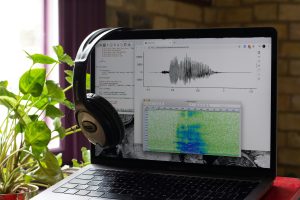
AI voice software development services involve designing, building, and deploying applications that understand, process, and respond to human speech. These solutions go far beyond simple voice commands, they interpret intent, manage context across conversations, and deliver responses that feel natural and intelligent.
We work with businesses to create voice-enabled systems tailored to their specific needs. This might include developing virtual assistants, voice-activated control systems, speech analytics platforms, or conversational AI for customer engagement. Each project is different, but the goal remains the same: to create software that listens, understands, and acts in ways that enhance user experience and operational efficiency.
Our services typically cover the full development lifecycle, from initial concept and technical feasibility through to design, development, testing, deployment, and ongoing optimization. We integrate AI voice capabilities into existing platforms or build standalone solutions from the ground up, always prioritizing scalability, accuracy, and user satisfaction.
Core Technologies Behind AI Voice Software
Building reliable AI voice software requires a deep understanding of several interconnected technologies. Here’s what powers the systems we develop.
Natural Language Processing
Natural Language Processing (NLP) is the engine that allows machines to understand human language in all its complexity. It’s not just about recognizing words, it’s about grasping meaning, handling slang, interpreting tone, and managing ambiguity.
We carry out NLP models that analyse speech input, extract intent, and determine the appropriate response. This involves tokenisation, entity recognition, sentiment analysis, and contextual understanding. Modern NLP frameworks also enable multilingual support and dialect recognition, which is critical for businesses serving diverse audiences.
Speech Recognition and Synthesis
Speech recognition (or automatic speech recognition, ASR) converts spoken language into text. It’s the first step in any voice interaction. Speech synthesis (text-to-speech, TTS) does the opposite, it generates natural-sounding speech from written text.
We use state-of-the-art ASR and TTS engines that deliver high accuracy even in noisy environments or with varied accents. Our solutions support real-time processing, which is essential for applications like live customer support or voice-controlled devices. We also customize voice profiles to match your brand identity, ensuring consistency across all touchpoints.
Machine Learning Models
Machine learning is what makes AI voice software truly intelligent. These models learn from data, improve over time, and adapt to user behavior.
We train custom models using your specific datasets to ensure the software understands industry terminology, user preferences, and unique use cases. This might involve supervised learning for intent classification, unsupervised learning for pattern discovery, or reinforcement learning to optimize conversational flows. Continuous training and retraining are part of our process, so your voice software gets smarter with every interaction.
Key Features of Professional AI Voice Solutions
When we build AI voice software, we focus on features that deliver measurable value and stand up to real-world use. Here’s what sets professional solutions apart:
- High Accuracy and Low Latency: Users expect instant responses. Our systems process speech in real-time with minimal delay, maintaining accuracy even under challenging conditions.
- Context Awareness: Good voice software remembers what was said earlier in the conversation. We build systems that track context across multiple turns, making interactions feel natural and reducing user frustration.
- Personalization: Voice software should adapt to individual users. We carry out user profiling, preference learning, and adaptive responses that improve engagement and satisfaction.
- Multimodal Integration: Voice doesn’t exist in isolation. Our solutions integrate with visual interfaces, chat systems, and other input methods to provide a seamless user experience across channels.
- Security and Privacy: Voice data is sensitive. We build with privacy by design, implementing encryption, secure storage, and compliance with regulations like GDPR and HIPAA where applicable.
- Scalability: Whether you’re handling hundreds or millions of interactions, our infrastructure scales with your needs without compromising performance.
- Analytics and Insights: Understanding how users interact with your voice software is critical. We provide detailed analytics on usage patterns, intent recognition accuracy, conversation flows, and areas for improvement.
These features aren’t optional extras, they’re the foundation of voice software that users trust and businesses can rely on.
Industries Benefiting From AI Voice Technology
AI voice software is transforming operations across a wide range of sectors. Here are some of the industries where we’ve seen the most significant impact.
Healthcare and Telemedicine
Healthcare providers are using voice technology to streamline clinical documentation, enable hands-free operation in sterile environments, and improve patient engagement. We’ve developed solutions that transcribe physician notes in real-time, provide voice-activated access to patient records, and support telemedicine consultations with automated symptom checking and appointment scheduling.
The ability to reduce administrative burden while maintaining accuracy and compliance makes AI voice software a game-changer in healthcare settings.
Customer Service and Support
Voice-enabled customer service systems handle routine inquiries, route calls intelligently, and provide instant support around the clock. We build conversational AI that understands customer intent, resolves issues autonomously, and escalates to human agents when needed.
Businesses benefit from reduced wait times, lower support costs, and improved customer satisfaction. And because the systems learn from every interaction, they get better over time.
Education and E-Learning
Voice technology is making education more accessible and interactive. We’ve created voice-enabled tutoring systems, language learning apps with pronunciation feedback, and accessibility tools for students with disabilities.
Voice interfaces also support hands-free learning environments, which is particularly valuable in technical training, lab settings, and on-the-job instruction. By making learning more engaging and inclusive, AI voice software is helping educators reach more students in more meaningful ways.
The Development Process for AI Voice Software
Building effective AI voice software isn’t a one-size-fits-all process. Here’s how we approach development at AGR Technology:
Discovery and Requirements Gathering: We start by understanding your business goals, target users, and technical constraints. This phase involves stakeholder interviews, user research, and feasibility analysis to define what success looks like.
Design and Prototyping: We map out conversation flows, design the user experience, and create prototypes that demonstrate core functionality. This is where we test assumptions and refine the interaction model before committing to full-scale development.
Data Collection and Preparation: Quality data is the foundation of any AI system. We identify relevant datasets, collect training samples, and prepare data for model training. This might involve audio recordings, transcriptions, annotated conversations, and domain-specific terminology.
Model Training and Fine-Tuning: We train machine learning models using your data, then fine-tune them to improve accuracy and performance. This iterative process involves testing against real-world scenarios and adjusting parameters to optimise results.
Integration and Deployment: Once the models are performing well, we integrate them into your application or platform. We handle API development, backend infrastructure, and front-end interfaces to deliver a complete solution.
Testing and Quality Assurance: We conduct rigorous testing across devices, environments, and user scenarios. This includes stress testing for scalability, security audits, and user acceptance testing to ensure the software meets all requirements.
Monitoring and Optimization: After launch, we continuously monitor performance, gather user feedback, and make improvements. AI voice software improves with use, so ongoing optimisation is essential for long-term success.
Our development process is collaborative, transparent, and focused on delivering software that works reliably in the real world.
Choosing the Right Development Partner
Not all AI voice software providers are created equal. Selecting the right development partner can make the difference between a solution that transforms your business and one that falls short of expectations.
Here’s what to look for:
Proven Technical Expertise: Your partner should have hands-on experience with the full stack of AI voice technologies, NLP, ASR, TTS, and machine learning. Ask for case studies, technical demonstrations, and examples of previous work.
Industry Knowledge: Different industries have unique requirements. A partner with experience in your sector will understand the nuances, compliance needs, and user expectations that matter most.
Custom Development Capability: Off-the-shelf solutions rarely fit perfectly. Look for a team that can build tailored software designed around your specific use cases and business objectives.
Commitment to Quality: Accuracy, reliability, and user experience should be non-negotiable. Your partner should have rigorous testing processes and a track record of delivering high-quality software.
Ongoing Support: AI voice software requires continuous improvement. Choose a partner who offers post-launch support, monitoring, and iterative optimisation to keep your solution performing at its best.
At AGR Technology, we bring all of these qualities to every project. We’re not just developers, we’re partners invested in your success. Our team has delivered AI voice solutions across healthcare, retail, finance, and education, and we’re ready to help you harness the power of voice technology.
Ready to get started? Contact us today to discuss your project and discover how custom AI voice software can drive results for your business.
Future Trends in AI Voice Technology
AI voice technology is evolving rapidly, and staying ahead of the curve can give your business a significant competitive advantage. Here are some trends we’re watching closely.
Emotion and Sentiment Recognition: Future voice systems won’t just understand words, they’ll detect mood, stress, and emotion. This opens up new possibilities for mental health support, customer service de-escalation, and personalized user experiences.
Multilingual and Cross-Dialect Support: As businesses expand globally, voice software needs to handle multiple languages and regional dialects seamlessly. Advances in transfer learning are making this more achievable and cost-effective.
Voice Biometrics for Security: Voice authentication is becoming more reliable and widely adopted. We’re integrating voice biometrics into systems that require secure, frictionless user verification.
Ambient Voice Interfaces: Voice technology is moving beyond devices into environments, smart homes, cars, workplaces. We’re designing systems that blend into the background, always available but never intrusive.
Real-Time Language Translation: AI-powered voice translation is improving rapidly. This will enable real-time multilingual conversations and open up new markets for businesses that serve diverse customer bases.
Ethical AI and Transparency: As voice technology becomes more pervasive, ethical considerations around consent, data use, and algorithmic bias are becoming critical. We’re committed to building AI systems that are transparent, fair, and respect user privacy.
These trends are shaping the future of how we interact with technology. By partnering with AGR Technology, you’ll have access to the latest innovations and the expertise to carry out them effectively.
Conclusion
AI voice software is no longer a futuristic concept, it’s a practical, powerful tool that’s transforming how businesses operate and how customers engage with brands. From automating routine tasks to creating entirely new user experiences, the potential applications are vast and growing.
At AGR Technology, we specialise in turning that potential into reality. We combine deep technical expertise, industry knowledge, and a commitment to quality to deliver AI voice solutions that work reliably, scale effortlessly, and deliver measurable results.
Whether you’re looking to improve customer service, enhance accessibility, streamline operations, or build a voice-first product from scratch, we’re here to help. Our team will guide you through every stage of development, from initial concept to ongoing optimization, ensuring your voice software meets your goals and exceeds user expectations.
Let’s build something exceptional together. Get in touch with AGR Technology today to discuss your AI voice software development needs and take the first step towards a smarter, more connected future.
Frequently Asked Questions
What are AI voice software development services?
AI voice software development services involve designing, building, and deploying applications that understand, process, and respond to human speech. These solutions interpret intent, manage conversational context, and deliver natural, intelligent responses tailored to specific business needs and user experiences.
How long does it take to develop custom AI voice software?
Development timelines vary based on project complexity, features, and integration requirements. Typically, a custom AI voice solution takes 3–6 months from discovery to deployment, including data preparation, model training, testing, and optimization to ensure reliable real-world performance.
Which industries benefit most from AI voice technology?
Healthcare, customer service, and education see significant benefits from AI voice technology. Healthcare uses it for clinical documentation and telemedicine, customer service for automated support and call routing, and education for interactive tutoring and accessibility tools that enhance learning experiences.
What is the difference between speech recognition and natural language processing?
Speech recognition (ASR) converts spoken words into text, while natural language processing (NLP) understands the meaning, intent, and context behind those words. NLP handles complexity like slang, tone, and ambiguity, enabling machines to respond intelligently to human language.
Can AI voice software integrate with existing business systems?
Yes, professional AI voice software can integrate seamlessly with existing platforms, CRMs, databases, and communication channels. Development teams handle API integration, backend infrastructure, and multimodal interfaces to ensure voice capabilities work within your current technology ecosystem without disruption.
How secure is voice data in AI voice applications?
Reputable AI voice software development prioritizes security through encryption, secure storage, and privacy-by-design principles. Solutions comply with regulations like GDPR and HIPAA where applicable, ensuring voice data is protected and handled ethically throughout collection, processing, and storage.
Other solutions:
AI Voice Agent Development Services

Alessio Rigoli is the founder of AGR Technology and got his start working in the IT space originally in Education and then in the private sector helping businesses in various industries. Alessio maintains the blog and is interested in a number of different topics emerging and current such as Digital marketing, Software development, Cryptocurrency/Blockchain, Cyber security, Linux and more.
Alessio Rigoli, AGR Technology